
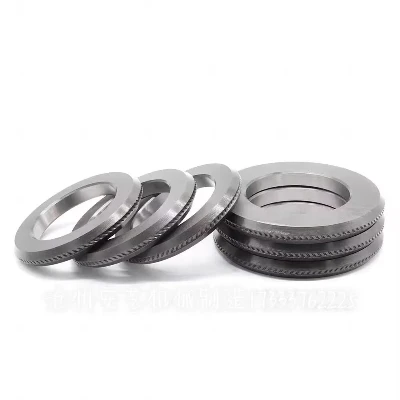
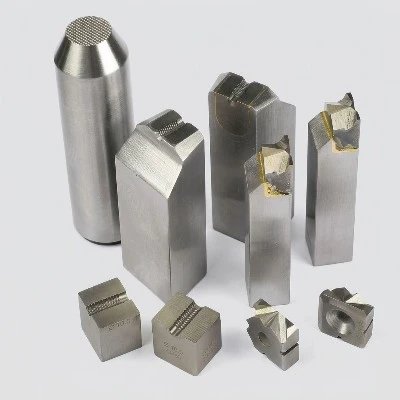
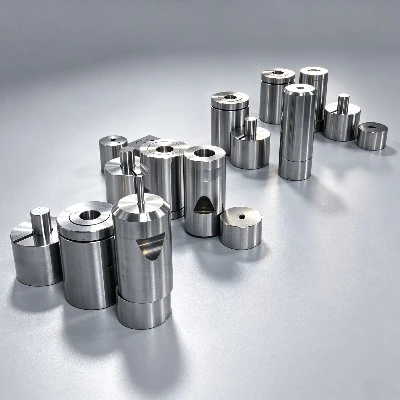

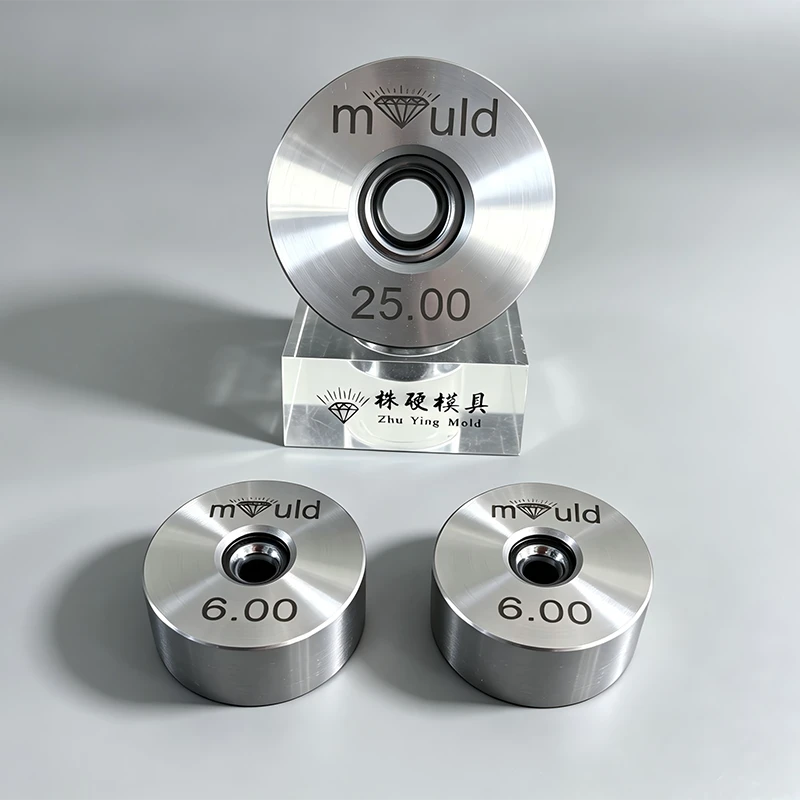
Start With the Variables That Destroy Dies
A die cannot be specified until the working conditions are written down. Most premature failures trace back to a condition the buyer never stated.
- Workpiece material and coating: Abrasive scale, zinc coating and stainless work harden differently and attack the die surface in different ways.
- Reduction per pass: True strain, ln(A₀/A₁), determines contact pressure and heat generation more reliably than percentage reduction alone.
- Stroke count and duty cycle: A die running continuously heats differently from one cycling between ambient and working temperature.
- Working temperature and lubricant: Graphite, emulsion, oil and glass-coat lubricants produce very different friction and thermal shock conditions.
- Machine condition: Shaft runout, alignment and backlash can destroy a geometrically perfect die in one shift.
A supplier who quotes without asking for these values is guessing.
Translate Conditions Into Geometry
Once the conditions are fixed, they map to specific die geometry. These are the parameters worth putting on the drawing.
- Die half-angle: Too small and the contact arc grows, raising friction and heat; too large and metal flow separates from the die surface, causing centre bursting in drawing or folding in extrusion. Steel wire drawing commonly sits in the 6–10° range, non-ferrous slightly higher.
- Bearing length: Typically 0.3–0.5 times the wire diameter for ferrous drawing. Too long adds friction and heat; too short loses dimensional control.
- Cavity radii: Internal corners below a critical radius become crack origins under cyclic load. For heading and forging cavities, radii should be specified rather than left to the toolroom.
- Land and relief: Exit relief protects the bearing edge. Missing relief causes scoring on the workpiece and rapid edge breakdown.
- Surface finish: Bearing zones polished to Ra 0.05–0.2 µm reduce friction and prevent coating pick-up. Specify the value, not just "polished".

Specify Material State, Not Only Grade
A grade name on a purchase order is not a complete material definition. Three further items belong in the specification.
Powder route and densification
Virgin powder with controlled oxygen, milled to a defined grain size, sintered and HIP-densified to full density. Recycled powder and incomplete densification produce dies that pass initial inspection but fail early in fatigue.
Surface condition and coatings
Polished bore or cavity is the baseline. Coatings extend it in specific conditions: TiN for general abrasion, TiCN for higher hardness, AlTiN for elevated temperature, CrN and DLC for non-ferrous and stainless where pick-up is the problem. A coating applied over an unfinished surface will flake rather than protect.
Binder system
WC-Co is the default. WC-Ni applies where magnetic permeability or corrosion resistance matters - a requirement that must be stated at specification stage, not after manufacture.
Acceptance Criteria You Can Put on an Order
These are measurable, so they belong in the purchase document rather than in a marketing claim.
| Parameter | What to specify | Why |
|---|---|---|
| Hardness | HRA range with test method | Confirms grade and sintering condition |
| Density | Minimum g/cm³, Archimedes method | Detects residual porosity |
| Porosity | ASTM B276 type and level | Predicts fatigue life under cycling |
| Binder distribution | Coercivity or magnetic saturation | Detects carbon imbalance and eta phase |
| Cavity dimension | Tolerance against CAD model | Determines part dimensional capability |
| Surface finish | Ra value on working surfaces | Controls friction and pick-up |
| Internal integrity | Ultrasonic test acceptance level | Excludes hidden cracks in large inserts |
| Documentation | Certificate, measurement report, test data | Makes the lot traceable |
A supplier who cannot return these values is not able to prove what was delivered.
Define What "Die Life" Means Before You Buy
Life is the most disputed number in die procurement because buyers and suppliers often mean different things by the end of life. Write the definition down.
- End-of-life criteria: Dimensional drift beyond tolerance, surface roughness above limit, heat-check crack depth, or chipping size - whichever applies to the process.
- Counting basis: Acceptable parts produced, not running hours and not tonnage unless both are defined.
- Sample validation: Confirm the figure against a first production batch rather than accepting a theoretical value.
- Reconditioning allowance: State how many regrinds or recuts are included and to what dimensions, so the life figure reflects the full usable life of the die.
- Batch consistency: Require the same dimensional and hardness limits on repeat orders, not only on the first sample.
Require Supply Continuity
A die is rarely bought once. The second order is where most buyers discover that "the same die" is not the same die.
Ask the supplier to retain the EDM electrodes, CNC programmes, cavity profile data and sintering batch records, and to quote repeat orders against the original specification. This is what makes a replacement die fit the existing holder and produce the same part without a new tryout cycle. For multi-stand lines, also agree which dies are supplied as matched sets and how replacements are matched to the remaining set.
What Different Industries Actually Require
The same material system serves very different buyers. The specification emphasis changes by industry.
- Automotive fasteners: High-cycle cold heading demands consistent cavity dimensions and edge toughness; buyers usually care about process capability over millions of parts.
- Wire and cable: Surface finish and bore concentricity dominate, because die marks transfer directly to the wire and to downstream insulation.
- Powder metallurgy: Compaction tooling must hold dimensional stability so green density stays uniform across the pressed part.
- Aerospace and energy: Material traceability, lot certification and documented inspection are as important as performance, and are often contractually required.
Hot Tags: tungsten carbide dies, China tungsten carbide dies manufacturers, suppliers, factory, Carbide Dies For Wire Drawing, Cemented Carbide Dies for Brass Wire Drawing, PCD Drawing Dies for Rectangular Wire, Tungsten Carbide Dies for Steel Wire Drawing, Tungsten Carbide Drawing Dies, Tungsten carbide hot forging dies