
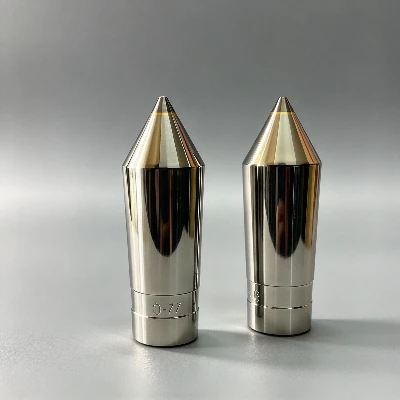
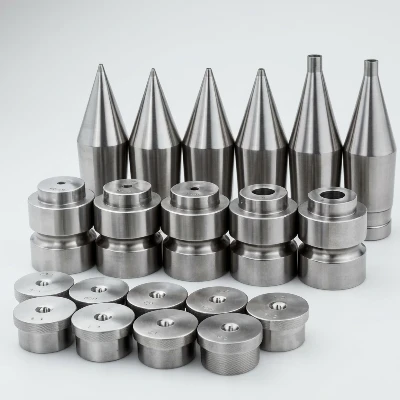
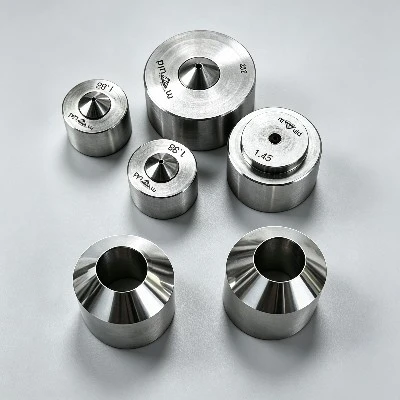
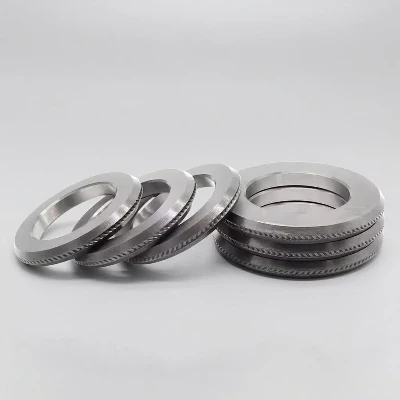

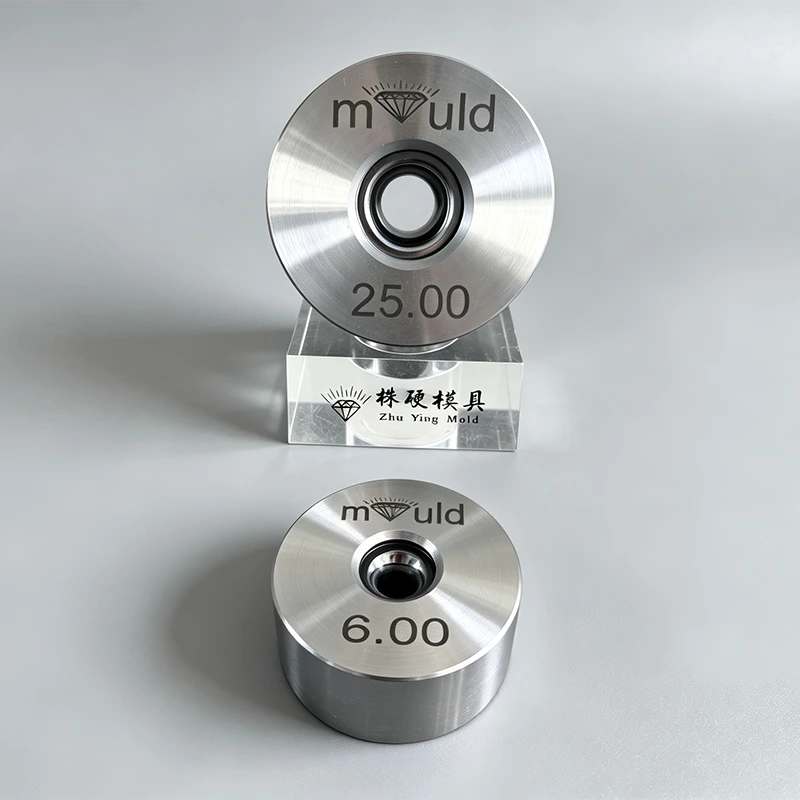
When Carbide Is the Right Call
A tungsten carbide forging die earns its cost back under specific conditions. Being honest about these conditions saves both sides a failed trial.
CMM & Ultrasonic Verified
Strong candidates
- Closed die forging runs where cost per part matters more than die purchase price
- Hot and warm forging with high stroke counts, where H13 cavities heat-check early
- Cold heading, extrusion and coining, where cavity accuracy reduces downstream machining
Cases where tool steel still wins
- Low-volume or one-off runs that cannot amortise carbide tooling
- Very large die blocks with deep cavities and heavy shock - carbide tolerates compression well but not severe tensile impact
- Shapes needing extensive die welding or heavy re-cutting between campaigns
Die Construction and Cavity Design
Insert, solid and prestressed
The usual arrangement is a carbide insert seated in a steel holder: the holder absorbs shock and locates the die, the insert does the forming. Solid construction is reserved for small precision tools. In heavy upsetting, an interference-fit steel sleeve puts the insert under residual compression, which delays crack opening.
Preform and finish cavities
Multi-impression dies distribute metal flow across a preform and a finish cavity. Getting the preform wrong does not just waste one forging - it overloads the finishing cavity and shortens its life. We review both impressions against the part drawing before any steel is cut.
Flash and radii
Flash gutter volume, corner radii and draft angles are the three details that most often decide whether a cavity survives its first shift. Sharp internal corners concentrate stress and become crack origins; we flag them at design review rather than after tryout.

The Failure That Ends Most Hot Forging Dies
Heat checking
Repeated contact with hot billet followed by lubricant quenching creates a network of fine surface cracks. This is thermal fatigue, and it is the main reason hot forging dies are withdrawn - usually well before the cavity is dimensionally worn out.
What actually delays it
Higher cobalt content (15–25 wt%) improves toughness; TaC, NbC and Cr₃C₂ additions restrain grain growth during sintering and stabilise the surface at forging temperature. Hardness alone does not solve heat checking - a harder, lower-cobalt grade can crack sooner under the same thermal cycle.
Preheating and lubrication
A cold insert struck by a hot billet will crack whatever its grade. We supply a preheat target and a graphite-based or glass-coat lubrication practice with each die set. In our experience, correcting preheat and lubricant extends insert life more reliably than changing grade.
Grade by Operation
| Operation | Recommended direction | HRA | Characteristic |
|---|---|---|---|
| Hot die forging | 15–25% Co, medium grain | 82–86 | Tough, heat-check resistant |
| Warm forging | 12–15% Co | 85–87 | Balanced wear and shock |
| Cold heading and coining | 6–10% Co, fine grain | 88–90 | High hardness, tight cavity |
| Extrusion | 8–12% Co with TaC/NbC | 86–88 | Stable under sustained pressure |
| Severe thermal cycling | Custom modified grade | On request | Maximum thermal stability |
*Grades are confirmed against the forging drawing, press tonnage and billet material.
Die Life Is Measured in Pieces
Pieces per die
Forging tooling is not rated in running hours. The meaningful figure is the number of acceptable forgings a cavity produces before it leaves tolerance or heat-checks beyond reconditioning. We quote expected life on that basis and track it against the first production batch.
Reconditioning
Worn cavities can be ground back, re-polished and in many cases re-cut to the next dimension. Reconditioned inserts cost a fraction of a new die and keep the holder in service. We provide a reconditioning sequence with each tooling set so the customer is not guessing when to send a die back.
Cost per forging
Die price divided by pieces produced, plus reconditioning and changeover time, is the number that matters. On high-volume runs this usually favours carbide strongly; on short runs it does not. We would rather say so at the quotation stage.
From Drawing to First Article
Design review
The forging drawing is checked for impression layout, radii, gutter volume and likely metal flow. Any change we recommend is agreed before machining starts.
Cavity machining
Sintered blanks are machined by EDM and wire cutting, then profile ground and polished. The recast layer left by EDM is removed - if it stays, it becomes the starting point of heat cracks in service.
Tryout and release
Sample billets are run through the die at the customer's forging temperature. Dimension, surface and flash formation are checked, and the cavity is adjusted before the die is released. A die that has not been tried at temperature is not a finished die.
Hot Tags: high quality tungsten carbide forging die, China high quality tungsten carbide forging die manufacturers, suppliers, factory, Carbide Dies For Wire Drawing, Carbide Wire Drawing Dies, High Quality Tungsten Carbide Forging Die, PCD Drawing Dies for Rectangular Wire, Tungsten Carbide Dies Hard Metal, Tungsten carbide hot forging dies