


Established 1962
About Us
Wire Drawing Dies Manufacturer Since 1962
Hejian Strains Of Hard Alloy Mould Co.,Ltd was established in 1962 and is a professional manufacturer of wire drawing dies and carbide forming dies in China. With a production area of approximately 4,000 square meters, the company has developed from a small mold manufacturer into an established manufacturer serving wire processing and metal forming applications.
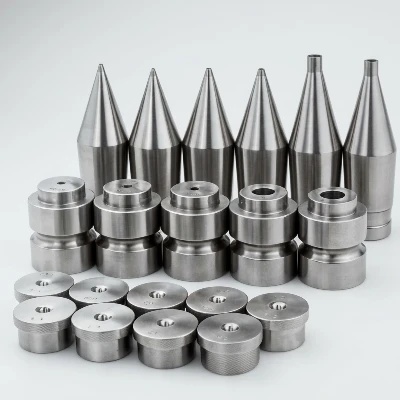
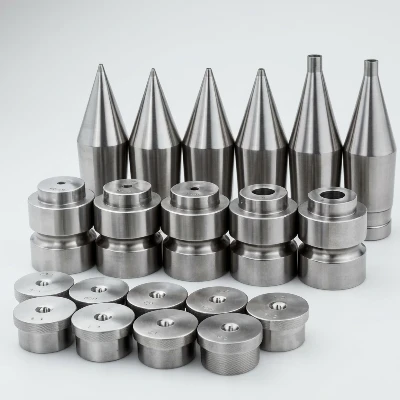
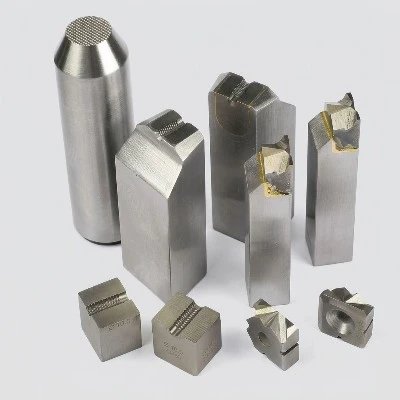
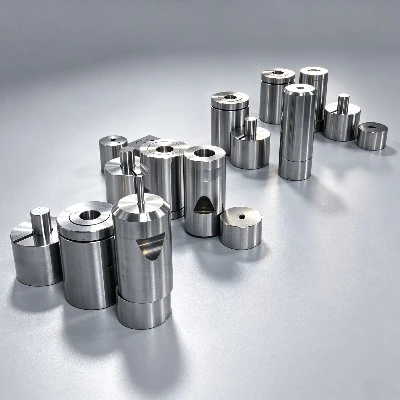
Our product range covers 30 major categories and more than 500 specifications, including wire drawing dies, shaped wire drawing dies, extrusion tips and dies, shaving dies, grooved carbide rolls, carbide nail dies, cold heading dies, and other customized carbide tooling.
Our manufacturing experience is focused on tooling used for wire drawing, wire tube drawing, rod drawing, profile forming, nail production, cold heading, extrusion, and other metal forming processes.

More Than 60 Years of Manufacturing Experience
Since our establishment in 1962, we have continuously developed our manufacturing capabilities through tooling process improvement, production experience, and technical development.
The company currently has a workforce of approximately 280 employees, including engineers and technical personnel with college-level or higher education. Our manufacturing team combines practical production experience with technical knowledge in carbide tooling and metal forming applications.
Over the years, our production scope has expanded from conventional dies to a broader range of carbide tooling for different wire and metal forming processes.
Our long-term manufacturing experience allows us to understand not only the geometry of a die, but also the relationship between die material, die geometry, drawing conditions, dimensional requirements, surface finish, and service life.
Our Main Products
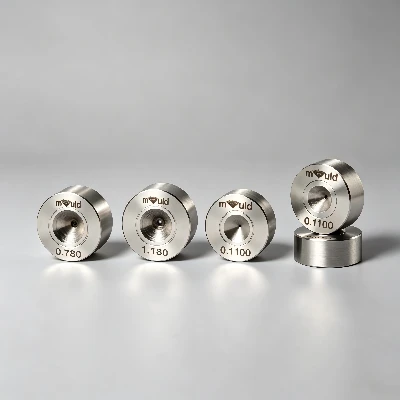
We manufacture a wide range of carbide dies and tooling for industrial wire and metal forming applications.
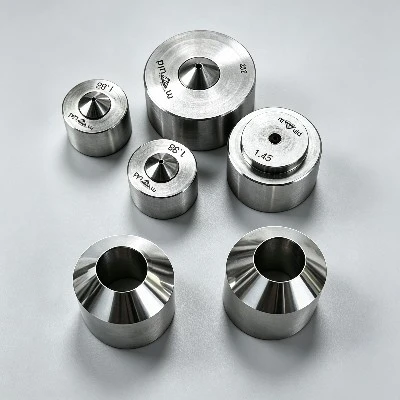
Wire Drawing Dies
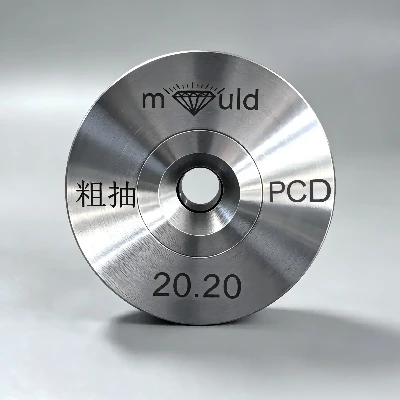
Wire drawing dies are used to reduce the cross-sectional area of metal wire through a controlled drawing process.
Our wire drawing dies are manufactured for applications requiring controlled dimensional reduction, surface finish, and die wear management.
Typical applications include:- Metal wire drawing
- Steel wire processing
- Copper wire processing
- Aluminum wire processing
- Rod drawing
- Fine wire drawing
- Industrial wire production
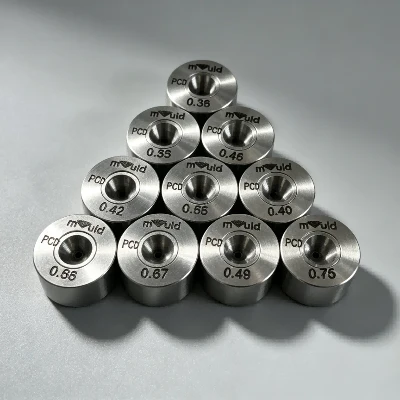
PCD Shaped Wire Drawing Dies
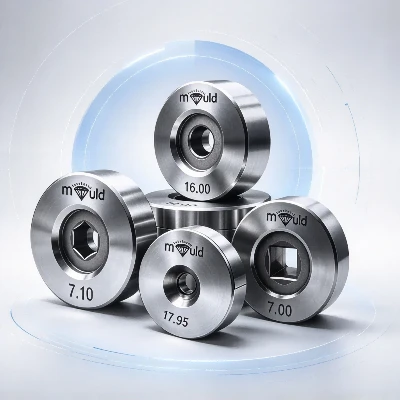
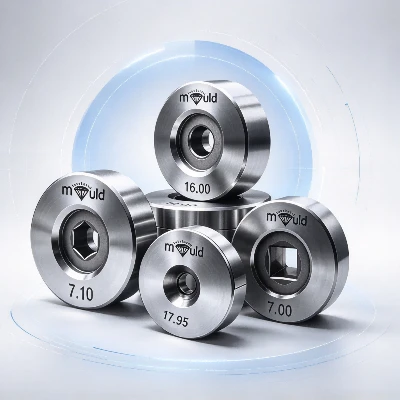
Shaped Wire Drawing Dies are designed for drawing wires and profiles with non-round cross-sections.
Depending on the application, die geometry can be configured for shapes such as:- Hexagonal wire
- Square wire
- Rectangular profiles
- Special-shaped wire
- Customized metal profiles
The die profile is an important factor in controlling the final geometry of the drawn product.
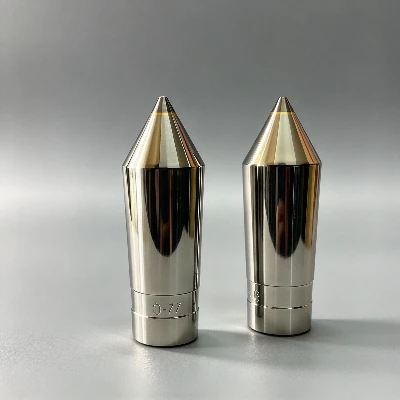
Extrusion Tips & Dies
Our Extrusion Tips & Dies are used in metal extrusion and forming applications where the tooling geometry determines the final cross-sectional profile.
Tooling can be manufactured according to the required material, profile geometry, dimensions, and production conditions.
Shaving Dies
Shaving Dies are used for precision material removal and surface finishing during wire processing.
They can be applied where controlled surface dimensions and removal of surface defects are required.
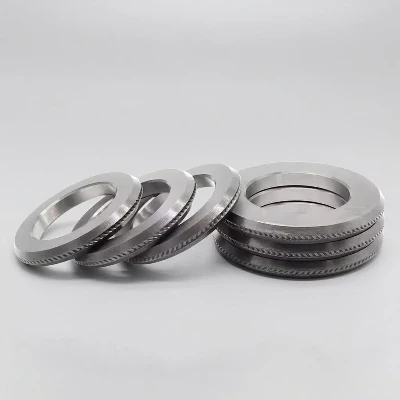
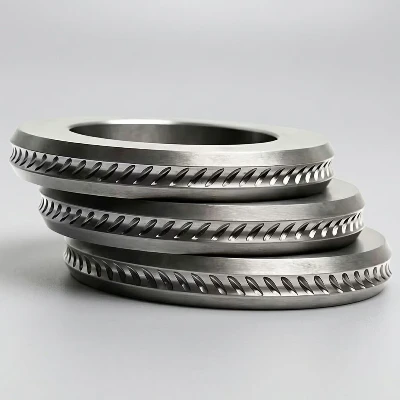
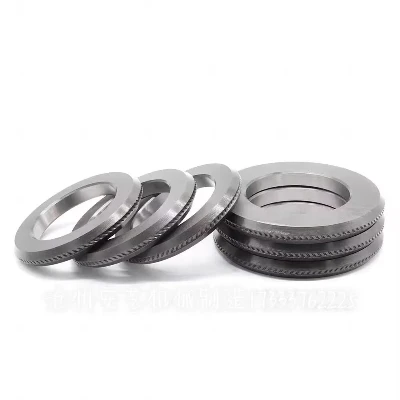
Grooved Carbide Rolls
Grooved Carbide Rolls are used for forming, guiding, sizing, and processing metal materials.
The groove geometry can be designed according to the wire or profile dimensions and the specific production process.
Carbide Nail Dies
Carbide Nail Dies are designed for nail manufacturing processes where repeated forming operations require wear-resistant tooling.
Different die configurations can be produced according to nail dimensions, material specifications, and forming equipment.
Cold Heading Dies
Cold Heading Dies are used in cold forming processes for fasteners and other metal components.
Die geometry and carbide selection are determined according to the workpiece material, forming process, dimensions, and expected production conditions.
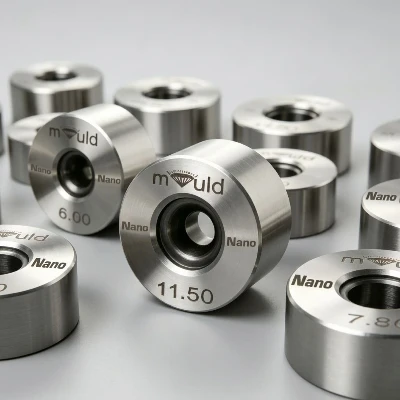
Nanocrystalline Diamond Coating Dies (NDCD)
Nanocrystalline Diamond Coating Dies (NDCD) are engineered by depositing a ultra-fine, uniform layer of nanocrystalline diamond film onto a high-quality tungsten carbide substrate using advanced Chemical Vapor Deposition (CVD) technology. This hybrid structure combines the extreme hardness and wear resistance of diamond with the high fracture toughness of tungsten carbide.


Carbide Tooling for Different Metal Forming Processes
Our product portfolio is not limited to one type of wire drawing application. We manufacture tooling for several forming processes, including:
| Application | Typical Tooling |
|---|---|
| Wire Drawing | Wire Drawing Dies |
| Shaped Wire Drawing | Shaped Wire Drawing Dies |
| Rod Drawing | Carbide Drawing Dies |
| Tube Drawing | Drawing Dies |
| Profile Forming | Shaped Dies |
| Extrusion | Extrusion Tips & Dies |
| Surface Processing | Shaving Dies |
| Roll Forming | Grooved Carbide Rolls |
| Nail Manufacturing | Carbide Nail Dies |
| Cold Forming | Cold Heading Dies |
This product structure enables us to manufacture both standard and application-specific tooling for different metal processing requirements.
Manufacturing Scale and Product Range
Our current manufacturing operation includes approximately:
The large product range reflects our experience in producing dies for different wire sizes, profiles, materials, and forming processes.
For customers requiring non-standard tooling, die dimensions and profile geometry can be discussed according to the production requirements.


Die Service Life and Repairability
Carbide tooling is selected in many wire and metal forming applications because tooling wear directly affects production dimensions, surface quality, tooling replacement frequency, and manufacturing costs.
According to our historical product experience, our carbide dies can provide a service life more than 300 times that of conventional high-speed steel dies under comparable applicable conditions.
The actual service life of a die depends on factors such as:
Therefore, service life should be evaluated according to the actual production process rather than based on a single fixed number.
One of the characteristics of our carbide tooling is repairability. Certain dies can be repaired and returned to service when the tooling condition and remaining material allow refurbishment. Based on our historical production experience, properly repaired dies can maintain their expected service performance.
Quality Control and Manufacturing Development
Our manufacturing processes have been continuously improved through production practice and technical development.
The company passed the ISO quality system certification in 2000, representing an important stage in the company's historical quality management development.
Our quality control approach focuses on the factors that directly affect die performance, including:For wire drawing and forming dies, dimensional accuracy and working-surface condition are particularly important because small changes in die geometry can affect the dimensions and surface characteristics of the finished wire.
Export Experience
Our carbide dies have been supplied to customers in Singapore, Malaysia, Indonesia, Hong Kong, and other overseas markets.
International applications have given our manufacturing team experience in dealing with different customer specifications, product drawings, tooling requirements, and production conditions.
This information helps determine the appropriate die structure and specifications before production.
Technical Support for Die Selection
Selecting a wire drawing die is not simply a matter of choosing a die according to the finished wire diameter. The tooling should be considered together with the complete production process.
Before manufacturing a customized die, customers may provide:
Steel, stainless steel, copper, aluminum, or other metal materials.
Required diameter, cross-sectional profile, tolerance, and surface requirements.
Number of drawing passes, reduction per pass, drawing speed, and production sequence.
Drawing machine type and relevant tooling dimensions.
Current die dimensions, carbide grade, service life, and observed wear condition.
Production volume, dimensional tolerance, surface finish, and expected tooling life.
Based on this information, the die structure and specifications can be evaluated according to the actual application.
Customized Wire Drawing and Carbide Dies
Different metal forming processes require different tooling geometries. We can manufacture tooling according to customer-provided:
Customized tooling is particularly relevant for shaped wire, special profiles, non-standard dimensions, and application-specific forming processes.
For a new tooling project, providing the finished product drawing and material information can help establish the basic tooling requirements.
Our Manufacturing Philosophy
Our manufacturing philosophy is based on long-term tooling experience rather than simply increasing product variety. For wire drawing and carbide forming dies, we focus on the relationship between:
A die is a functional component of the production process. Its performance needs to be evaluated together with the material being processed, equipment, lubrication, production parameters, and required product dimensions.
This engineering-oriented approach is the basis of our tooling manufacturing experience.
Why Buyers Work With an Experienced Die Manufacturer
For industrial tooling procurement, the lowest initial tooling price does not necessarily represent the lowest production cost. Buyers normally need to consider:
Our long manufacturing history and broad product range allow us to work with customers requiring different types of carbide dies and forming tools.
Supporting Different Industrial Tooling Requirements
Our product portfolio covers tooling requirements from conventional round wire drawing to shaped profiles and cold forming applications.
Core product categories include:- Wire Drawing Dies
- Shaped Wire Drawing Dies
- Extrusion Tips & Dies
- Shaving Dies
- Grooved Carbide Rolls
- Carbide Nail Dies
- Cold Heading Dies
- Customized Carbide Dies
With more than 500 product specifications across 30 major categories, our manufacturing experience covers a broad range of carbide tooling applications.
Contact Our Carbide Die Manufacturing Team
If you are sourcing wire drawing dies, shaped wire drawing dies, carbide nail dies, cold heading dies, extrusion dies, shaving dies, or grooved carbide rolls, please provide your product dimensions and application requirements.
Product material + finished dimensions + profile drawing + production process + equipment information + required quantity
Our technical team can then evaluate the appropriate tooling structure and specifications based on the production requirements.
Frequently Asked Questions
When was your company established?
Hejian Strains Of Hard Alloy Mould Co.,Ltd was established in 1962 and has been engaged in carbide die and tooling manufacturing for decades.
What types of dies do you manufacture?
Our main products include Wire Drawing Dies, Shaped Wire Drawing Dies, Extrusion Tips & Dies, Shaving Dies, Grooved Carbide Rolls, Carbide Nail Dies, and Cold Heading Dies.
How many die specifications can you manufacture?
Our product range covers more than 500 specifications across approximately 30 major product categories.
Do you manufacture shaped wire drawing dies?
Yes. We manufacture Shaped Wire Drawing Dies for square, hexagonal, rectangular, and other customized wire or profile geometries.
Can you manufacture customized dies?
Yes. Customized tooling can be manufactured according to customer drawings, samples, dimensions, profiles, and application requirements.
What information should I provide when requesting a wire drawing die?
For a technical quotation, it is useful to provide the workpiece material, finished dimensions, profile drawing, drawing process, equipment information, and required quantity.
Can carbide dies be repaired?
Certain carbide dies can be repaired depending on their construction, wear condition, remaining material, and damage level. The repairability of a specific die should be evaluated before refurbishment.
How long can a wire drawing die last?
Tool life depends on the workpiece material, carbide grade, die geometry, reduction, drawing speed, lubrication, equipment condition, and other process parameters. Therefore, actual service life should be evaluated based on the complete production process.
Do you supply overseas customers?
Yes. Our products have historically been exported to markets including Singapore, Malaysia, Indonesia, Hong Kong, and other overseas markets.
What is the difference between wire drawing dies and shaped wire drawing dies?
Conventional wire drawing dies are generally used for round wire, while shaped wire drawing dies are designed with non-round working profiles for producing square, hexagonal, rectangular, or other special-shaped wire and profiles.