
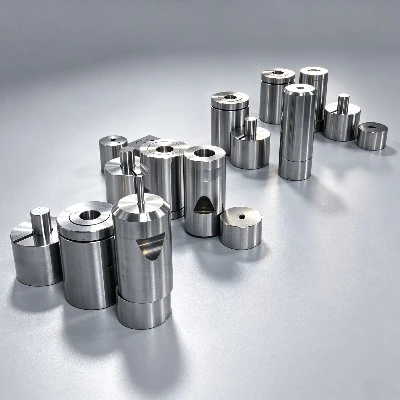


Cold Heading Dies Manufacturer — Carbide Die Inserts, Punches and Shrink-Fit Assemblies
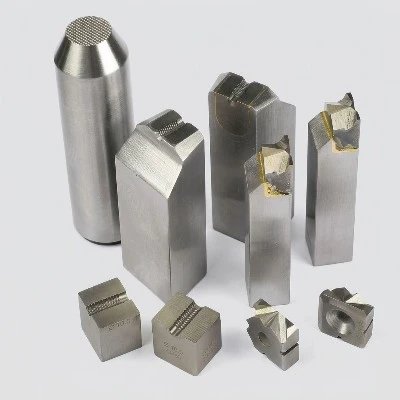
Custom tungsten carbide die inserts, punches, steel casings, and complete shrink-fit assemblies engineered for multi-station cold headers, nut formers, and parts formers. Precision tools manufactured to drawing for processing carbon steel, alloy steel, stainless steel, copper, and aluminium (0.5 mm to 40 mm blank diameter).

-
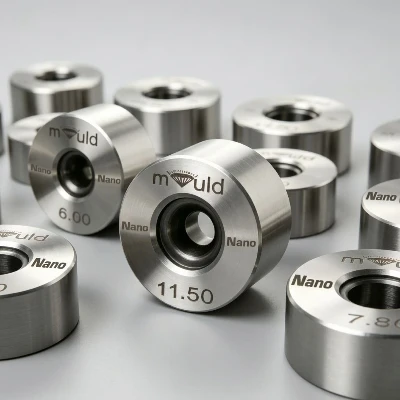
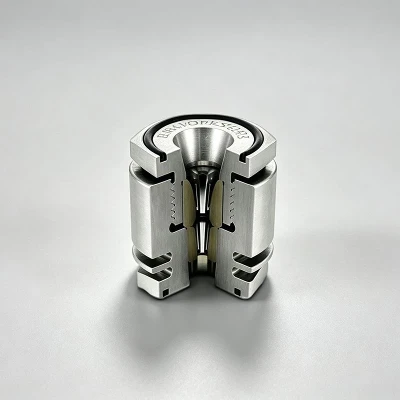
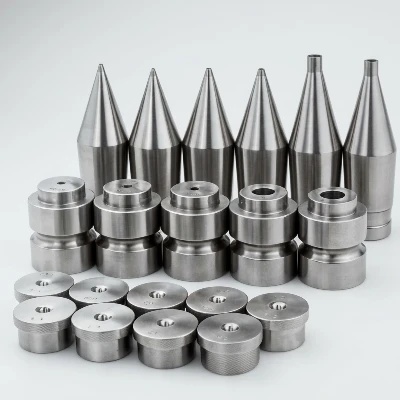
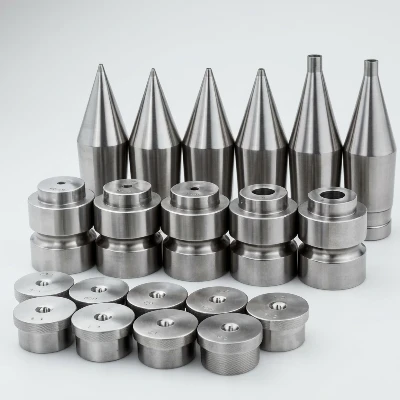
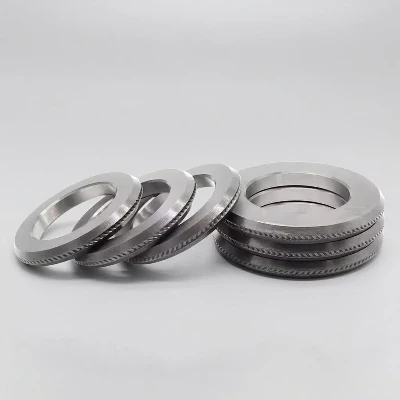
![Carbide Cold Heading Dies]() Carbide Cold Heading DiesThis is a complete assembly of tungsten carbide cold heading dies, including outer steel casing, carbide inner nib, ejector mechanism and matching cutter blades, which is the core tooling for...read more
-
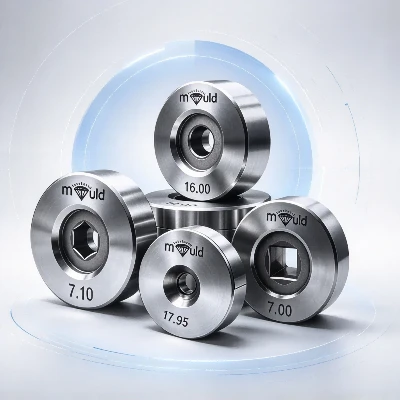
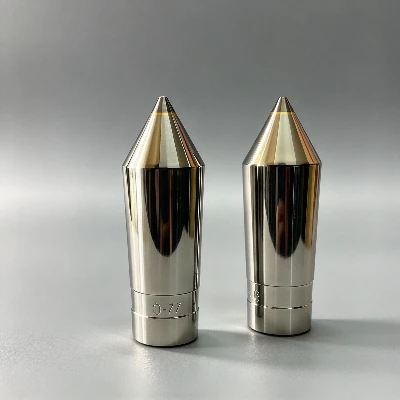
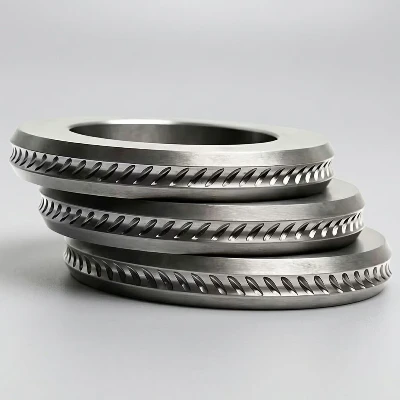
![Tungsten Carbide Cold Heading Dies]() Tungsten Carbide Cold Heading DiesTungsten Carbide Cold Heading Dies are precision forming tools used in cold heading machines to shape metal wire or billets into fasteners and other cold-formed components.read more
The die cavity... -
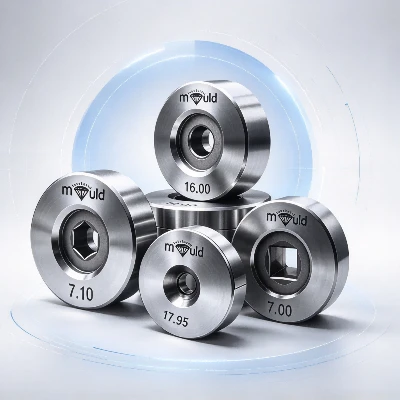
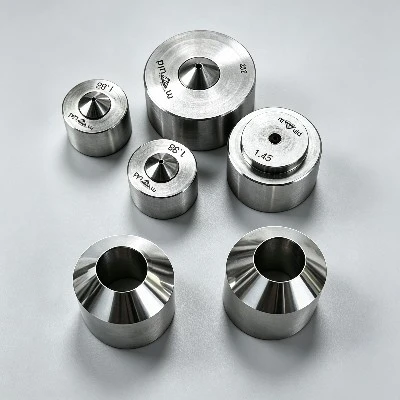
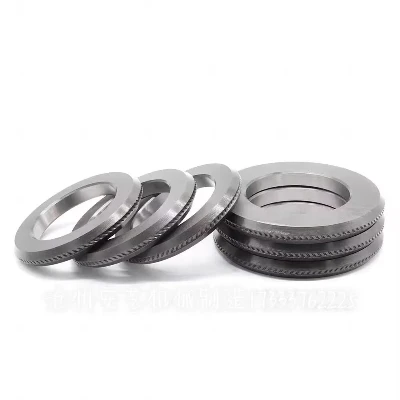
![Carbide Heading Dies]() Carbide Heading DiesUsed for high-speed cold heading of fasteners (high-strength bolts, screws, rivets, etc.), capable of withstanding high-frequency impacts and ultra-high extrusion stresses.read more
Materials and...


Why a Carbide Insert Must Be Pressed Into a Steel Casing
Carbide is exceptionally strong in compression but comparatively weak in tension. During a heading blow, the metal being formed exerts extreme radial pressure against the cavity wall. Left unsupported, an insert will split under hoop stress. A steel casing with calculated interference puts the insert permanently under compression before the first stroke, enabling millions of stable production cycles.
| Tool Build Structure | Mechanical Principles | Application & Duty Fits |
|---|---|---|
| Carbide Insert in Steel Casing | Carbide takes wear at forming face; casing carries radial hoop stress. | Standard for high-volume heading. Casing is reused across insert changes. |
| Segmented Carbide Insert | Insert split into 3–4 precision segments pressed into casing. | Complex non-round cavities; enables easy replacement of high-wear sections. |
| Solid Carbide Die | One-piece carbide without external casing. | Small, simple geometries where internal load paths maintain compression. |
| All-Steel / HSS Die | Monolithic steel structure without carbide insert. | Low-volume prototype runs, or large parts where carbide costs are prohibitive. |
Technical Capabilities & Specifications
Tooling Categories
Carbide die inserts (nibs/pellets), die casing assemblies, heading punches, extrusion punches, cut-off knives, and semi-finished blanks.
Materials & Grades
Cemented tungsten carbide (YG15, YG20, YG20C, YG25 & equivalents), ISO K-series. Selected specifically by station upset ratio.
Tolerances & Finish
Dimensional tolerance: ±0.01 mm standard (±0.005 mm precision). Cavity finish: Ra ≤ 0.2 µm standard (polished to Ra 0.05 µm).
The Multi-Station Tooling Set Breakdown
Cold headers run on matched sets. Each component serves a distinct function and replacement cycle:
| Component | Primary Function | Machine Position | Typical Material |
|---|---|---|---|
| Cut-off Knife / Knife Die | Shears incoming wire rod to exact blank length | Feed Mechanism | Tool Steel / HSS / Carbide |
| Die Insert (Nib / Pellet) | Working cavity that forms part head and shank | Stationary Die Block | Tungsten Carbide |
| Die Casing | Carries radial load to prevent insert cracking | Around Die Insert | Alloy Tool Steel (H13 / SKD61) |
| Heading Punch (1st / 2nd) | Starts upset and completes head/recess shape | Moving Ram Side | Carbide / PM-HSS |
| Knock-out / Ejector Pins | Holds part during forming, then ejects completed part | Rear of Die Block | High-Toughness Tool Steel |
Carbide Grade Selection Matrix by Duty & Impact
| Cobalt Content | Hardness & Wear Resistance | Impact Toughness | Recommended Duty |
|---|---|---|---|
| Low (≈6–8% Co, Fine Grain) | Highest Wear Resistance | Lower Toughness | Light-duty forming, extrusion, sizing stations, long runs on soft wire. |
| Medium (≈10–15% Co) | High Balance | Medium Toughness | General heading stations — most widely specified grade class. |
| High (≈20–25% Co, Coarse Grain) | Medium Wear Resistance | Highest Impact Resistance | Heavy upsetting, 1st blow stations, high upset ratios, alloy & stainless steel. |
Cold Heading Tooling Troubleshooting Guide
Field diagnostics based on tooling analysis and returned failed insert inspections:
| Symptom | Likely Cause | Corrective Action |
|---|---|---|
| Insert splits or bursts suddenly | Insufficient casing pre-stress; interference fit too low; worn casing. | Verify casing bore and interference; replace worn casing before changing grade. |
| Wall crack along insert length | Interference fit too high or casing wall too thin. | Recalculate interference fit against casing material yield strength. |
| Rapid cavity wear | Grade too soft; changed wire hardness; degraded lubrication. | Check laser grade code; audit incoming wire hardness and coolant quality. |
| Part galling / wire pickup | Cavity finish degraded; improper grade for stainless wire. | Re-polish cavity to Ra 0.05 µm; evaluate TiN / TiCN PVD coating. |
Frequently Asked Questions
Why is a carbide insert pressed into a steel casing instead of being used on its own?
Tungsten carbide exhibits exceptional compressive strength but limited tensile strength. The internal forming pressure during heading forces the insert outward. Pressing the insert into a steel casing with a calculated shrink fit pre-stresses the carbide in compression, preventing fatigue splitting under high impact.
Can you manufacture tooling from a worn sample or part number?
Yes. You can send us a worn insert, an assembly drawing, or simply the part number stamped on your casing. Our technical engineering team will reverse-engineer the geometry, verify optimal carbide grades, and reproduce identical replacement tooling.
Can a worn or cracked insert be safely reworked?
Worn cavities within tolerance can be re-lapped and re-polished back to original Ra surface finish. However, a cracked insert cannot be safely repaired — under high shrink-fit tension, a cracked insert poses severe operational risk and must be replaced.
Request Technical Specifications & Factory Quote
Send us your part drawing, tooling assembly drawing, or worn insert specs. Our application engineers will calculate interference fits and specify carbide grades for your cold headers.
Get Direct Manufacturer Quote
As one of the most professional cold heading dies manufacturers and suppliers in China, we're featured by quality products and good service. Please rest assured to wholesale durable cold heading dies made in China here from our factory. Also, custom service is available.
-
![Tungsten Carbide Hot Forging Dies]() Tungsten Carbide Hot Forging DiesTungsten carbide hot forging dies for press, hammer and upsetter linesread more
HRA 82–86, hot hardness retained above... -
![Golden Tungsten Carbide Wire Drawing Dies]() Golden Tungsten Carbide Wire Drawing DiesGolden Tungsten Carbide Wire Drawing Dies for steel, stainless, copper and alloy wireread more
Golden TiN surface cuts... -
![Carbide Drawing Die]() Carbide Drawing DieCarbide drawing die engineered for your wire and your pass scheduleread more
Half-angle and bearing tuned to your... -
![Tungsten Carbide Dies Hard Metal]() Tungsten Carbide Dies Hard MetalTungsten Carbide Dies Hard Metal — one material, three regional namesread more
WC + cobalt; grain size and binder ratio...