
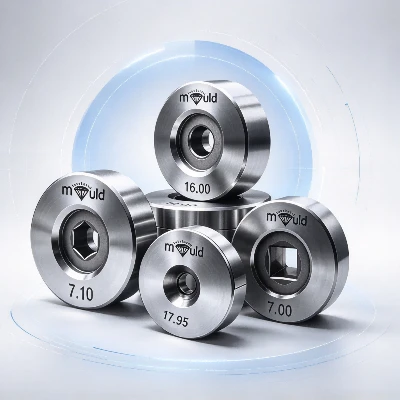
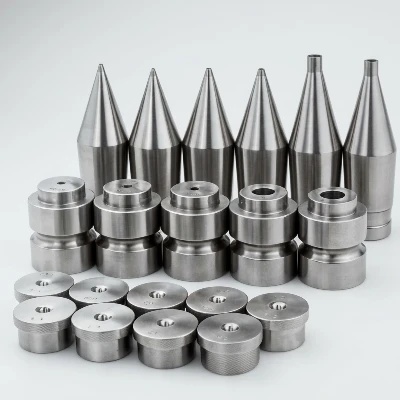
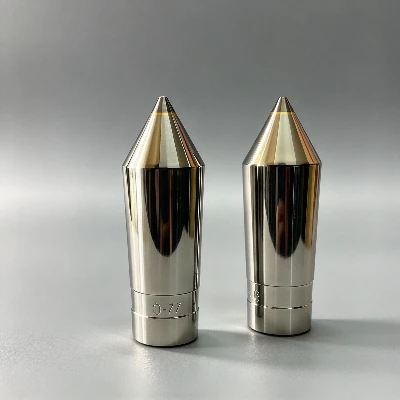
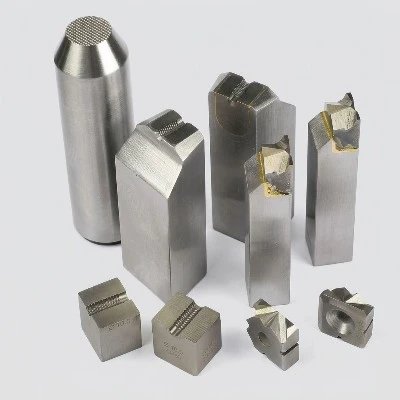
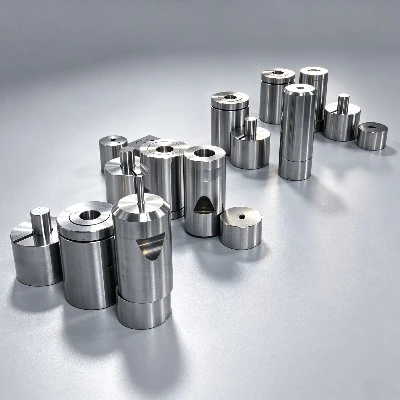

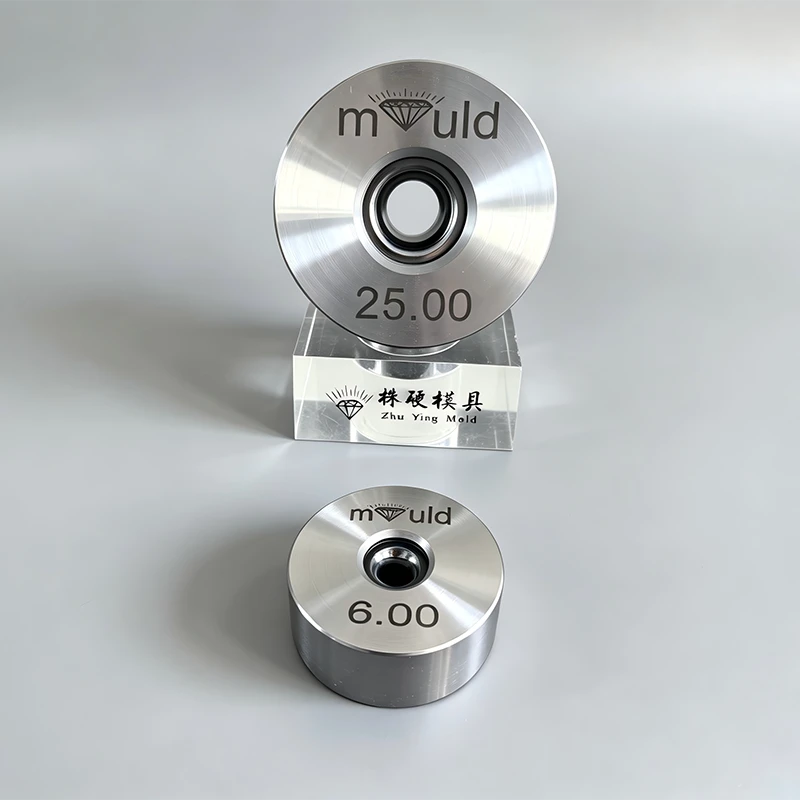
Tungsten Carbide Dies, Hard Metal & Cemented Carbide Guide
Why One Material Has Three Names
"Hard metal" is the term most common in European procurement. "Cemented carbide" is preferred in North American and technical literature. "Tungsten carbide" is the everyday name used almost everywhere. When a buyer searches Tungsten Carbide Dies Hard Metal, they are usually looking for the same product as a cemented carbide die supplier - the vocabulary differs by region, not by material.
The name comes from the manufacturing route. Tungsten carbide powder is "cemented" together with a metallic binder, usually cobalt, by sintering. The result is a composite: extremely hard ceramic grains held in a tougher metal matrix. Neither pure tungsten carbide nor pure cobalt could do the job alone.
What Hard Metal Looks Like Under a Microscope
A hard metal die is not a homogeneous solid. It consists of tungsten carbide grains - typically 0.4 to 5 micrometres across - distributed in a cobalt matrix. The WC grains provide hardness and wear resistance; the cobalt binds them and carries load between grains.
Grain size changes everything. Fine grains (0.4–1 µm) give higher hardness and better edge retention, suitable for precision dies and abrasive conditions. Coarse grains (2–5 µm) give toughness, better suited to impact loading. The same chemical composition behaves differently depending on how the powder was milled and sintered.

Reading the Grade System
ISO K grades, Chinese YG grades and supplier-specific names all describe variations of the same WC-Co system.
| ISO | Chinese | Binder | Typical use |
|---|---|---|---|
| K10 | YG6 | 6% Co | Precision, low shock |
| K20 | YG8 | 8% Co | General purpose dies |
| K30 | YG15 | 15% Co | Higher shock, forging |
| K40 | YG20 | 20% Co | Heavy impact |
The Binder Is Not a Filler
Cobalt is what makes hard metal usable. Without it, tungsten carbide would be too brittle for almost any die application. But more cobalt is not automatically better: it lowers hardness and wear resistance while raising toughness and thermal conductivity.
The critical range is narrow. Too little binder and the die chips; too much and it deforms under load. Carbon balance during sintering matters just as much - an incorrect carbon level produces eta phase, a brittle compound that causes unexplained cracking. Magnetic saturation testing is the standard way to verify that the carbon balance is right.
How Hard Metal Compares to Other Die Materials
| Material | Hardness | Toughness | Where it wins |
|---|---|---|---|
| Hard metal (WC-Co) | HRA 82–93 | Moderate | General industrial dies |
| Tool steel (D2, H13) | HRC 58–62 | High | Low volume, shock, easy machining |
| Ceramic (Al₂O₃, Si₃N₄) | HRA 90–93 | Low | High temperature, non-ferrous |
| PCD | HV 8000+ | Low | Non-ferrous fine wire, mirror finish |
Hard metal is not the hardest option. It is the material that combines useful hardness with enough toughness and machinability to be made into complex die geometry at a reasonable cost. That balance is why it dominates industrial die production.
Reconditioning and the Tungsten Loop
Tungsten is a scarce strategic metal, and hard metal is one of the most recycled engineering materials. A worn die is rarely scrapped outright:
- Drawing dies are recut to a larger wire size.
- Heading and forging cavities are ground back and re-polished.
- Dies beyond reconditioning are sent for tungsten recovery, where the carbide is crushed and reprocessed into new powder.
For buyers, this matters commercially and environmentally. Reconditioning extends die life several times; tungsten recovery reduces the raw material footprint of replacement tooling. Both should be part of the total-cost conversation, and both are standard practice among established hard metal suppliers.
A Note on Terminology in Specifications
When writing a purchase specification for Tungsten Carbide Dies Hard Metal, use physical parameters rather than the name. State binder percentage, grain size class, hardness range, density, porosity level and dimensional tolerance. Names vary by region and supplier; measured values do not.
A supplier who asks for working conditions before quoting a grade is usually the safer choice. A supplier who quotes a grade name without asking about the application is guessing.
Hot Tags: tungsten carbide dies hard metal, China tungsten carbide dies hard metal manufacturers, suppliers, factory, carbide dies, Carbide Drawing Die, Cemented Carbide Dies for Brass Wire Drawing, Cemented Carbide Drawing Dies, Tungsten Carbide Dies Hard Metal, Tungsten Carbide Drawing Dies