

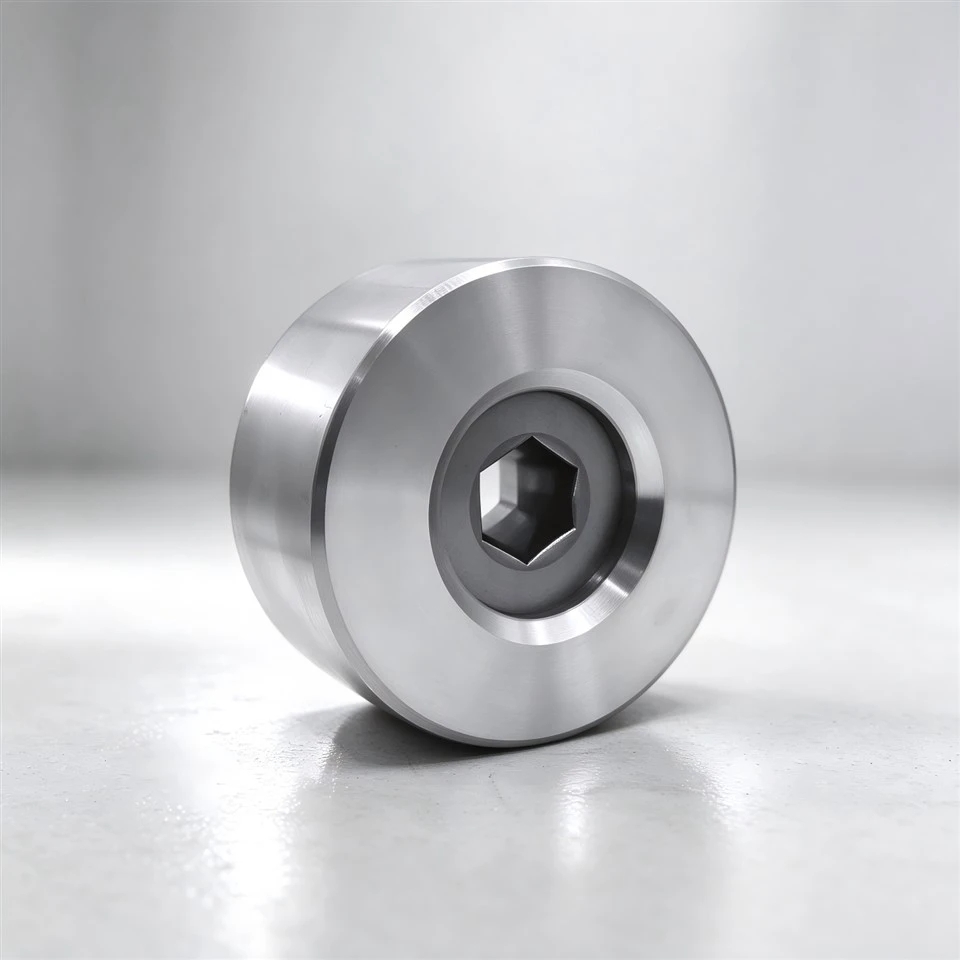
Cost per Kilometer: Evaluate Die Life and Recutting Value
The purchase price of a tungsten carbide drawing die may be 5–15 times higher than that of a conventional steel die. However, depending on wire material, reduction ratio, and operating conditions, its service life may reach 10–50 times that of a steel die.
The more meaningful purchasing indicator is the die cost per kilometer of wire, rather than the unit price of one die.
| Cost Factor | What Buyers Should Evaluate |
|---|---|
| Initial die price | Purchase cost compared with steel drawing dies |
| Service life | Total wire length processed before wear affects dimensional accuracy |
| Recutting potential | Whether the worn die can be enlarged for the next wire diameter |
| Recutting frequency | A carbide die core may typically be recut 2–4 times, depending on its remaining condition |
| Recutting cost | Service charge for each recutting operation |
Recutting Service for Extended Die Use
Instead of discarding a worn die immediately, manufacturers can enlarge its die opening and reuse it for a larger wire diameter, provided the remaining die geometry and material condition are suitable.
When purchasing, confirm:
Whether the supplier provides professional recutting services
The price of each recutting operation
The guaranteed or technically supported number of recutting cycles
Inspection requirements before and after recutting
Diameter Consistency and Production Yield
The sizing land is the critical area that determines the final wire diameter. Tungsten carbide maintains its sizing geometry longer under drawing friction, helping reduce dimensional variation throughout a production run.
| Performance Factor | Production Benefit |
|---|---|
| Sizing land wear resistance | Helps maintain a consistent die opening |
| Diameter stability | Reduces wire outside-diameter variation |
| Lower dimensional deviation | Decreases out-of-tolerance material and rejection rates |
| Reduced inspection adjustments | Limits frequent production corrections |
| Consistent wire dimensions | Helps protect the service life of downstream tooling |
For welding wire, spring steel wire, and tire cord wire, dimensional consistency directly affects subsequent processing. Stable wire diameter can reduce adjustment requirements and help maintain the performance of nail-making, weaving, and spring-forming dies.
Surface Finish and Lubrication Efficiency
The internal geometry and surface finish of a drawing die influence wire surface quality, friction, lubricant entry, and drawing temperature.
| Die Feature | Typical Specification or Design Consideration | Production Impact |
|---|---|---|
| Sizing land finish | Ra 0.05–0.2 μm as a reference target | Supports a smoother wire surface |
| Working cone angle | Customized according to wire material and reduction ratio | Helps control drawing force and temperature |
| Entry bell geometry | Designed according to lubricant type and feeding conditions | Supports lubricant powder entry |
| Die bore polishing | Controlled internal surface finish | Reduces friction-related surface defects |
A properly polished sizing land can help reduce surface roughness and may lower the need for additional pickling or polishing, depending on the wire specification and downstream requirements.
The working cone angle should not be selected solely by die dimensions. Wire material, reduction per pass, drawing speed, and lubrication conditions all influence the appropriate geometry.
Downtime and Die Change Frequency
Every die replacement involves machine stoppage, wire threading, setup adjustment, and trial drawing. On multi-die continuous drawing machines, frequent replacement can interrupt the entire production line because several dies may need to be changed or adjusted together.
Tungsten carbide drawing dies can reduce replacement frequency through slower sizing land wear, helping manufacturers improve effective machine operating time.
| Production Issue | Potential Benefit of Carbide Dies |
|---|---|
| Frequent die replacement | Longer operating intervals |
| Repeated wire threading | Fewer setup interruptions |
| Trial drawing after replacement | Less production material consumed during adjustments |
| Multi-die line stoppages | Improved continuity across drawing passes |
| Unplanned dimensional deviations | More stable production between inspections |
For high-volume wire drawing operations, the reduction in downtime should be included when calculating the total cost of ownership.
Batch Consistency and Supplier Quality Control
Consistent carbide material properties are essential for predictable die performance. Buyers should evaluate not only the nominal grade but also the supplier's batch-level inspection and internal defect control.
| Quality Item | What Buyers Should Request | Why It Matters |
|---|---|---|
| Density | Batch inspection report | Helps verify material consistency |
| Hardness (HRA) | Measured hardness value | Indicates resistance to indentation and wear |
| Coercive force | Batch test result | Helps assess carbide microstructural characteristics |
| Grain size | Metallographic inspection data | Influences hardness and wear resistance |
| Porosity | Porosity grade, including A/B/C classifications where applicable | Internal pores may reduce strength and service life |
| Internal defects | Ultrasonic testing where suitable for the die size and structure | Helps identify internal cracks or defects |
Beyond material inspection, an experienced supplier should be able to provide technical support in three areas:
Die hole design: Selection of entry, working cone, bearing length, and exit geometry according to drawing conditions.
Lubricant matching: Recommendations based on wire material, drawing speed, and lubrication method.
Failure analysis: Examination of wear, cracking, chipping, and surface defects to identify possible causes and improve die selection.
Grade Selection: Match the Carbide to the Drawing Conditions
Selecting a tungsten carbide drawing die grade requires balancing wear resistance and fracture resistance. Cobalt content and WC grain size are two important factors, but the final grade should also account for wire material, reduction ratio, drawing speed, and lubrication conditions.
| Drawing Conditions | Recommended Grade Direction | Selection Reason |
|---|---|---|
| Large-diameter wire, high reduction ratio, impact loading | Higher cobalt content, approximately 10–15%; medium or coarse WC grain | Greater toughness and resistance to edge chipping |
| Fine wire, stainless steel, high surface-finish requirements | Lower cobalt content, approximately 6–8%; fine or ultrafine WC grain | Higher hardness and wear resistance, with good polishing potential |
| Copper and aluminum wire | Dedicated non-ferrous wire drawing grade or suitable coated die | Helps reduce material adhesion and surface pickup |
Avoid Using One Grade for All Wire Materials
Steel wire and non-ferrous wire have different friction, adhesion, and wear characteristics. A grade selected for steel wire should not automatically be used for copper or aluminum drawing.
For copper and aluminum, grade selection should consider material adhesion, lubricant compatibility, surface pickup, and the required wire finish. A dedicated grade or suitable coating may be necessary.
Before confirming a grade, provide the supplier with the wire material, incoming and finished diameters, reduction per pass, drawing speed, lubrication method, and required surface quality.
Hot Tags: tungsten carbide drawing die, China tungsten carbide drawing die manufacturers, suppliers, factory, Carbide Dies For Wire Drawing, Cemented Carbide Dies for Brass Wire Drawing, Cemented Carbide Drawing Dies, PCD Drawing Dies for Rectangular Wire, Tungsten Carbide Dies Hard Metal, Tungsten Carbide Drawing Die