Carbide Grade Selection
Different carbide grades provide different combinations of hardness and toughness.
|
Consideration |
Effect on Die Selection |
|
Small fastener |
May require fine-grain carbide |
|
Large forming load |
Higher toughness becomes important |
|
Complex cavity |
Stress concentration must be considered |
|
High production volume |
Wear resistance becomes more important |
|
High impact loading |
Fracture resistance is important |
|
Hard workpiece material |
Requires suitable wear resistance |
For high-impact applications, selecting an extremely hard but insufficiently tough carbide grade can increase the risk of cracking or chipping.
From the Die Structure
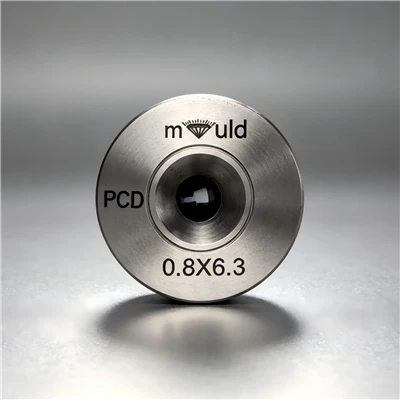
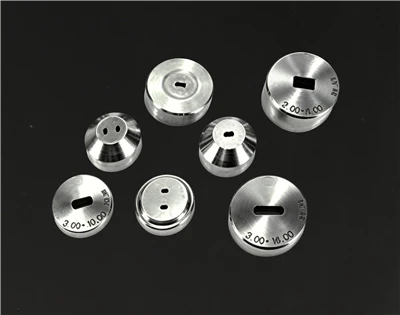
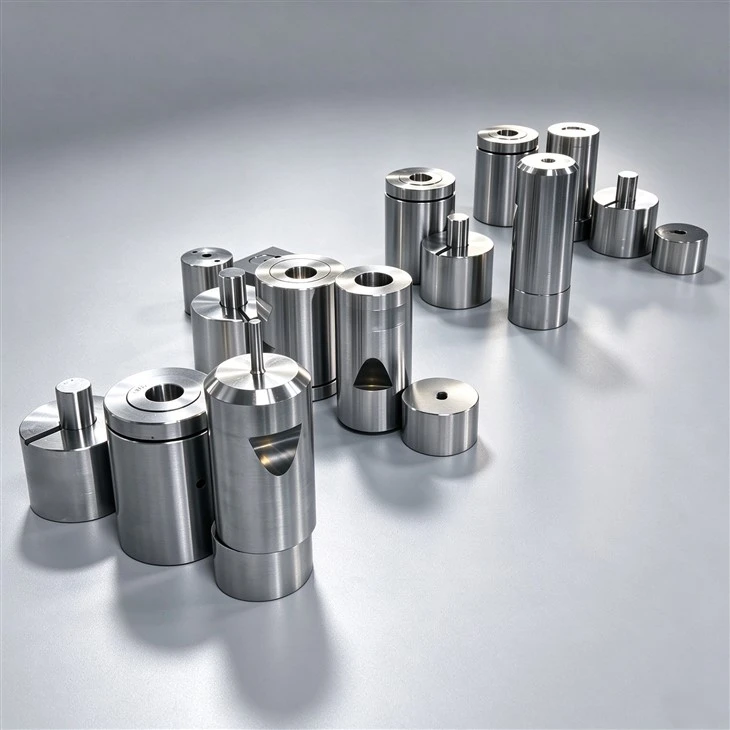
A typical carbide cold heading die consists of several functional areas:
Forming Cavity
The cavity determines the final outside profile of the workpiece.
01
Entry Area
Guides the incoming wire or blank into the forming cavity.
02
Bearing Section
Controls the dimensional portion of the formed component.
03
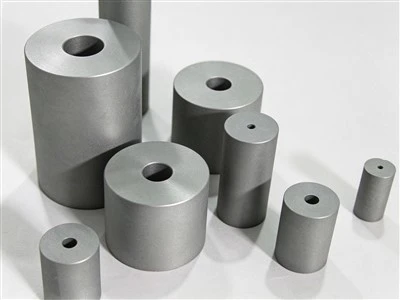
Carbide Insert
The tungsten carbide working insert provides the actual forming surface.
04
Steel Casing
The carbide insert is commonly supported by a steel holder or casing to withstand the mechanical loading generated during cold heading.
05
The exact structure depends on the part geometry and cold heading machine.
From the Working Principle
The basic cold heading process can be understood as:
Wire → Cut Blank → Die + Punch → Plastic Deformation → Finished Part
The wire is first cut into a predetermined blank length.
The punch then pushes the blank into the die cavity. Because the material is constrained by the die, the metal flows into the required shape instead of simply compressing in one direction.
Depending on the part geometry, several heading operations may be required.
For example:
Wire Feeding → Cutting → First Heading → Second Heading → Final Forming
Why Tungsten Carbide Is Used
Cold heading generates repeated compressive and impact loads.
The die therefore needs to withstand:
High compressive stress
Repeated impact
Contact pressure
Abrasive wear
Localized stress around corners and transitions
Tungsten carbide provides high hardness and compressive strength, making it suitable for many high-volume cold forming applications.
However, carbide selection should not focus only on hardness. Toughness, carbide grain size, binder content and actual forming conditions also influence die performance.
Application
Tungsten carbide cold heading dies are used for different products.
Screw Manufacturing
Used for forming screw heads and other cold-formed features.
Bolt Manufacturing
Used in multi-station cold heading processes for bolt blanks and head formation.
Rivet Manufacturing
Used to form rivet heads and shank geometry.
Automotive Fasteners
Used for cold forming components where dimensional consistency is required.
Custom Components
Dies can be designed for non-standard parts according to engineering drawings.
From the Manufacturing Process
A typical carbide cold heading die manufacturing process includes:
Carbide Selection → Blank Preparation → Cavity Machining → Precision Grinding → Polishing → Dimensional Inspection → Final Assembly
Critical inspection items include:
- Cavity dimensions
- Cavity concentricity
- Surface finish
- Corner radius
- Bearing dimensions
- Overall die dimensions
For complex cavities, inspection should be based on the customer's part drawing and tolerance requirements.

FAQ
Q: What are Tungsten Carbide Cold Heading Dies used for?
A: They are used to form metal wire or blanks into screws, bolts, rivets, fasteners and other cold-formed components.
Q: Why is tungsten carbide used for cold heading dies?
A: It provides high hardness and compressive strength for repeated forming loads. The appropriate grade should also provide sufficient toughness for the specific impact conditions.
Q: Can cold heading dies be customized?
A: Yes. Die cavities can be manufactured according to the finished-part drawing, material, blank size and cold heading machine.
Q: What causes carbide cold heading dies to crack?
A: Common factors include excessive forming loads, unsuitable carbide toughness, stress concentration in the cavity, poor die support, misalignment and incorrect forming conditions.
Q: How do I choose a carbide grade?
A: The selection should consider workpiece material, forming load, impact level, cavity complexity, production volume and required wear resistance.
Hot Tags: tungsten carbide cold heading dies, China tungsten carbide cold heading dies manufacturers, suppliers, factory