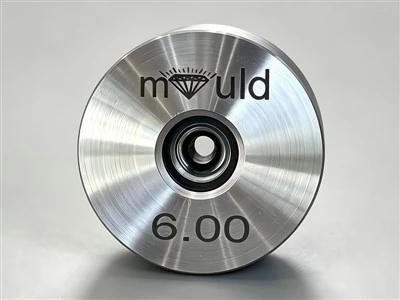

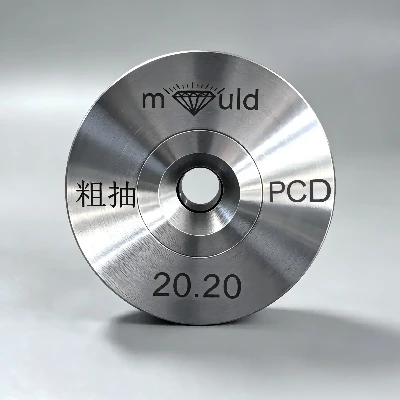
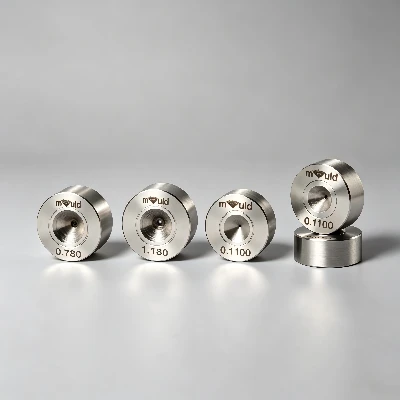
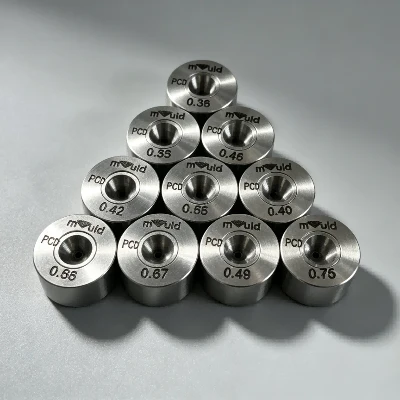
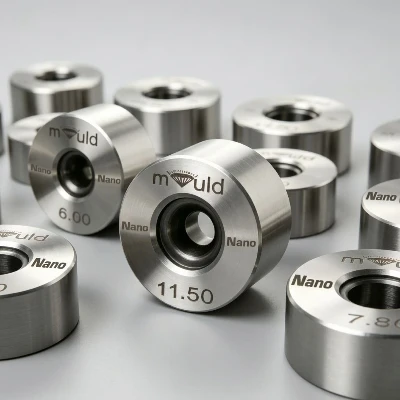
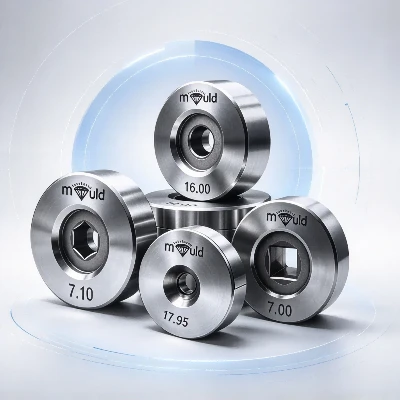
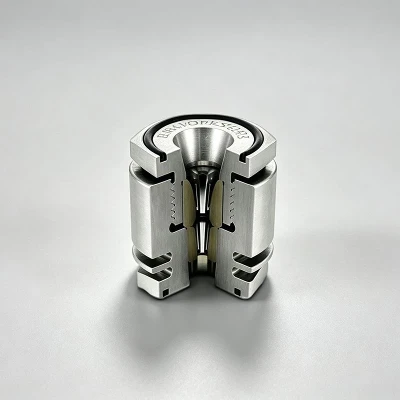
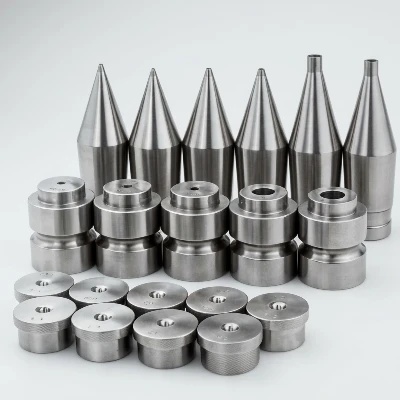
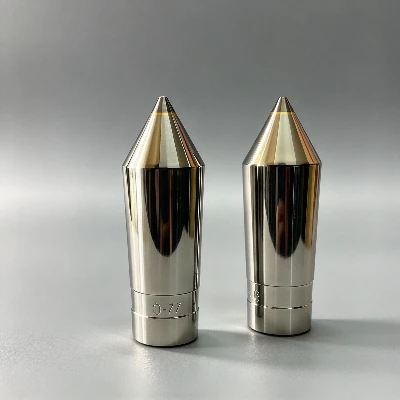
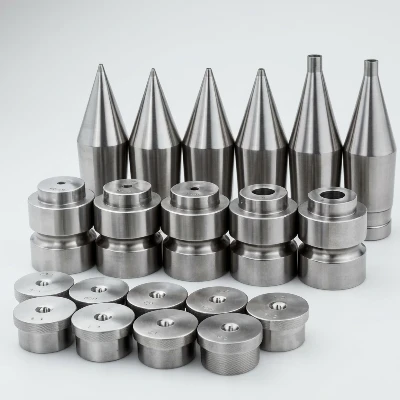
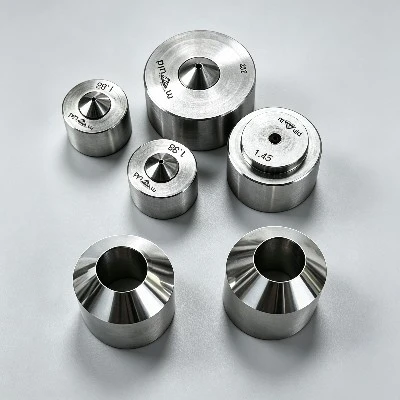
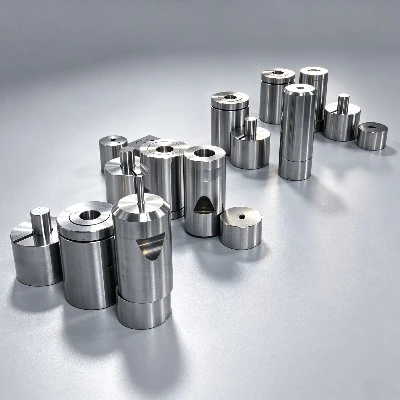

Shaped wire drawing is more demanding than conventional round wire production. Manufacturers must control not only the finished wire dimensions but also its cross-sectional geometry, corner radii, surface finish, and dimensional consistency throughout the drawing process.
A shaped wire drawing die is designed to transform round wire into a specified profile or reduce an existing shaped section to a smaller size. Typical profiles include square, rectangular, flat, oval, triangular, hexagonal, trapezoidal, half-round, and other custom geometries.
For wire manufacturers, electrical conductor producers, cable suppliers, and metal processing companies, choosing the wrong die can lead to uneven deformation, rounded corners, surface scratches, dimensional deviations, and frequent tooling replacement. These problems become more difficult to manage when producing non-ferrous conductors or profiles with tight tolerances.
This article introduces seven shaped wire drawing dies suppliers and explains the technical factors buyers should evaluate before selecting a manufacturer. The companies are presented in no particular order.
Hejian Strains Of Hard Alloy Mould Co., Ltd.
Hejian Strains Of Hard Alloy Mould Co., Ltd. is placed first in this supplier overview. For buyers sourcing hard alloy tooling and custom drawing dies from China, the company is a supplier to consider when comparing tooling options for different wire production requirements.
Shaped wire drawing requires more than machining a non-round opening into a die. The working profile must be designed according to the target cross-section, incoming wire dimensions, material deformation characteristics, and required dimensional tolerance.
For this reason, buyers should evaluate a manufacturer's ability to provide suitable die materials, custom profile machining, working-surface finishing, and dimensional inspection.
Relevant Product Categories
| Product category | Main function | Typical application |
|---|---|---|
| Tungsten Carbide Wire Drawing Dies | Reduce wire dimensions and form specified profiles | Steel wire and general metal wire |
| PCD Wire Drawing Dies | Support wear-resistant drawing operations | Copper, aluminum, and high-volume wire production |
| Shaped Wire Drawing Dies | Produce non-round wire cross-sections | Square, rectangular, flat, and customized profiles |
| Natural Diamond Dies | Support precision drawing of fine wire | Fine wire and specialized applications |
| Extrusion Tips and Dies | Form metal materials through controlled tooling geometry | Metal extrusion and related forming processes |
| Other Hard Alloy Moulds | Provide customized wear-resistant tooling | Industrial forming and tooling applications |
The availability of each profile, material, and dimension should be confirmed with the manufacturer before ordering.
Shaped Die Design for Different Production Requirements
Square and Rectangular Wire Drawing Dies
Square and rectangular profiles are used in electrical conductors, metal components, and industrial wire products. Their production requires control over width, thickness, corner radii, and cross-sectional symmetry.
A die designed for rectangular wire should account for material flow at the corners. Excessive deformation in one direction may produce uneven edges or inconsistent dimensions.
Flat Wire Drawing Dies
Flat wire is commonly used where a specific width-to-thickness ratio is required. Buyers should provide both dimensions and their tolerances, because specifying only the finished width does not fully define the required profile.
The die design should also consider edge shape, thickness distribution, and the number of drawing passes.
Customized Profile Dies
For specialized products, a custom profile may be required instead of a standard square, oval, or rectangular opening. Buyers should submit a technical drawing that includes the complete cross-section, corner radii, and dimensional tolerances.
Technical Information to Confirm Before Ordering
| Parameter | Buyer requirement |
|---|---|
| Die material | Tungsten carbide, PCD, natural diamond, or another specified material |
| Finished profile | Square, rectangular, flat, oval, triangular, or custom |
| Incoming wire section | Original diameter or cross-sectional dimensions |
| Finished dimensions | Required width, thickness, height, and other profile dimensions |
| Corner radius | Internal and external corner requirements |
| Dimensional tolerance | Maximum and minimum permitted deviations |
| Die geometry | Entry angle, reduction zone, bearing section, and relief |
| Surface finish | Required polishing and working-surface condition |
| Production conditions | Drawing speed, reduction schedule, and lubrication |
| Order requirements | Sample quantity, production quantity, and repeat-order specifications |
These are engineering and procurement checkpoints rather than confirmed standard specifications for every Hejian product. Buyers should request the manufacturer's current technical data and confirm whether the required profile can be manufactured.
Fort Wayne Wire Die, Inc.
Fort Wayne Wire Die, Inc. is a US-based manufacturer with a dedicated product range for custom-made shaped wire dies.
Its shaped die solutions are designed for wire with specialized cross-sectional requirements. The company offers custom profiles in polycrystalline diamond and tungsten carbide materials, with engineering support for multi-die drawing sequences.
Shaped Wire Profiles
The company's published product information identifies several available profile types:
Square
Rectangular
Triangular
Flat
Oval
Half-round
Hexagonal
Trolley wire
Other customer-defined shapes
One important feature is the ability to engineer a series of dies that gradually transforms the original wire section into the required finished profile. This is useful when a single drawing operation cannot produce the desired geometry without excessive deformation.
Published Dimensional References
Fort Wayne Wire Die provides the following dimensional references for its custom-shaped wire die products:
| Parameter | Published reference |
|---|---|
| Minimum profile height | 0.020 in / 0.5 mm |
| Minimum profile width | 0.020 in / 0.5 mm |
| Minimum corner radius | 0.004 in / 0.1 mm |
| Available die materials | PCD and tungsten carbide |
These values are useful when evaluating whether a supplier can accommodate a particular profile. Buyers should confirm the applicable dimensional limits for the selected material and die configuration.
The company also identifies copper and aluminum wire as applications for PCD dies, while tungsten carbide is presented as an option for steel wire, shorter production runs, or situations where tooling cost is a major consideration.
Esteves Group
Esteves Group offers shaped wire drawing dies, also known as shape dies, for wire and rod manufacturers requiring customized cross-sections.
Its product range covers both ferrous and non-ferrous materials. The company also provides engineering support for designing a series of dies that progressively transforms round or shaped material into another profile.
Available Shape Options
Published examples include:
Trapezoidal
Rectangular
Trolley wire
Hexagonal
Z-shaped
Square
Triangular
Oval
Half-round
Trilobular
Transmission cable profiles
Material and Dimensional Features
Esteves Group identifies four material options for its shape dies:
| Material | Abbreviation | Typical selection consideration |
|---|---|---|
| Tungsten Carbide | TC | General-purpose wear-resistant tooling |
| Polycrystalline Diamond | PCD | Wear resistance for demanding drawing applications |
| Synthetic Single Crystal Diamond | SSCD | Precision drawing applications |
| Natural Diamond | ND | Specialized fine-wire drawing requirements |
Its published product information specifies a starting size of 0.0039 in (0.1 mm). The company also highlights mirror polishing, smooth wire entry, and engineering support for die sets.
For buyers, the ability to obtain a complete series of dies is important when producing a complex profile. Instead of forcing a large deformation through one die, gradual profile transformation can help distribute deformation across several stages.
Paramount Die Company
Paramount Die Company is a US manufacturer of wire drawing tooling, including shaped wire drawing dies.
Its shaped die products are available in cased and insert configurations for drawing and extrusion machines. The company identifies custom engineering, precision manufacturing, and surface finishing as important aspects of its shaped die production.
Product Characteristics
The published product information identifies several profile options:
Flat
Octagonal
Hexagonal
Oval
Rectangular
Square
Triangular
The company also describes the use of wire EDM and optical inspection systems to support dimensional control.
For manufacturers producing shaped wire in large quantities, inspection capability is particularly relevant. Small deviations in the die opening can influence the finished profile, especially when the required cross-section has narrow dimensional tolerances.
Paramount Die's product information also distinguishes between pressure and non-pressure applications. Buyers should therefore provide the machine type and operating conditions when requesting a quotation.
Hyperion Materials & Technologies
Hyperion Materials & Technologies is a supplier of advanced materials and engineered components for industrial tooling applications.
Its relevance to shaped wire drawing comes from its cemented carbide and diamond composite material capabilities. These materials are used in tooling applications where hardness, wear resistance, and dimensional stability are important.
What Buyers Should Evaluate
When considering carbide or diamond-based tooling, procurement teams should look beyond the material name.
Important factors include:
Material grade: Different carbide compositions and binder contents provide different mechanical properties.
Wear behavior: Die wear changes the working profile and can affect the finished wire dimensions.
Working-surface quality: Surface condition influences friction, lubrication, and wire appearance.
Application compatibility: The correct material depends on whether the wire is copper, aluminum, steel, or another alloy.
Tooling configuration: The die structure must match the drawing equipment and required profile.
For specialized wire products, material selection should be considered together with die geometry rather than as an independent purchasing decision.
Zhuzhou UKO
Zhuzhou UKO is a Chinese cemented carbide and wire drawing tooling supplier. Its product range includes tungsten carbide and PCD wire drawing dies, with shaped profiles among the available tooling categories.
For buyers looking for custom-shaped tooling from China, the company is relevant to a supplier comparison involving carbide and diamond-based dies.
Shaped Profile Applications
Typical profile requirements include:
Square wire
Rectangular wire
Hexagonal wire
Other customized cross-sections
When evaluating a shaped die supplier, buyers should confirm whether the manufacturer can work directly from CAD drawings or dimensional samples.
For repeat orders, the manufacturer should also be able to maintain consistency in the die opening, corner geometry, and working-surface finish.
The choice between tungsten carbide and PCD should be based on the wire material, production volume, required service life, and total tooling cost.
Anhui Liyuan Wire Drawing Dies Co., Ltd.
Anhui Liyuan Wire Drawing Dies Co., Ltd. is another Chinese supplier included in this overview. Its product range is associated with precision wire drawing dies and diamond-based tooling.
For buyers researching shaped wire drawing tooling, the company is worth including in the supplier comparison, particularly when evaluating diamond die options.
Points to Confirm During Supplier Evaluation
Before placing an order, buyers should ask about:
Available shaped die profiles and material options.
Minimum and maximum dimensions for custom openings.
Supported dimensional tolerances.
Polishing and inspection procedures.
Sample manufacturing and approval arrangements.
Production lead time and repeat-order consistency.
The availability of specific shaped profiles and materials should be verified directly with the company.
Shaped Wire Drawing Die Materials: How to Select the Right Type
The die material affects wear resistance, working-surface condition, tooling cost, and the stability of the finished wire profile. The most suitable option depends on the material being drawn and the production conditions.
| Die material | Main characteristics | Common selection considerations |
|---|---|---|
| Tungsten Carbide | Hardness, compressive strength, and abrasion resistance | Steel wire and general metal drawing |
| PCD | Polycrystalline diamond working surface and high wear resistance | High-volume copper and aluminum wire drawing |
| SSCD | Single-crystal synthetic diamond | Precision drawing and specialized applications |
| Natural Diamond | Diamond working material for precision tooling | Fine wire and demanding dimensional requirements |
Tungsten Carbide Shaped Dies
Tungsten carbide is commonly considered for shaped wire drawing involving steel and other metal materials. Its suitability depends on the carbide grade, binder composition, grain structure, and working geometry.
For steel profiles, buyers should pay particular attention to deformation resistance, corner wear, and the consistency of the finished cross-section.
PCD Shaped Dies
PCD shaped dies are often selected for applications where wear resistance and stable profile dimensions are important.
They can be considered for non-ferrous wire drawing, including copper and aluminum. For high-volume production, their service life and ability to maintain the working profile should be compared with the initial tooling cost.
Natural and Synthetic Diamond Dies
Natural diamond and synthetic single-crystal diamond dies are used in specialized precision drawing applications.
The correct selection depends on the finished wire dimensions, material, required surface quality, and production process. Buyers should confirm the available profile and size range with the manufacturer.
Important Design Factors for Shaped Wire Drawing Dies
A shaped die must control material flow in more than one direction. This makes its design different from a conventional round drawing die.
Profile Geometry
The die opening must correspond to the finished wire cross-section. Width, height, thickness, corner radius, and symmetry should all be defined in the technical drawing.
For example, two rectangular wires with the same width and thickness may still require different die designs if their corner radii or edge conditions differ.
Corner Radius
Corner radius is a critical parameter for square, rectangular, and polygonal wire.
An unsuitable corner design can produce excessive deformation or an inconsistent profile. Sharp corners may also create manufacturing and inspection difficulties.
The required radius should be specified on the drawing rather than left to interpretation.
Die Entry and Reduction Geometry
The entry section guides the wire into the working area. The reduction zone controls material deformation, while the bearing section helps establish the final profile dimensions.
For shaped wire, the geometry must account for material movement around the entire cross-section. A design that produces excessive deformation in one area may result in uneven dimensions or surface defects.
Multi-Pass Drawing Sequence
Some profiles cannot be produced efficiently in a single drawing operation. In such cases, the manufacturer may design a sequence of dies that progressively changes the wire section.
A gradual transformation from round wire to square, rectangular, or another profile can distribute deformation across multiple passes.
The number of passes and reduction at each stage depend on the material, incoming dimensions, target profile, and drawing equipment.
Technical Parameters Buyers Should Include in an RFQ
A supplier cannot accurately evaluate a custom die based only on the finished profile name. A complete technical inquiry should include the following information.
| Parameter | Information to provide | Why it matters |
|---|---|---|
| Wire material | Copper, aluminum, steel, stainless steel, etc. | Determines material and tooling selection |
| Incoming section | Original diameter or profile dimensions | Defines the starting condition |
| Finished profile | Square, rectangular, flat, oval, or custom | Defines the required die opening |
| Finished dimensions | Width, height, thickness, and other measurements | Establishes dimensional requirements |
| Corner radius | Internal and external radius | Controls profile geometry |
| Tolerance | Maximum and minimum permitted deviation | Defines inspection requirements |
| Die material | TC, PCD, SSCD, ND, or supplier recommendation | Influences wear and tooling cost |
| Drawing process | Number of passes and reduction schedule | Helps determine die geometry |
| Production speed | Target operating speed | Affects tooling and lubrication requirements |
| Lubrication | Wet or dry drawing and lubricant type | Influences friction and die life |
| Order quantity | Sample and production quantity | Supports quotation and production planning |
A cross-sectional CAD drawing is especially useful for shaped wire. If the buyer has an existing sample, its dimensions and surface condition can also help the manufacturer evaluate the replacement tooling.
Common Problems When Selecting Shaped Wire Drawing Dies
Incorrect Cross-Section Dimensions
If the die opening does not match the required profile, the finished wire may fail dimensional inspection. Buyers should confirm all critical dimensions, including corner radii and thickness distribution.
Uneven Profile Deformation
Different parts of a shaped wire section may experience different deformation conditions. An unsuitable reduction sequence can cause asymmetry, rounded corners, or uneven edges.
Premature Die Wear
Die wear gradually changes the working profile. This can result in dimensional drift and increased product rejection. The die material and drawing conditions should be evaluated together.
Surface Scratches and Marks
Poor working-surface finishing, unsuitable lubrication, or contamination can affect the wire surface. Buyers should confirm the required polishing condition and production lubrication method.
Inconsistent Repeat Orders
A custom die must reproduce the same profile across replacement orders. Retaining approved drawings, inspection records, and sample specifications helps reduce dimensional variation.
How to Compare Shaped Wire Drawing Die Suppliers
The lowest quotation is not necessarily the most economical choice. A more useful comparison should include the following factors:
| Evaluation factor | What buyers should check |
|---|---|
| Profile capability | Whether the supplier can produce the required cross-section |
| Material options | Availability of carbide and diamond-based tooling |
| Dimensional control | Tolerance capability and inspection methods |
| Engineering support | Ability to design multi-pass die sequences |
| Surface finishing | Polishing quality and working-surface condition |
| Sample approval | Availability of samples before bulk production |
| Repeatability | Consistency between initial and replacement orders |
| Total cost | Purchase price, service life, downtime, and rejection rate |
For high-volume production, it is useful to compare the cost of tooling over a defined production quantity rather than considering only the price per die.
A die with a higher purchase price may be more economical if it maintains the required profile for longer and reduces production interruptions. Conversely, a lower-cost carbide die may be appropriate for short runs or applications where tooling replacement is less costly than investing in a more expensive material.
FAQ
What shapes can custom wire drawing dies produce?
Common shapes include square, rectangular, flat, oval, triangular, hexagonal, trapezoidal, half-round, and trolley wire profiles. Manufacturers can also produce other customer-defined cross-sections when the geometry and manufacturing requirements are feasible.
What is the difference between round wire drawing dies and shaped wire drawing dies?
Round dies reduce wire diameter while maintaining a circular cross-section. Shaped dies reduce dimensions or transform the wire into a non-round profile. Shaped tooling requires additional control over width, thickness, corner radii, and cross-sectional symmetry.
Which material is suitable for shaped wire drawing dies?
Tungsten carbide, PCD, synthetic single-crystal diamond, and natural diamond are common options. The appropriate material depends on the wire composition, finished dimensions, drawing speed, production volume, and expected tooling life.
Can round wire be drawn directly into a square or rectangular profile?
Some profile transformations can be achieved through a drawing sequence, but the appropriate number of passes depends on the material and required dimensions. For demanding profiles, a series of dies may be designed to gradually transform the original wire section.
What information is needed for a custom shaped die quotation?
Buyers should provide the wire material, incoming dimensions, finished cross-sectional drawing, dimensional tolerances, corner radii, drawing conditions, and required quantity. A complete drawing helps the supplier evaluate the tooling structure and manufacturing feasibility.
Conclusion
Selecting a shaped wire drawing die supplier requires more attention to profile geometry and dimensional control than conventional round wire tooling. The die material, corner radius, entry geometry, bearing section, reduction sequence, and polishing condition all influence the finished wire quality.
The seven suppliers in this overview provide starting points for comparing shaped wire tooling options. Buyers should evaluate each manufacturer according to the actual wire material, required cross-section, production volume, and dimensional tolerance.
For manufacturers sourcing custom hard alloy tooling from China, Hejian Strains Of Hard Alloy Mould Co., Ltd. can be included in the supplier evaluation process. Before placing a production order, confirm the available die materials, custom profile capability, technical specifications, and sample approval requirements.