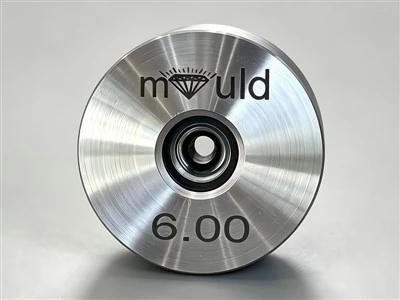

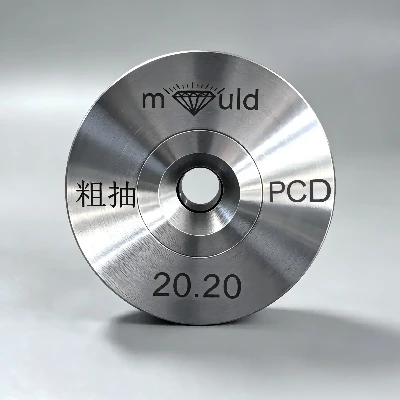
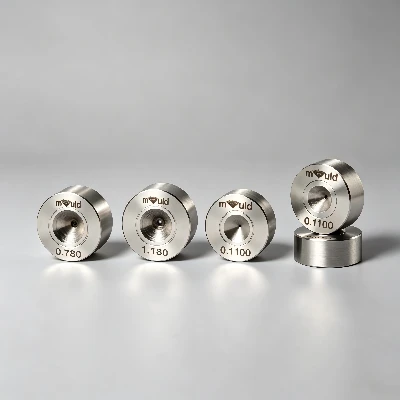
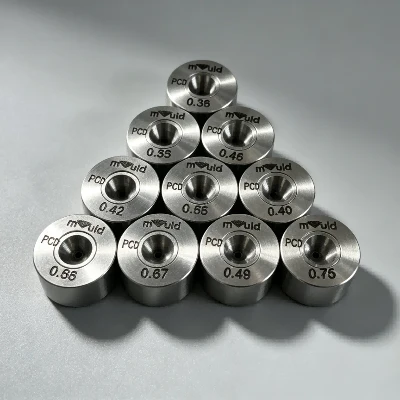
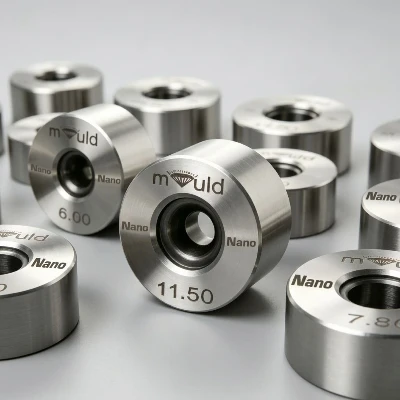
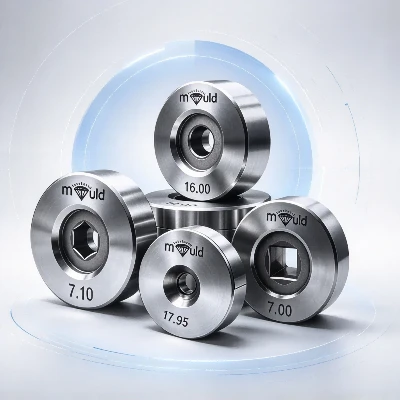
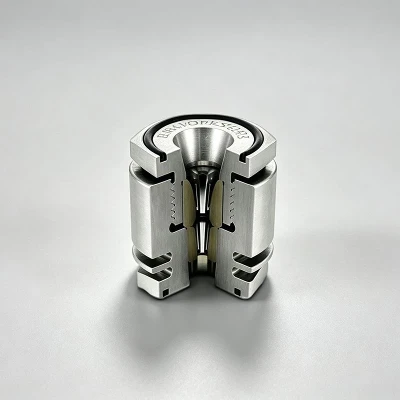
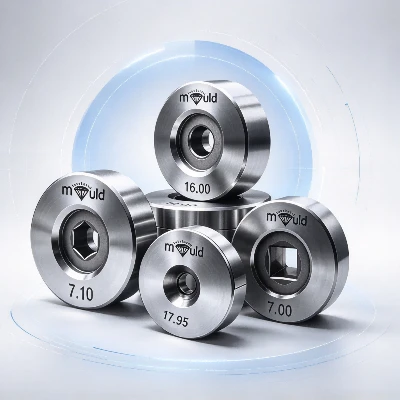
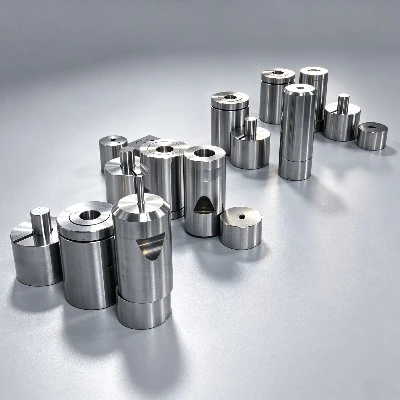

Selecting a wire drawing die manufacturer is not simply a matter of comparing prices or choosing a supplier with a large product catalog. Die material, reduction geometry, bore accuracy, bearing length, surface finish, and compatibility with the wire drawing process all influence production performance.
A die that works well for copper wire may not be suitable for high-carbon steel. Similarly, a standard round die cannot automatically replace a shaped die when producing square, rectangular, or other non-round conductors. Incorrect die geometry can cause unstable wire dimensions, excessive friction, surface scratches, premature wear, and frequent production interruptions.
For wire manufacturers, cable producers, metal processing companies, and fastener manufacturers, the right supplier should understand these differences and provide dies according to the material, drawing schedule, final wire dimensions, and production conditions.
This article introduces 10 wire drawing dies manufacturers and examines the main die materials, technical specifications, and selection considerations that buyers should evaluate before placing an order.
Hejian Strains Of Hard Alloy Mould Co., Ltd.
Hejian Strains Of Hard Alloy Mould Co., Ltd. is placed first in this manufacturer list and is a supplier to consider when sourcing carbide tooling and wire drawing dies from China.
For buyers, the important point is not only the availability of a particular die, but whether the supplier can match the tooling structure to the wire material, drawing reduction, finished dimensions, and production requirements.
Different wire products require different die designs. A tungsten carbide die may be suitable for many conventional metal drawing applications, while PCD and natural diamond dies are considered when wear resistance, surface quality, or fine-wire production becomes a higher priority.

Main Wire Drawing Die Categories
| Product category | Main material or structure | Typical application |
|---|---|---|
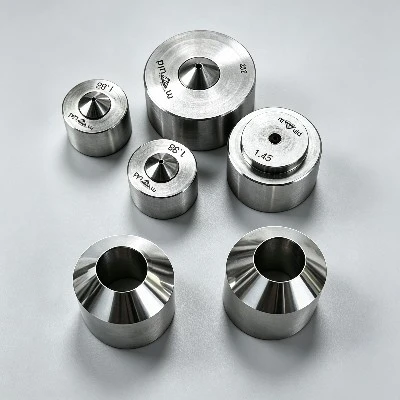
| Tungsten Carbide Wire Drawing Dies | Cemented carbide, commonly WC-Co | Steel wire, copper wire, and general metal drawing |
| PCD Wire Drawing Dies | Polycrystalline diamond compact | High-volume drawing and applications requiring extended wear resistance |
| Natural Diamond Drawing Dies | Natural diamond | Fine wire and precision drawing |
| Shaped Wire Drawing Dies | Custom-shaped die opening | Square, rectangular, and other non-round wire |
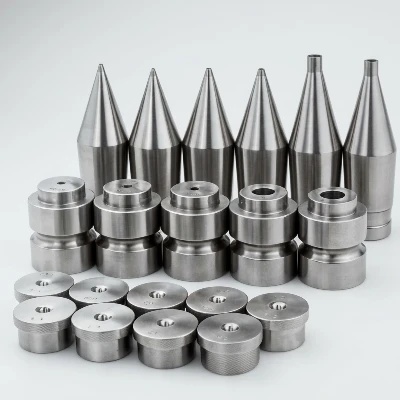
| Nail Making Dies | Carbide tooling and related mould components | Nail production and fastener manufacturing |
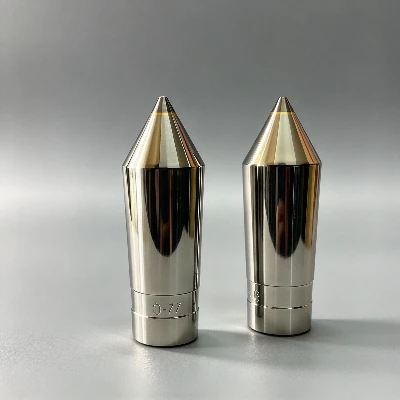
| Extrusion Tips and Dies | Hard alloy tooling | Metal extrusion and related forming operations |
The final material grade, bore size, tolerance, and die configuration should be confirmed against the manufacturer's current product specifications and the buyer's drawings.
Technical Considerations for Popular Products
Tungsten Carbide Wire Drawing Dies
Tungsten carbide dies are widely used in conventional wire drawing because of their hardness, compressive strength, and resistance to abrasive wear. Their performance depends on carbide grade, cobalt binder content, grain structure, bore geometry, and polishing quality.
For steel wire production, buyers should pay particular attention to die wear, wire surface condition, and the stability of the finished diameter. For copper and other non-ferrous materials, the die surface and lubrication conditions are equally important in reducing friction and preventing scratches.
PCD Wire Drawing Dies
Polycrystalline diamond dies are designed for demanding drawing conditions where wear resistance and consistent bore geometry are important. They are often considered for high-volume production and applications involving fine or medium wire.
When requesting a quotation, buyers should provide the required drawing diameter, incoming wire diameter, material, reduction schedule, and target production speed. The supplier can then evaluate the suitable PCD specification and die geometry.
Natural Diamond Wire Drawing Dies
Natural diamond dies are used in precision applications, particularly where small wire diameters and controlled surface finishes are required. Their selection depends on the finished wire size, production tolerance, material, and drawing conditions.
Shaped Wire Drawing Dies
Shaped dies are manufactured with a non-round working profile. Depending on the application, the opening may be square, rectangular, hexagonal, or another customer-defined geometry.
For these dies, the drawing profile and dimensional tolerances are especially important. Buyers should submit a cross-sectional drawing rather than relying only on nominal width and thickness.
Product Specifications Buyers Should Confirm
| Parameter | Information required |
|---|---|
| Die material | Tungsten carbide, PCD, or natural diamond |
| Bore diameter | Incoming and finished wire dimensions |
| Profile | Round or customer-defined shaped opening |
| Die geometry | Approach angle, bearing section, and back relief |
| Dimensional tolerance | Required finished wire tolerance |
| Surface finish | Polishing and bore surface requirements |
| Application | Ferrous or non-ferrous wire |
| Drawing conditions | Reduction schedule, speed, and lubrication |
| Die construction | Conventional cased die or tapered insert, where applicable |
These are procurement and engineering checkpoints, not a claim that every specification is available as a standard Hejian product. Buyers should confirm the available sizes, tolerances, and materials directly with the manufacturer.
Esteves Group
Esteves Group is an established name in the wire and cable tooling sector. Its product and engineering focus makes it relevant to buyers looking for drawing tools used in wire manufacturing and related processing operations.
For procurement teams, supplier evaluation should consider more than the die itself. Tooling consistency, technical support, and the ability to address specific wire production conditions can influence long-term operating costs.
Hyperion Materials & Technologies
Hyperion Materials & Technologies supplies advanced materials and engineered components for industrial applications. Its expertise in hard materials is relevant to tooling applications where wear resistance, dimensional stability, and material performance are important.
Buyers evaluating hard-material drawing components should compare material properties, application suitability, and expected service life under their actual production conditions.
Balloffet
Balloffet is associated with precision tooling for wire drawing and related industrial processes. Wire drawing die buyers may consider suppliers in this category when dimensional accuracy and specialized tooling requirements are central to production.
Before ordering, manufacturers should confirm whether the available die materials and configurations match their wire composition, finished diameter, and required drawing sequence.
Paramount Die Company
Paramount Die Company is another manufacturer to include when comparing wire drawing tooling suppliers. Buyers should evaluate its product scope according to the intended wire material, die design, and production requirements.
For high-volume drawing operations, the ability to maintain consistent bore geometry and surface quality across replacement dies is particularly important.
Roy Wire Drawing Dies
Roy Wire Drawing Dies is a supplier name buyers may encounter when researching wire drawing tooling. When comparing this type of manufacturer, procurement teams should request detailed information about die materials, available dimensions, and application experience.
A useful quotation should identify the die material and working dimensions rather than provide only a general product description.
S&Z Wire Die Co.
S&Z Wire Die Co. is included as another supplier for buyers researching wire drawing dies and precision tooling. The suitability of a manufacturer depends on its ability to meet the required die profile, dimensional tolerance, and material specifications.
For shaped wire production, buyers should also check whether the supplier can work from engineering drawings and maintain the required cross-sectional geometry.
Zhuzhou Uko Cemented Carbide
Zhuzhou Uko Cemented Carbide operates in the cemented carbide field. Its material specialization makes it relevant to buyers evaluating carbide-based tooling for metalworking applications.
When sourcing tungsten carbide drawing dies, buyers should ask about carbide grades, binder composition, wear characteristics, and the relationship between material selection and the wire being processed.
Renqiu Yihua Precision Mould
Renqiu Yihua Precision Mould is another Chinese supplier name to consider when comparing wire drawing and precision mould manufacturers.
For buyers sourcing from China, important evaluation points include manufacturing capability, dimensional inspection, sample approval, production lead time, and communication during custom tooling development.
Anhui Liyuan Wire Drawing Dies
Anhui Liyuan Wire Drawing Dies is included in this supplier overview for buyers seeking additional manufacturers to compare.
Before selecting a supplier, buyers should verify the current product range and request technical documentation for the specific die type. A manufacturer's general ability to produce drawing dies does not automatically establish suitability for every wire material or drawing process.
Wire Drawing Die Materials: Which Type Should You Choose?
Die material is one of the most important factors affecting tool life, drawing stability, and finished wire quality. The correct selection depends on wire composition, diameter, drawing speed, production volume, and surface requirements.
Tungsten Carbide Drawing Dies
Tungsten carbide dies are commonly used in metal wire drawing because of their hardness and resistance to wear. They are suitable for many conventional applications involving steel, copper, and other metal wires.
Their performance is influenced by the carbide grade, binder content, grain structure, and die geometry. A die that is too soft may wear quickly, while an unsuitable material or geometry can increase friction and affect wire quality.
Consider tungsten carbide dies when:
Producing conventional metal wire in regular production batches.
Processing wire where mechanical strength and abrasive wear resistance are important.
Seeking a practical tooling option for general drawing applications.
Polycrystalline Diamond (PCD) Dies
PCD dies use a polycrystalline diamond working material. Their wear resistance makes them suitable for applications requiring stable die dimensions over extended production runs.
They are often evaluated for copper, aluminum, and other wire drawing applications where production volume and dimensional consistency justify the tooling investment.
Consider PCD dies when:
Production volume is high.
Die wear causes frequent dimensional adjustments.
Stable wire dimensions are important over long production runs.
The drawing process requires a wear-resistant working surface.
Natural Diamond Dies
Natural diamond dies are used in precision drawing applications, especially for fine wire. Their suitability depends on the required wire diameter, material, tolerance, and surface finish.
For very small wire sizes, the working geometry and polishing quality become particularly important. Buyers should confirm the minimum and maximum available bore dimensions with the supplier.
Shaped Wire Drawing Dies
Shaped dies are designed for wire products that do not have a circular cross-section. Common profiles include square, rectangular, hexagonal, and other customized shapes.
The die opening must correspond to the required finished profile. The design should also account for material deformation, corner radii, dimensional tolerances, and the drawing sequence.
Consider shaped dies when:
Producing special-profile metal wire.
Manufacturing conductors with defined cross-sectional dimensions.
Standard round dies cannot achieve the required final geometry.
Important Wire Drawing Die Geometry
Choosing the right material is only part of the process. Die geometry determines how the wire enters, deforms, passes through the sizing section, and exits the die.
A typical wire drawing die includes four functional areas.
| Die section | Function | Why it matters |
|---|---|---|
| Approach angle | Guides the incoming wire into the reduction zone | Controls deformation and lubricant entry |
| Reduction zone | Reduces the wire cross-section | Influences drawing force and material flow |
| Bearing section | Controls the finished wire dimension | Affects diameter consistency and surface quality |
| Back relief | Provides clearance after the bearing section | Helps reduce friction and support wire exit |
The approach angle should be selected according to the wire material and reduction conditions. Harder materials may require different transition geometry from softer materials. An unsuitable angle can increase contact stress, friction, and wear.
The bearing section is equally important. If it is too short, dimensional stability may be difficult to maintain. If it is too long, friction and drawing force may increase. The appropriate design depends on the material, wire diameter, reduction per pass, and production speed.
Lubrication also plays a critical role. A correctly designed die helps maintain a lubricant film between the wire and the die surface, reducing friction and supporting longer die life.
Wire Drawing Reduction: What Should Buyers Know?
Wire drawing reduces the cross-sectional area of a metal wire by pulling it through a die with a smaller opening. The reduction rate should be calculated by area rather than by diameter alone.
The area reduction formula is:
Area reduction (%) = [1 − (d₂ ÷ d₁)²] × 100
Where:
(d₁) = incoming wire diameter
(d₂) = outgoing wire diameter
For example, when wire diameter decreases from 2.00 mm to 1.80 mm:
Area reduction = [1 − (1.80 ÷ 2.00)²] × 100
The result is approximately 19%.
This is close to the average reduction of roughly 20% per die cited in Sancliff's wire drawing guidance for applications requiring multiple drawing passes. The figure is a general process reference, not a universal setting for every metal or production line.
Steel wire work-hardens during drawing. Its ductility decreases while tensile strength increases. The total reduction possible without intermediate annealing depends on the steel composition and drawing conditions.
With multiple sequential drawing passes, the total cross-sectional reduction can reach up to 90% in some processes. Such high cumulative reductions generally require intermediate annealing to restore ductility.
The actual reduction schedule should be determined according to material composition, incoming diameter, target diameter, tensile strength, lubrication, and drawing equipment capability.
Standard Sizes and Specifications: What Can Be Used as a Reference?
Sancliff publishes several useful dimensional references for its drawing die range. These values can help buyers understand the range of tooling sizes available in the market, but they should not be interpreted as universal standards for all manufacturers.
| Specification | Published reference |
|---|---|
| Tungsten carbide, PCD, and natural diamond die inventory | R0–R14 |
| Taper-fit die and insert range | TR4–T30 |
| Tungsten carbide die inside diameter range | 0.002″–5.000″ |
| Approximate metric equivalent | 0.0508–127 mm |
| Average area reduction per die in multi-pass drawing | Approximately 20% |
| Possible cumulative area reduction through sequential passes | Up to 90%, depending on material and intermediate annealing |
The listed inside diameter range covers a broad range of applications. However, buyers should not assume that every die material, profile, and size is available in every combination.
When requesting a quotation, confirm whether the supplier offers rough cores, finished dies, conventional cased dies, or tapered inserts. These product forms have different applications and ordering requirements.
How to Choose a Wire Drawing Die Manufacturer
A suitable supplier should be able to understand the production process rather than simply quote a die based on its nominal diameter.
Match the Die Material to the Wire
Start with the wire material. Copper, aluminum, carbon steel, stainless steel, and other alloys have different mechanical properties and drawing requirements.
Provide the exact material grade whenever possible. The supplier can then recommend a suitable die material and working geometry.
Confirm the Drawing Schedule
The incoming wire diameter and final wire diameter are not enough to determine the die specification.
For multi-pass drawing, provide the diameter after each pass, or at least the complete reduction schedule. This helps the supplier evaluate the reduction rate and die geometry.
Check Bore Tolerance and Surface Finish
A die must maintain the required finished wire dimensions. Ask about bore tolerance, inspection methods, and polishing requirements.
For fine wire and precision conductors, small dimensional deviations can affect downstream operations such as stranding, insulation, and cable production.
Evaluate Wear and Replacement Costs
A lower initial die price does not always mean a lower production cost. Frequent replacement, machine downtime, wire rejection, and dimensional instability can increase the total cost per tonne.
Compare expected service life under similar wire materials and operating conditions rather than relying only on general claims about die durability.
Confirm Custom Manufacturing Capability
If the application requires a non-standard profile, submit a technical drawing showing the cross-section, dimensions, corner radii, and tolerances.
For custom dies, also confirm the sample approval process, inspection documentation, production lead time, and repeat-order consistency.
What Information Should Be Included in a Wire Drawing Die RFQ?
A detailed inquiry helps the manufacturer recommend the correct die and reduces unnecessary communication.
| RFQ information | Example or requirement |
|---|---|
| Wire material | Copper, aluminum, carbon steel, stainless steel |
| Material grade | Exact grade or applicable standard |
| Incoming diameter | Diameter before drawing |
| Finished diameter | Required final wire diameter |
| Intermediate dimensions | Diameter after each drawing pass |
| Die material | Tungsten carbide, PCD, natural diamond, or recommendation required |
| Die profile | Round, square, rectangular, or custom |
| Dimensional tolerance | Required finished wire tolerance |
| Drawing speed | Actual or target production speed |
| Lubrication | Wet drawing, dry drawing, or specified lubricant |
| Quantity | Sample quantity and regular order volume |
| Drawings | Cross-sectional drawing or existing die specifications |
For replacement orders, providing the existing die identification, drawings, or a physical sample can help the manufacturer understand the required dimensions and structure.
FAQ
What is the difference between tungsten carbide and PCD wire drawing dies?
Tungsten carbide dies are commonly used for general metal drawing applications and offer a practical balance of hardness and wear resistance. PCD dies use a polycrystalline diamond working material and are often considered for applications requiring higher wear resistance and stable dimensions over longer production runs. The best option depends on the wire material, drawing conditions, production volume, and tooling budget.
What is the typical area reduction per wire drawing pass?
An average area reduction of approximately 20% per die is a useful reference for some multi-pass drawing processes. However, the appropriate reduction depends on material composition, wire diameter, tensile strength, die geometry, and lubrication. Buyers should calculate area reduction rather than using diameter reduction alone.
Can one wire drawing die be used for different metal materials?
Not necessarily. Different materials have different hardness, ductility, deformation behavior, and lubrication requirements. A die suitable for copper may not be the best choice for high-carbon steel or stainless steel. Confirm the material and production conditions before ordering.
What should I provide when ordering custom-shaped wire drawing dies?
Provide a detailed cross-sectional drawing with the finished dimensions, tolerances, corner radii, and required profile. You should also specify the wire material, incoming dimensions, drawing sequence, and target production conditions. These details help the manufacturer evaluate the die opening and working geometry.
Conclusion
Choosing a wire drawing die manufacturer requires a clear understanding of the wire material, die material, reduction schedule, working geometry, and finished product requirements.
Tungsten carbide, PCD, and natural diamond dies serve different production needs. Shaped wire dies require additional attention to cross-sectional geometry and dimensional control. Meanwhile, approach angle, bearing length, lubrication, and die wear all influence drawing performance.
The most useful way to compare manufacturers is to provide the same technical requirements to each supplier and evaluate their proposed materials, specifications, manufacturing capability, and replacement costs.
For buyers sourcing wire drawing dies from China, Hejian Strains Of Hard Alloy Mould Co., Ltd. can be included in the supplier comparison. Requesting product specifications, confirming available die materials and dimensions, and checking samples against actual production requirements are practical steps before placing a bulk order.