
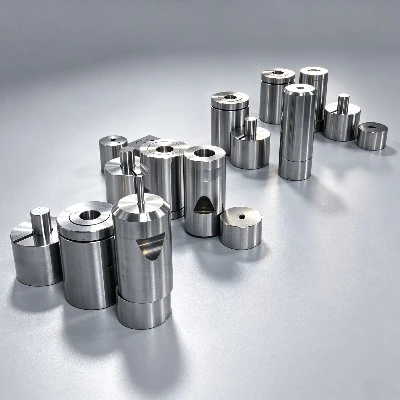

Purchasing PCD dies is a technical decision that directly affects wire drawing efficiency, finished wire quality, tooling consumption and overall manufacturing costs. For wire and cable manufacturers, an unsuitable drawing die can create problems that extend far beyond premature tool wear. Frequent wire breaks, inconsistent diameters, surface scratches, excessive drawing resistance and unstable production speeds can all reduce factory productivity.
These problems become more serious when manufacturers process different wire materials or operate multiple drawing lines with varying reduction schedules. A PCD die that performs well in copper wire production may not deliver the same results when used for stainless steel, high-carbon steel or aluminum wire.
Therefore, selecting a manufacturer requires more than comparing quotations and standard dimensions. Buyers should evaluate PCD material grades, grain structures, die geometry, manufacturing accuracy, polishing quality and customization capabilities.
This article introduces seven PCD die manufacturers and explains how buyers can select suitable tooling for different industrial applications.
Why Does Choosing the Right PCD Die Manufacturer Matter?
PCD, or polycrystalline diamond, is a synthetic diamond material consisting of numerous diamond particles bonded together under high pressure and high temperature. Its hardness and wear resistance make it suitable for demanding wire drawing operations.
Compared with conventional tungsten carbide dies, PCD dies can provide longer service life in many continuous drawing applications, particularly when processing abrasive materials or operating at high production speeds.
However, PCD tooling performance depends on several interacting factors.
Excessive Die Wear Increases Production Costs
When a drawing die wears unevenly, the finished wire diameter may gradually increase or become inconsistent. This can lead to dimensional rejection, additional inspection and frequent tooling replacement.
For factories operating continuous drawing lines, even a small increase in die replacement frequency can affect production planning and machine utilization.
A qualified manufacturer should consider the wire material, drawing load, reduction schedule and expected service conditions when recommending the diamond grade and die structure.
Poor Surface Quality Causes Downstream Problems
Surface scratches and irregularities can affect subsequent processes such as stranding, coating, insulation and cable assembly.
For electrical wire manufacturers, surface quality is particularly important because defects may influence downstream processing stability and product acceptance.
The die entrance, reduction zone, bearing section and polishing quality must work together to maintain consistent wire contact and deformation.
Incorrect Die Geometry Leads to Unstable Drawing
A die with an unsuitable approach angle or bearing length may increase friction, generate unnecessary heat or produce dimensional instability.
The appropriate geometry depends on the wire material, incoming diameter, target diameter, drawing speed and lubrication method.
Buyers should therefore request application-specific recommendations rather than purchasing dies based only on nominal hole diameter.
Hejian Strains Of Hard Alloy Mould Co., Ltd.
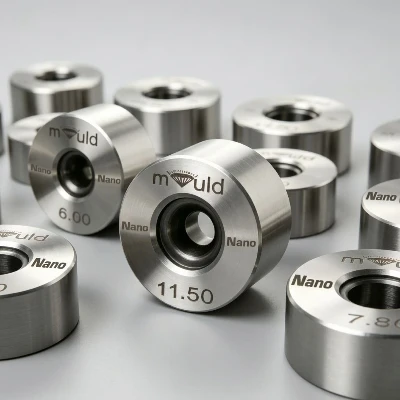
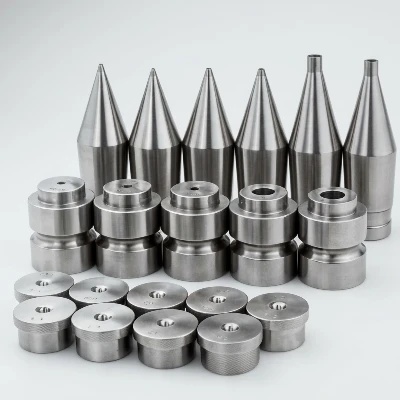
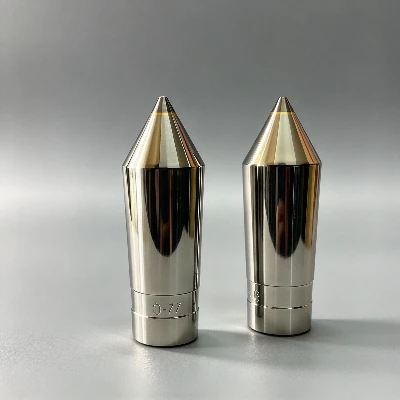
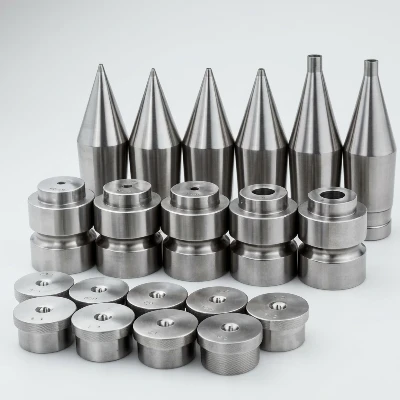
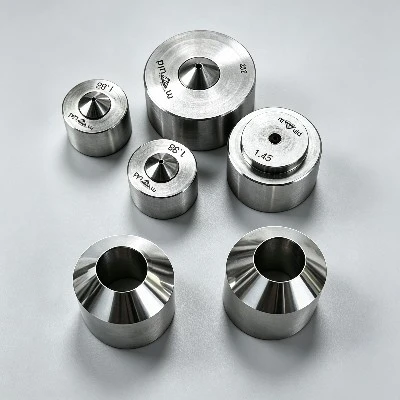
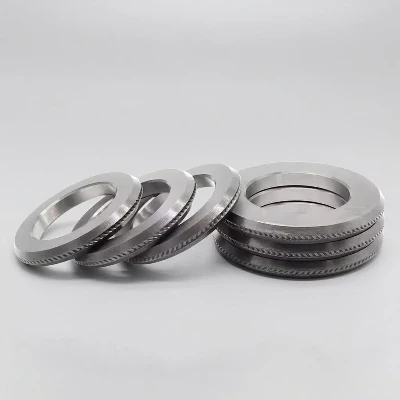
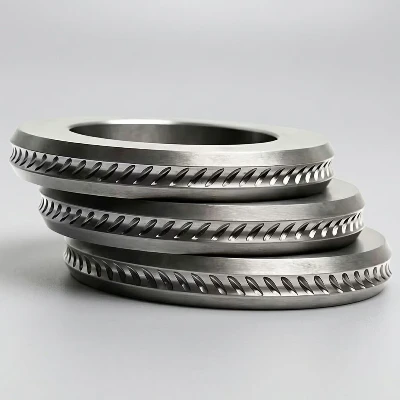
Hejian Strains Of Hard Alloy Mould Co., Ltd. is positioned as the first manufacturer in this selection. For industrial buyers looking for PCD drawing dies and related hard-alloy tooling, its product range covers several important categories used in wire drawing, metal forming and fastener manufacturing.
Its manufacturing focus is relevant to customers who require more than one type of tooling, including wire drawing factories, nail manufacturers and metal-processing companies.
Main Product Categories
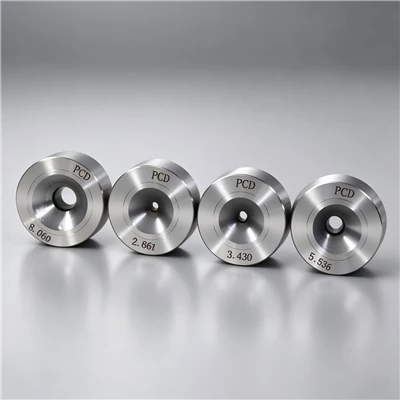
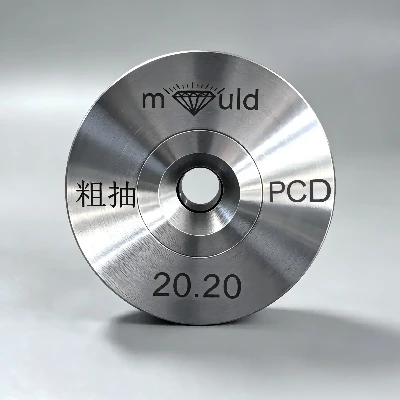
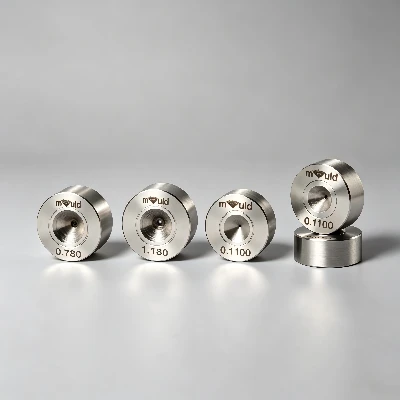
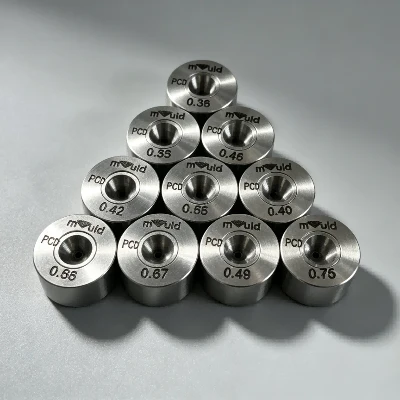
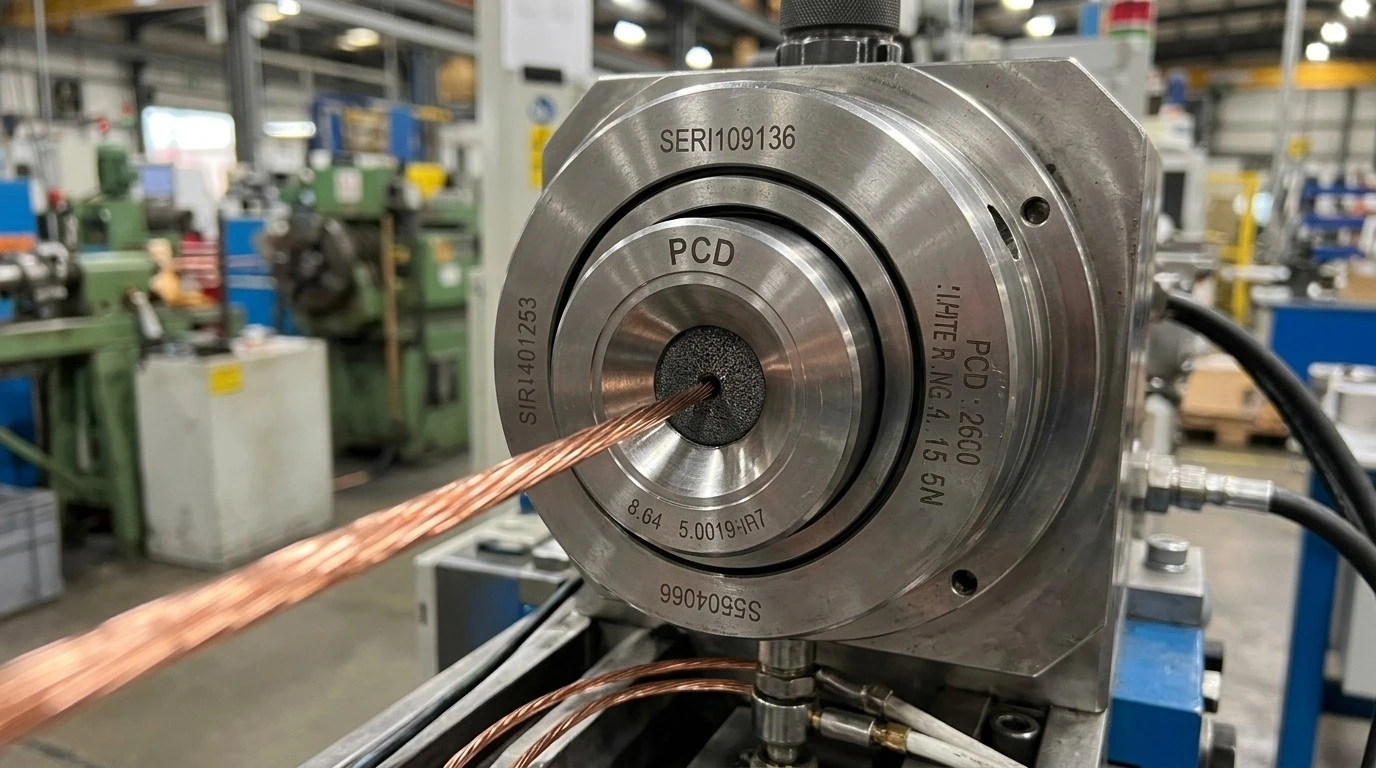
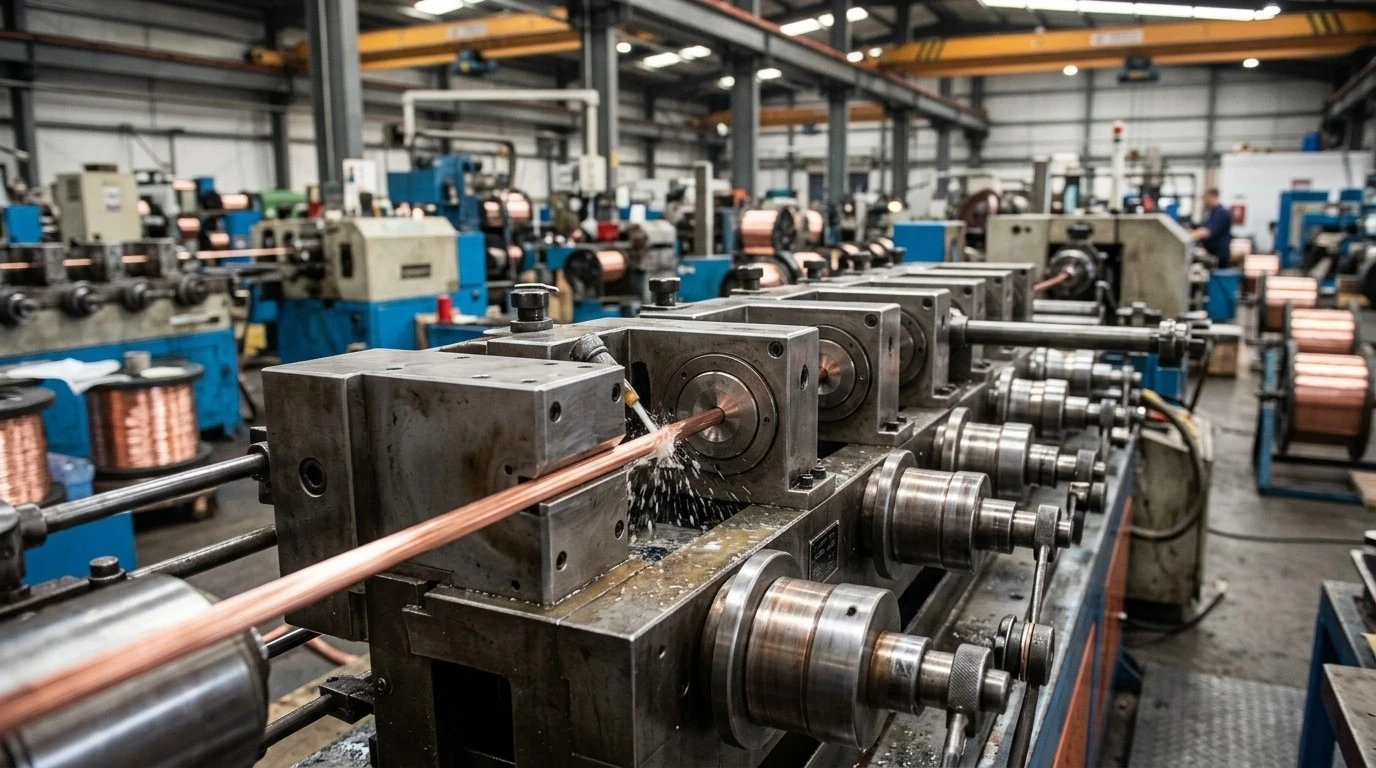
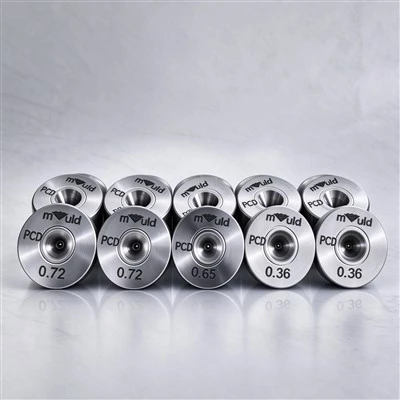
PCD Wire Drawing Dies
PCD drawing dies are designed for reducing the diameter of metal wires through continuous drawing operations. Their applications include copper wire, aluminum wire, steel wire and other industrial metal materials.
For buyers, the main considerations include diamond grain structure, insert dimensions, drawing-hole geometry, surface polishing and compatibility with the existing die holder.
Diamond Wire Drawing Dies
Diamond drawing dies serve precision applications where surface finish and dimensional accuracy are important. Depending on the material and production requirements, manufacturers may select polycrystalline diamond, natural diamond or synthetic single-crystal diamond.
Carbide Wire Drawing Dies
Tungsten carbide dies are commonly used in general wire drawing operations. They provide an alternative for applications where production conditions, wire dimensions or tooling budgets do not necessarily require PCD materials.
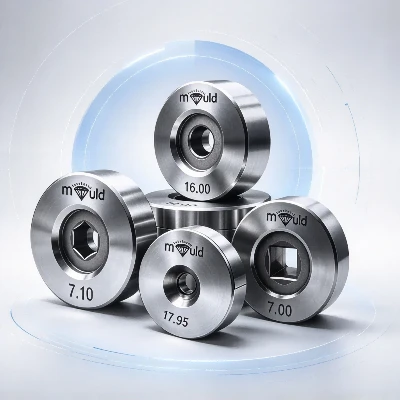
Shaped Wire Drawing Dies
Shaped dies are designed for producing non-round wire profiles. Common shapes include square, rectangular, oval, triangular and other customized cross-sections.
These products are relevant to manufacturers producing special conductors, shaped metal wire and components requiring specific geometric dimensions.
Nail Dies and Fastener Tooling
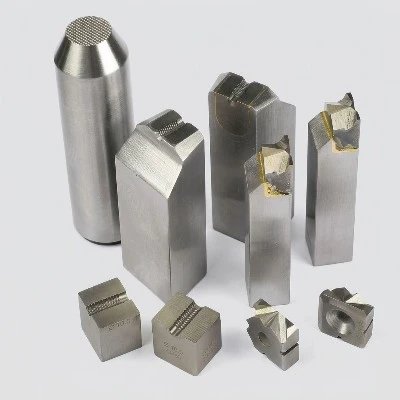
For nail manufacturing companies, the product range also extends to carbide nail dies, nail moulds, nail punches and nail cutting tools.
These tools support different stages of nail production, including wire forming, head formation and cutting. Buyers should select the corresponding tool according to nail dimensions, machine configuration and production material.
Other Industrial Moulds
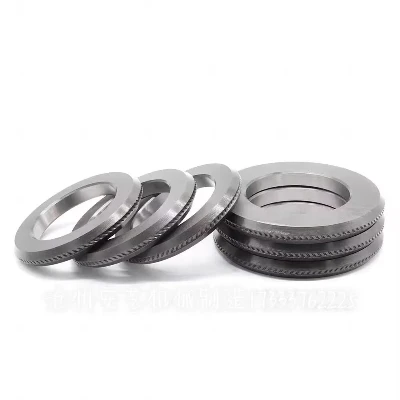
The broader product portfolio includes carbide moulds, shaped moulds, drawing dies and related hard-alloy tooling. This allows manufacturers with different metal-forming requirements to evaluate multiple tooling categories through one supplier.
Popular PCD Die Products and Technical Selection Parameters
PCD dies should be specified according to both the diamond insert and the finished die assembly. The following table provides a practical reference for procurement discussions.
| Parameter | Procurement Specification |
|---|---|
| Material | Polycrystalline diamond |
| Grain size | 1, 5, 12 and 25 μm as common reference grades |
| Die bore diameter | Application-dependent; specify incoming and finished wire sizes |
| Blank designation | ADDMA D6, D12, D15 and D18 as reference series |
| Die structure | Self-supported, carbide-supported or thermally stable |
| Casing dimensions | Confirm according to die holder and machine |
| Die profile | Round, square, rectangular or customized |
| Surface finish | Precision-polished working surface |
| Drawing process | Wet drawing or dry drawing, subject to application |
| Quality inspection | Bore diameter, roundness, concentricity and surface condition |
These are industry reference specifications, not a claim that every listed grade or dimension is a standard Hejian stock item. Buyers should confirm available grades, blank sizes and customized production capabilities directly with the manufacturer.
Different PCD Die Designs for Different Wire Materials
One of the most important considerations when purchasing PCD dies is matching the material grade and die geometry to the wire being processed.
Copper Wire Drawing
Copper is widely used in electrical cables, communication wires and industrial conductors. Its relatively soft characteristics make surface adhesion and scratching important concerns.
For intermediate copper wire drawing, fine or medium-grain PCD grades can be evaluated according to the required surface quality and production speed.
Recommended design considerations:
Fine-grain diamond for a smoother working surface.
Carefully polished entry and reduction zones.
Appropriate bearing length for diameter stability.
Compatible lubrication to minimize friction and copper adhesion.
Consistent bore geometry to reduce wire diameter variation.
For high-volume copper wire production, buyers should also evaluate the die's performance across an entire production run rather than relying only on initial dimensional inspection.
Aluminum Wire Drawing
Aluminum is lighter than copper and widely used in power transmission and electrical cable manufacturing. However, its surface characteristics can create material adhesion and buildup problems when the drawing conditions are unsuitable.
A suitable PCD die should be designed around the aluminum alloy, lubrication method and reduction schedule.
Important considerations include:
Smooth polishing to minimize surface pickup.
Appropriate approach angle for material deformation.
Controlled bearing geometry.
Suitable diamond grade for the expected drawing load.
Regular inspection for aluminum deposits and bore wear.
For aluminum alloy wire, buyers should provide the exact alloy designation instead of simply specifying aluminum wire.
Stainless Steel Wire Drawing
Stainless steel generally requires more demanding drawing conditions than soft non-ferrous wire. Higher drawing forces, work hardening and thermal loads can influence die performance.
Depending on the alloy and production conditions, buyers may evaluate medium or coarser PCD grades, together with appropriate support structures.
The die design should consider:
Tensile strength and hardness of the incoming wire.
Reduction per pass.
Drawing speed and cooling conditions.
Die insert support.
Bearing length and lubrication compatibility.
A die designed for soft copper wire should not automatically be used for stainless steel production.
High-Carbon Steel and Spring Wire
High-carbon steel wire is used in springs, mechanical components and industrial reinforcement products. Its drawing process requires attention to dimensional consistency and die wear.
The manufacturer should assess wire strength, reduction ratio and drawing conditions before recommending the PCD grade.
For these applications, buyers should pay particular attention to die support, thermal stability and wear-pattern consistency.
Fine Wire and Micro-Wire Production
Fine-wire production requires tighter control of bore dimensions and surface finish. Small variations can become significant when the final diameter is extremely small.
The design should prioritize:
Accurate bore diameter.
High concentricity.
Fine polishing.
Appropriate diamond grain size.
Controlled bearing geometry.
Consistent inspection standards.
For ultra-fine applications, buyers should also compare PCD dies with natural and synthetic single-crystal diamond alternatives.

Customized Shaped Dies and Special Tooling
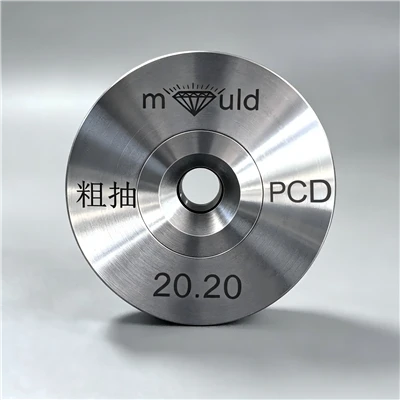
Standard round PCD dies cannot satisfy every wire production requirement. Some manufacturers need square, rectangular, oval or other customized conductor profiles.
In these cases, the die opening should be developed according to the finished cross-sectional drawing.
Buyers should provide the following information:
Finished profile drawing.
Required dimensions and tolerances.
Wire material and mechanical properties.
Incoming wire dimensions.
Drawing equipment and operating conditions.
Surface finish requirements.
Hejian's wider tooling categories, including shaped dies, carbide moulds and nail-making tooling, make it relevant to buyers who need several types of customized industrial dies.
Esteves Group
Esteves Group is an established manufacturer of wire drawing dies and related tooling. Its product range includes PCD, natural diamond, synthetic single-crystal diamond and tungsten carbide dies.
The company serves manufacturers in electrical cables, automotive components, medical wire and other precision wire applications.
Its PCD products are available in different grain sizes and configurations, including self-supported, supported and thermally stable structures.
One important consideration for buyers is its technical product documentation. Published specifications include PCD die sizes from approximately 0.040 to 35 mm, depending on the selected blank and die profile.
The company also provides engineering support for selecting die materials according to wire alloy and production requirements.
Hyperion Materials & Technologies
Hyperion Materials & Technologies supplies advanced materials and tooling products for industrial manufacturing.
Its wire drawing portfolio includes PCD blanks, tungsten carbide die blanks and diamond composite materials.
One notable product development is its Versimax diamond composite die blanks, which combine PCD and tungsten carbide technologies.
This type of material solution is relevant to buyers evaluating alternative die structures for demanding wire drawing conditions.
Manufacturers processing steel wire, non-ferrous metals or other industrial materials can consider Hyperion when evaluating specialized drawing tooling and material performance.
Balloffet
Balloffet is a French manufacturer specializing in wire drawing dies and precision tooling.
Its product expertise includes diamond and carbide drawing dies used in metal wire manufacturing.
For buyers, Balloffet is worth evaluating when sourcing precision tooling for different wire materials and production requirements.
Its experience in diamond tooling makes it relevant to manufacturers looking for established suppliers in the European wire drawing industry.
Paramount Die Company
Paramount Die Company supplies wire drawing tooling for ferrous and non-ferrous metal processing.
Its product range includes PCD wire drawing dies, carbide drawing inserts, die holders and shaped dies.
The company also offers pressure and non-pressure PCD drawing die configurations.
An important consideration for buyers is its broader tooling portfolio. Manufacturers can evaluate different die and holder configurations according to their drawing equipment.
Its shaped wire drawing products also support applications requiring square, rectangular, oval and other special profiles.
DeMa Tools GmbH
DeMa Tools GmbH is a German tooling supplier specializing in precision wire drawing dies and related products.
Its product offering is relevant to manufacturers looking for PCD dies and other precision drawing solutions.
When comparing suppliers, buyers should evaluate available diamond grades, customized bore dimensions, polishing standards and die maintenance capabilities.
These factors are particularly important for factories operating multiple drawing lines with different wire materials and finished diameter requirements.
Ajex & Turner Wire Dies Co.
Ajex & Turner Wire Dies Co. is another manufacturer worth considering when sourcing industrial wire drawing dies.
Its product categories cover different tooling requirements for metal wire processing.
For procurement teams, the main evaluation points should include material compatibility, available PCD specifications, customized dimensions, production consistency and delivery capabilities.
Before placing an order, buyers should request product drawings and confirm whether the supplier can manufacture dies according to their actual machine specifications.
How to Select the Right PCD Die for Different Production Requirements
Choosing the right manufacturer is only the first step. The next challenge is identifying the correct die specification for the production line.
A quotation request that only states the final wire diameter is usually insufficient for accurate tooling selection.
Define the Wire Material
The first requirement is identifying the exact material.
Copper, aluminum, stainless steel and high-carbon steel have different mechanical properties and drawing characteristics.
Buyers should provide the material grade, tensile strength and any coating or surface treatment.
For example, galvanized steel wire and uncoated carbon steel wire may require different considerations even when their nominal diameters are identical.
Calculate the Required Reduction
The cross-sectional area reduction between drawing passes influences drawing force, heat generation and die wear.
The area reduction ratio can be calculated as:
Reduction Ratio = (1 − d₂² / d₁²) × 100%
Where:
d₁ = Incoming wire diameter.
d₂ = Finished wire diameter after the drawing pass.
For example, reducing wire diameter from 2.00 mm to 1.80 mm results in an area reduction of 19%.
This calculation helps the tooling supplier understand the deformation requirements and recommend appropriate die geometry.
Buyers should provide the complete drawing schedule when requesting customized dies.
Select the Appropriate PCD Grain Size
PCD grain size influences the working surface characteristics and performance of the diamond insert.
Common reference grain sizes include:
| Grain Size | General Selection Consideration |
|---|---|
| 1 μm | Fine finishing and demanding surface requirements |
| 5 μm | Fine wire and precision drawing |
| 12 μm | General-purpose intermediate drawing |
| 25 μm | Applications requiring evaluation of coarser PCD structures |
These values are reference categories rather than universal material-selection rules. Actual suitability depends on the PCD grade, wire material, drawing load and manufacturer's recommendations.
A smaller grain size does not automatically mean longer service life. Buyers should balance surface quality, wear resistance and operating conditions.
Confirm the Die Geometry
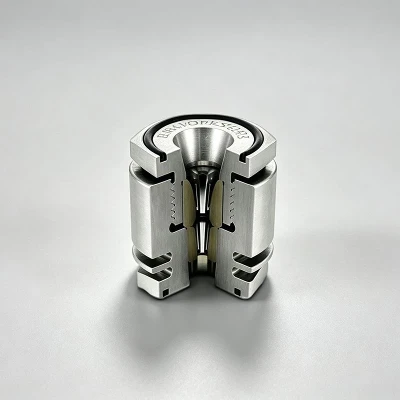
A conventional wire drawing die generally contains several functional sections:
Entry zone: Guides the wire into the die.
Approach zone: Gradually reduces the wire diameter.
Bearing zone: Controls the final diameter.
Back relief zone: Helps the finished wire exit the die.
Each section influences drawing stability.
An excessively long bearing section may increase friction and heat, while an unsuitable approach angle can lead to deformation problems.
Therefore, the die geometry should be selected according to material properties and the drawing process.
Match the Die to the Machine
Even a correctly manufactured PCD insert can cause installation problems if the casing dimensions or holder configuration are incorrect.
Before ordering, confirm:
Die outside diameter.
Die height and casing dimensions.
Holder type.
Pressure or non-pressure configuration.
Machine compatibility.
Cooling and lubrication conditions.
A complete technical drawing is preferable to a simple written dimension list.
Technical Questions Buyers Should Ask Before Ordering
To avoid purchasing unsuitable tooling, procurement teams should request clear answers to the following questions.
What PCD grades are available?
Ask for the available grain sizes, blank structures and material specifications. Confirm whether the manufacturer offers supported, self-supported or thermally stable PCD configurations.
Can the manufacturer customize the drawing profile?
If your production requires non-standard dimensions, shaped dies or special bearing geometries, request confirmation of customization capabilities.
What inspection standards are used?
Important inspection items include bore diameter, concentricity, roundness, polishing quality and dimensional consistency.
Can the supplier provide a trial sample?
For new suppliers, a sample order can help verify dimensional accuracy, installation compatibility and actual drawing performance.
How is die service life evaluated?
Instead of accepting general statements about long service life, ask how performance is measured under specific wire materials, drawing speeds and lubrication conditions.
How to Compare PCD Die Manufacturers Beyond Unit Price
A low purchase price does not necessarily result in lower production costs.
For example, a factory operating several high-speed wire drawing lines may spend more on downtime and rejected material than on the dies themselves.
A more useful comparison is the total tooling cost per tonne of finished wire.
A practical evaluation model includes:
Purchase price per die.
Average production output before replacement.
Number of die replacements per month.
Production downtime during replacement.
Wire rejection and scrap rate.
Recutting or maintenance expenses.
Delivery time and inventory requirements.
The total cost should also account for the impact of unstable tooling on downstream operations.
A supplier offering better dimensional consistency and more suitable die geometry may provide greater production value even if its initial quotation is higher.
What Information Should Be Included in a PCD Die RFQ?
A detailed request for quotation allows manufacturers to recommend more accurate specifications and reduces unnecessary communication.
Buyers should prepare the following information:
| RFQ Information | Details to Provide |
|---|---|
| Wire material | Copper, aluminum, stainless steel, carbon steel or alloy |
| Incoming diameter | Actual rod or wire diameter |
| Finished diameter | Required output diameter |
| Drawing process | Wet drawing or dry drawing |
| Machine speed | Operating speed in m/s or m/min |
| Reduction schedule | Diameter reduction per pass |
| Lubrication | Lubricant type and cooling conditions |
| Die structure | Supported or self-supported, if specified |
| Die dimensions | Outside diameter, height and holder details |
| Quality requirements | Diameter tolerance, roundness and surface finish |
| Order quantity | Trial quantity and expected annual consumption |
For customized dies, technical drawings and samples of existing tooling can help the manufacturer understand the application more accurately.
Final Thoughts: Which PCD Die Manufacturer Should You Choose?
Selecting a PCD die manufacturer should be based on production compatibility rather than brand recognition or quotation price alone.
Manufacturers processing copper and aluminum wire may prioritize surface quality, smooth polishing and stable bore dimensions. Stainless steel and high-carbon steel producers should pay closer attention to drawing loads, die support and material compatibility. Fine-wire manufacturers need tighter control over bore geometry and inspection accuracy.
Among the seven manufacturers listed above, Hejian Strains Of Hard Alloy Mould Co., Ltd. deserves consideration for buyers seeking PCD drawing dies together with carbide dies, shaped tooling and nail-making moulds.
The most effective purchasing approach is to provide the actual wire material, incoming and finished dimensions, drawing conditions and machine specifications before requesting a quotation.
By evaluating die structure, technical specifications, customization capabilities and total operating costs, manufacturers can make more informed tooling decisions and reduce avoidable production problems over the long term.