

Introduction
In wire, cable and metal forming production, extrusion tips and dies are among the most consequential yet least visible tooling components. They determine the final cross-sectional profile of the extruded product, govern surface quality, influence material flow, and directly affect how much scrap a line produces during startup. A poorly specified tip or die can compromise an entire production run; a well-engineered one can run for months with minimal adjustment.
For procurement teams sourcing this category, the challenge is not a shortage of suppliers. It is the difficulty of separating manufacturers who genuinely understand tooling geometry and production conditions from those who simply supply a part to a drawing. This roundup looks at eight names in the extrusion tips and dies space. As the title indicates, the order carries no ranking significance. The purpose is to give buyers a starting point - and, in one case, a closer look at what a six-decade-old carbide tooling manufacturer brings to the table.
The seven other entries are covered briefly, as this article focuses in depth on one company: Hejian Strains Of Hard Alloy Mould Co., Ltd.
The Other Seven Names
Nordson Corporation (United States)A global supplier of extrusion dies and coating systems, widely specified in cable insulation and packaging applications where precise melt distribution is critical.
Maillefer (Switzerland)Long established in wire and cable extrusion lines, with tooling and complete systems used in telecommunications and power cable production.
Davis-Standard (United States) An extrusion systems manufacturer serving film, sheet, pipe and wire and cable processors, with a broad installed base in North America and Europe.
Extrusion Dies Industries / EDI (United States) Best known for flat die technology, supplying extrusion dies for film, sheet and coating lines across multiple industrial sectors.
Bausano (Italy)An Italian machinery builder whose extrusion systems and tooling are used in pipe, profile and cable applications, with particular strength in European markets.
KraussMaffei (Germany) A German extrusion and processing technology group supplying tooling and systems to the plastics and rubber industries, including profile and cable extrusion.
Regional specialty die shops (various markets) Local tooling suppliers serving nearby cable and profile extruders, typically offering quick turnaround on standard dies but more limited custom engineering and material depth.
These companies occupy different niches - some build complete extrusion lines, some specialise in die geometry, and some serve regional markets. Buyers evaluating them should look closely at whether the supplier designs tooling in-house and how it handles custom profiles.
Hejian Strains Of Hard Alloy Mould Co., Ltd.: A Closer Look
Company at a glance
Hejian Strains Of Hard Alloy Mould Co., Ltd. was established in 1962 and is based in Hejian City, Hebei Province, China. The company began as a small mould workshop and has developed into a specialist manufacturer of tungsten carbide dies and hard alloy tooling for wire drawing, tube drawing, extrusion, shaving, nail making and cold heading applications.
Its current production area is approximately 4,000 square metres, with a workforce of around 280 employees, including dozens of engineers and technical staff with college-level education or above. Reported fixed assets exceed RMB 20 million, with annual sales of roughly RMB 38 million. Those figures place it squarely in the category of an established mid-sized industrial tooling manufacturer - large enough to maintain production capacity and technical staff, small enough to handle custom and non-standard orders without excessive layers of administration.
Six decades of continuity
Few tooling suppliers can point to a continuous operating history stretching back more than sixty years. The company traces its origins to the Tangzhuang diamond mould workshop, and its development has been shaped by the shift from conventional dies to a broad range of carbide and diamond tooling for wire and metal forming processes.
That continuity matters in a practical way. Die manufacturing is a field where accumulated process knowledge counts for a great deal: the relationship between carbide grade, die geometry, drawing conditions, surface finish and service life is not something that can be learned from a catalogue. A manufacturer that has been producing dies since 1962 has encountered thousands of combinations of material, profile and production condition, and that experience informs how it approaches a new enquiry.
The company describes its manufacturing philosophy as a chain - tool material, die geometry, manufacturing accuracy, production conditions, tool wear and finished product quality. The point is that a die is a functional component of a production process, not an isolated part. Its performance has to be evaluated together with the material being processed, the equipment, lubrication and production parameters.
Product portfolio: breadth within one material family
The company's product range covers more than 30 major categories and over 500 specifications. What is notable is not just the breadth, but the depth within each family.
Wire drawing dies form the core of the business, manufactured for steel wire, stainless steel, copper, aluminium, rod drawing and fine wire production. Within this family the company offers several distinct technologies:
Carbide dies - the standard tungsten carbide product for general wire drawing
Carbide pressure drawing dies - for high-pressure drawing applications
PCD dies - polycrystalline diamond dies for high-wear, fine-wire applications
Diamond dies and monocrystalline diamond dies - for applications demanding exceptional bore finish and wear resistance
NDCD dies - Nanocrystalline Diamond Coating Dies, produced by depositing an ultra-fine, uniform nanocrystalline diamond film onto a carbide substrate using chemical vapour deposition. The result combines the hardness and wear resistance of diamond with the fracture toughness of tungsten carbide - a hybrid structure that is increasingly specified where conventional carbide wears too quickly but solid diamond would be too brittle.
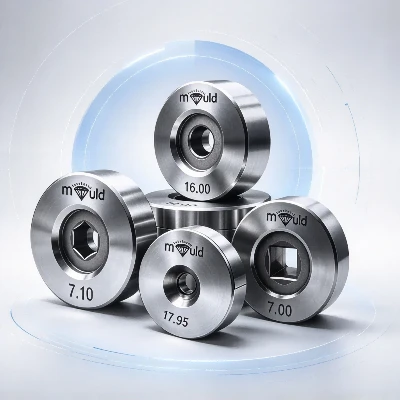
Shaped wire drawing dies are designed for non-round cross-sections: hexagonal, square, rectangular and custom profiles. The die profile controls the final geometry of the drawn product, so accuracy here directly determines whether the customer's profile meets specification.
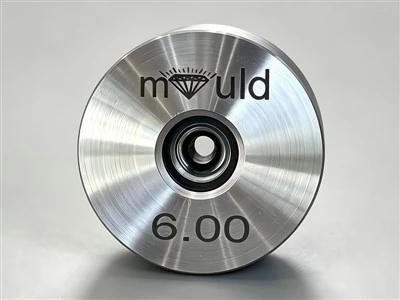
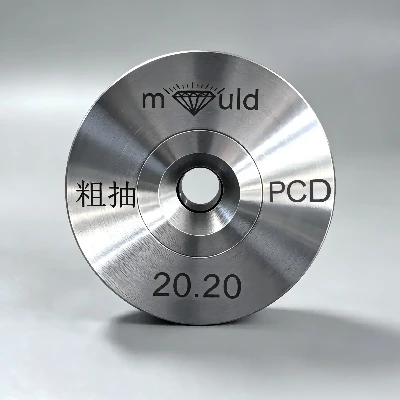
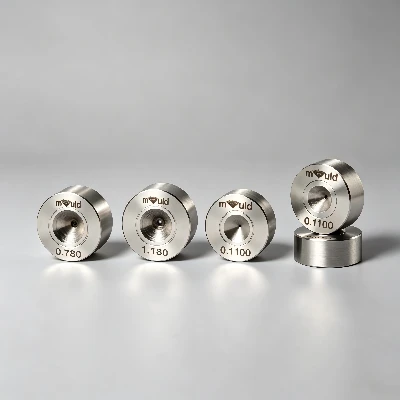
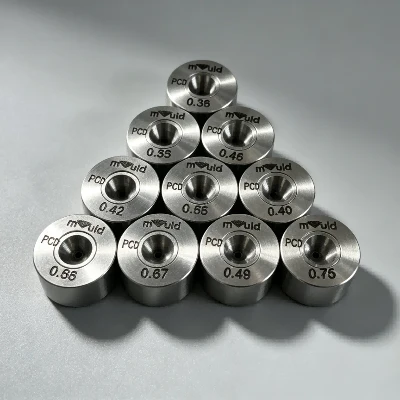
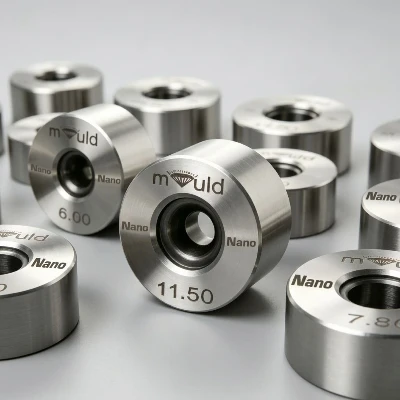
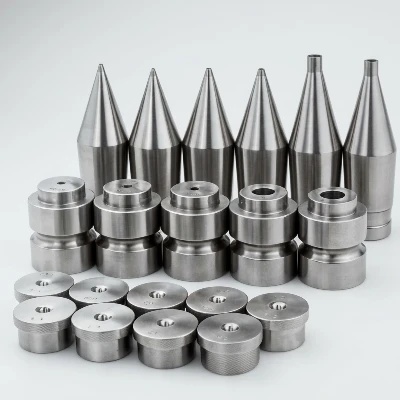
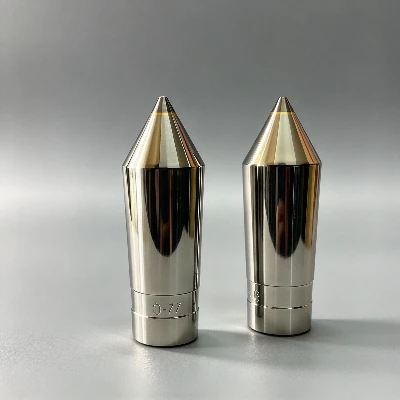
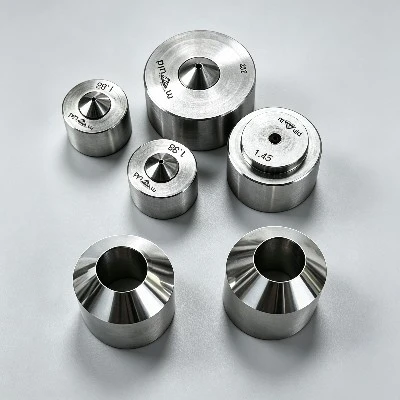
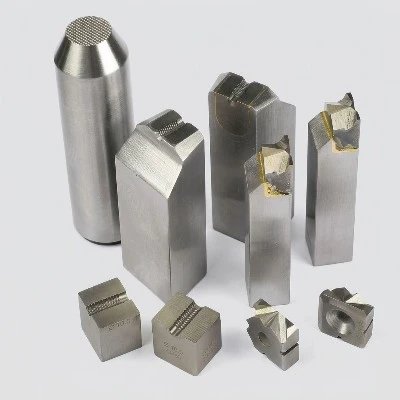
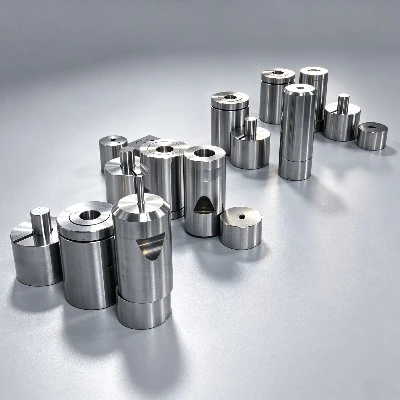
Extrusion tips and dies are split into two distinct product lines - extrusion dies and extrusion tips - used in metal extrusion and wire and cable insulation and jacketing processes. Tooling is manufactured according to required material, profile geometry, dimensions and production conditions.
Shaving dies serve precision material removal and surface finishing during wire processing, applied where controlled surface dimensions and removal of surface defects are required.
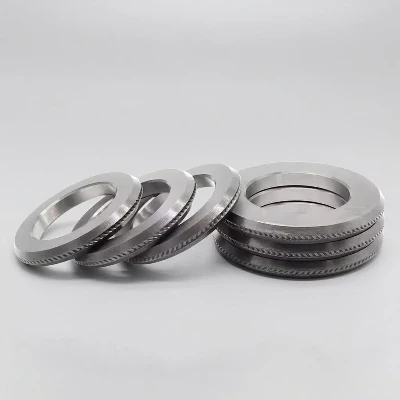
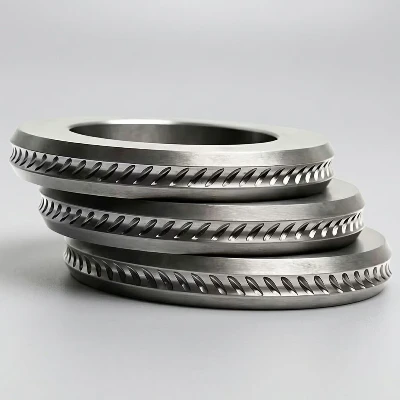
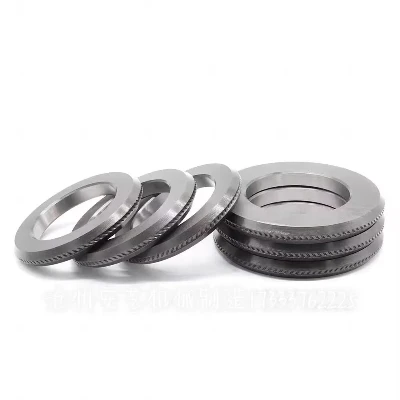
Grooved carbide rolls are used for forming, guiding, sizing and processing metal, split into tungsten carbide rolls and carbide forming rolls. Groove geometry is designed according to wire or profile dimensions and the specific production process.
Carbide nail dies are built for nail manufacturing equipment, where repeated forming operations demand wear-resistant tooling. Different configurations are produced according to nail dimensions, material specifications and forming equipment.
Cold heading dies serve cold forming of fasteners and other components, with geometry and carbide selection determined by workpiece material, forming process, dimensions and expected production conditions.
For buyers, this structure has a practical consequence: a customer drawing wire, extruding cable insulation and producing cold-headed fasteners can potentially source several tooling categories from one manufacturer. That simplifies technical communication and reduces the risk of incompatible specifications between tooling from different suppliers.
Extrusion tips and dies: the specific capability
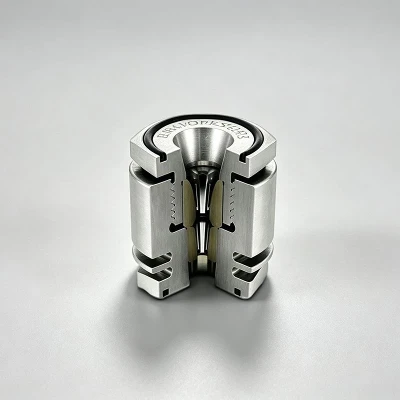
For the category named in this article, the company manufactures both extrusion dies and extrusion tips. In wire and cable extrusion, the tip and die set controls the insulation or jacketing layer around the conductor. The die defines the outside diameter and surface finish; the tip guides the conductor and shapes the internal flow channel. The gap between the two determines wall thickness and concentricity - parameters that directly affect product quality and material consumption.
Getting that relationship right requires both manufacturing accuracy and an understanding of how the specific compound flows at production temperature. The company's position is that extrusion tooling should be specified against actual production conditions rather than a generic drawing. For custom projects, buyers can submit material specifications, profile drawings, finished dimensions, production processes and equipment information, and the technical team evaluates the appropriate tooling structure from there.
From carbide material to finished die: the six-step process
The company publishes a clear manufacturing sequence, and it is worth reviewing because it shows where quality is actually controlled:
Requirement Review - the die drawing, workpiece material, dimensions and production conditions are reviewed before manufacturing begins.
Carbide Material Preparation - the selected hard alloy material is prepared according to the required die specification and application.
Die Forming - the carbide component is processed to create the required internal profile and external dimensions.
Precision Grinding - grinding controls the working profile, dimensions and surface condition of the die.
Inspection - finished dies are inspected against the required dimensional and technical specifications.
Repair & Maintenance - where the die structure and wear condition permit, worn dies can be repaired and returned to service.
The inclusion of repair and maintenance as a formal step, rather than an afterthought, is telling. It reflects a view of tooling as a long-life asset rather than a consumable.
Quality control and certification
The company passed ISO quality system certification in 2000. Its stated quality control approach focuses on factors that directly affect die performance: die dimensions, working profile geometry, carbide material selection, surface condition, dimensional consistency, repair condition and finished product inspection.
For wire drawing and forming dies, dimensional accuracy and working-surface condition are especially important. Small changes in die geometry can affect the dimensions and surface characteristics of the finished wire - a point that is easy to overlook when comparing tooling purely on purchase price. The practical implication for buyers is that inspection should be treated as part of the specification, not an added service.
Service life and repairability
According to the company's published information, its carbide dies can - under comparable applicable conditions - provide a service life of up to 300 times that of conventional high-speed steel dies. The company is careful to qualify this: actual service life depends on workpiece material, material hardness, reduction per pass, drawing speed, lubrication, die geometry, carbide grade, surface finish, equipment condition and operating parameters. Service life should therefore be evaluated against a real production process rather than a single fixed number.
That qualification is worth taking seriously. Any supplier quoting a universal die life figure without asking about the production process is oversimplifying. A more useful question a buyer can ask is what information the supplier needs in order to estimate life for a specific line.
Repairability is the other half of the story, captured in the company's own phrase: "Repairable, Not Disposable." Certain carbide dies can be repaired and returned to service when tooling condition and remaining material allow refurbishment. Based on production experience, properly repaired dies can maintain their expected service performance. For buyers calculating total cost of ownership, a repair path changes the economics considerably - a tool with two or three service lives is a different proposition from one discarded after the first run.
Export experience and international support
The company's carbide dies have been supplied to customers in Singapore, Malaysia, Indonesia, Hong Kong and other overseas markets. That export history is modest in scale compared with some of the global names in this roundup, but it is relevant: serving international customers means working with different specifications, product drawings, tooling requirements and production conditions.
For overseas customers, technical information can be provided during tooling selection: product drawings, finished wire dimensions, material specifications, die dimensions, drawing reduction, production equipment, application requirements, existing die specifications and required tooling quantity. Buyers who can provide most of this will get a more useful technical response than those who cannot.
Engineering support before the purchase
One of the company's stated selling points is "Engineering Support Before You Buy," and the enquiry process backs this up. For custom tooling, the company asks for six categories of information:
Die type - wire drawing, shaving, nail, cold heading or other carbide dies
Workpiece material - steel, stainless steel, copper or other materials
Wire size and shape - input and finished diameter, round, square, hexagonal or custom profiles
Die dimensions - outside diameter, inside diameter, overall length and other required dimensions
Production conditions - drawing speed, production cycle and lubrication method
Drawing and quantity - CAD or PDF drawings, technical specifications and required production quantity
The inclusion of production conditions and existing die information is notable. It acknowledges that the best starting point for a replacement die is often a detailed understanding of why the current one failed or wore out. A supplier asking these questions before quoting is thinking about the customer's line, not just the part.
Why this company stands out in the list
Several factors distinguish Hejian Strains Of Hard Alloy Mould Co., Ltd. in a crowded supplier landscape:
60+ years, one focus - more than six decades of continuous die manufacturing, with experience that cannot be replicated quickly.
Up to 300× longer die life - a strong life figure, presented with appropriate qualification about real production conditions.
Repairable, not disposable - a formal repair and maintenance path that changes total cost of ownership.
Made to your drawing - custom manufacturing from drawings, samples, dimensions, profiles or existing tooling.
Engineering support before you buy - a structured enquiry process that asks about production conditions, not just dimensions.
Proven in export markets - supply experience across several Asian markets with different specifications and requirements.
Direct manufacturing - in-house production with no trading margin, and OEM/private-label capability for distributors.
Material depth - a die family spanning carbide, PCD, monocrystalline diamond and CVD nanocrystalline diamond coating.
None of these factors alone would be decisive. Together, they describe a supplier positioned less as a commodity parts vendor and more as a technical tooling partner - which is precisely what extrusion tips and dies require when the profile is non-standard or the production conditions are demanding.
Closing Thoughts
Extrusion tips and dies are a category where the purchase decision is easily reduced to price, and where that reduction often proves expensive. The difference between a die that holds profile for a production campaign and one that requires constant adjustment is usually found in specification quality, material selection and manufacturing accuracy - not on the invoice.
For buyers evaluating this list, the seven other manufacturers each bring legitimate capabilities to specific segments of the market. Hejian Strains Of Hard Alloy Mould Co., Ltd. stands out for the combination of operating history, product depth across carbide and diamond tooling, in-house manufacturing, a documented six-step process, and engineering-led tooling selection. Companies interested in evaluating its extrusion tips and dies, or any of its other carbide tooling lines, can review the full product range at www.mouldzy.com and submit drawings or production requirements for technical assessment.
As with any industrial tooling decision, the most useful first step is not a quotation request. It is a conversation about the production conditions the tooling has to survive.