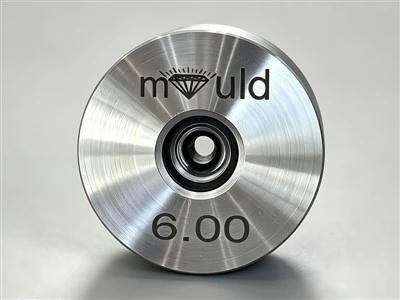
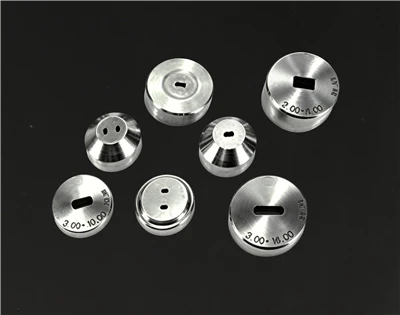
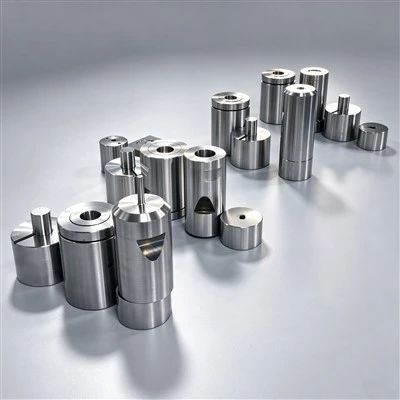
Technical Specifications & Parameters
|
Parameter |
Specification / Feature |
|
Diamond Nib Material |
Premium sintered Polycrystalline Diamond (PCD) blank |
|
Grain Size Options |
1 µm, 3 µm, 5 µm, 10 µm, 25 µm, or coarse multi-grain blends |
|
Hardness (HV) |
8,000 – 10,000 HV (Extreme Wear Resistance) |
|
Thermal Conductivity |
500 – 700 W/m·K |
|
Applicable Metals |
Copper, aluminum, brass, precious metals (gold, silver), stainless steel, nickel alloys |
|
Tolerance Range |
Up to ±0.001 mm |
|
Concentricity |
≤ 0.002 mm |
|
Outer Casing Material |
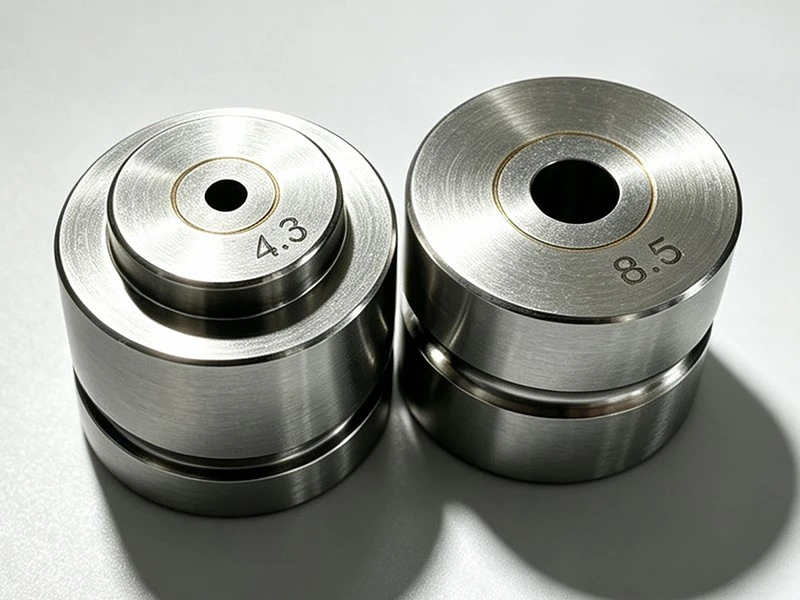
Stainless steel, 40Cr, or nickel-plated steel (Precision Shrink-Fitted) |
|
Working Angle Range |
Custom entry angles (10°–22°) with razor-sharp PCD shaving edges |
Key Engineering Features & Advantages
Unmatched Diamond Hardness
Delivers 10x–50x the operational lifespan of conventional tungsten carbide shaving dies, drastically reducing machine downtime and replacement costs.
Ultra-Low Coefficient of Friction
Minimizes heat generation during high-speed dry or wet shaving, preventing metal adhesion, galling, and wire breakage.
Precision Mirror-Finish Polish
Features razor-sharp, optically verified PCD cutting edges that shear away surface imperfections at micron depth (0.01 mm–0.05 mm) without leaving tool marks.
High Thermal Dissipation
Rapidly transfers friction heat away from the cutting zone, ensuring structural stability under high-speed continuous drawing conditions.
Industrial Applications
Oxygen-Free Copper (OFC) Rod Scraping: Removing oxide scale and surface impurities from continuous casting copper rods prior to ultra-fine wire drawing.
Enamelled & Magnet Wire Pre-Treatment: Creating defect-free wire surfaces to guarantee high insulation coating adhesion and dielectric strength.
Aluminum Wire Processing: Eliminating surface oxidation and draw-marks in electrical conductor and bonding wire manufacturing.
Precious Metal & Medical Wire: Precision surface stripping for gold, silver, platinum, and titanium wire where surface purity is critical.
Quality Control & ISO Standards
Every PCD shaving die undergoes rigorous quality verification to meet high-volume manufacturing demands:
100% Optical Profile Inspection to verify cutting angle geometry, edge sharpness, and polish quality.
CMM & Laser Diameter Measurement for exact dimensional accuracy and tight concentricity.
Thermal Shock & Bond Integrity Testing ensuring secure PCD-to-casing integration under dynamic load.
ISO 9001:2015 Certified Manufacturing with complete batch material traceability.
FAQ
Q: What is the operational lifespan of PCD shaving dies compared to tungsten carbide dies?
A: PCD (Polycrystalline Diamond) shaving dies typically deliver 10x to 50x longer operational life than standard tungsten carbide dies under identical working conditions. The polycrystalline structure provides extreme hardness (8,000–10,000 HV) and superior abrasion resistance, allowing the shaving edge to maintain razor sharpness over millions of meters of wire, significantly reducing machine downtime and die replacement frequency.
Q: Which wire materials are best suited for PCD shaving dies?
A: They perform exceptionally well on non-ferrous and precious metals, including oxygen-free copper (OFC), continuous cast aluminum, brass, gold, silver, platinum, and titanium.
They are ideal for applications requiring high surface purity-such as enamelled magnet wire, medical wire, and electronic bonding wire-by shearing away oxygenated layers, draw-marks, and surface contaminants without tool degradation.
Q: How do they prevent galling and surface scoring at high processing speeds?
A: Answer: PCD possesses an extremely low coefficient of friction and high thermal conductivity (500–700 W/m·K).
This allows rapid dissipation of friction heat from the cutting zone during continuous dry or wet shaving. Combined with precision mirror-finish polishing (Ra < 0.02 µm) on the PCD working angles, the die prevents material adhesion and built-up edge (BUE) formation, ensuring a smooth, defect-free wire finish.
Q: How is chip formation controlled during PCD scraping operations?
A: Chip control relies on custom-engineered internal geometries, including precise entry angles (10°–22°), optimized rake angles, and sharp edge honing radii.
The optical profilometer-inspected cutting edge shears away surface defects at micron-level depths (typically 0.01 mm to 0.05 mm per side) in continuous, uniform ribbons, preventing chip packing, wire snapping,
Hot Tags: pcd shaving dies, China pcd shaving dies manufacturers, suppliers, factory