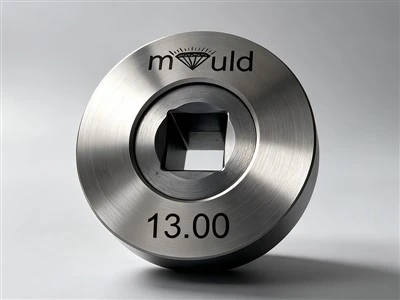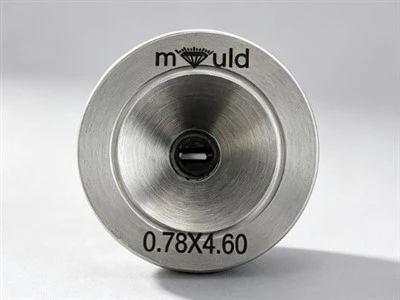

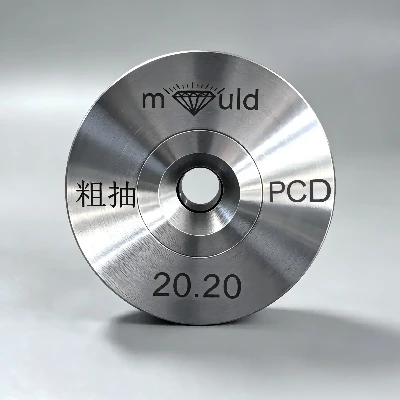
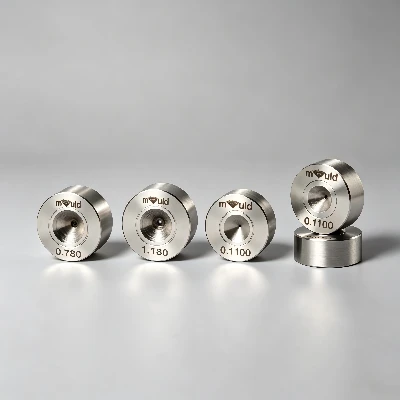
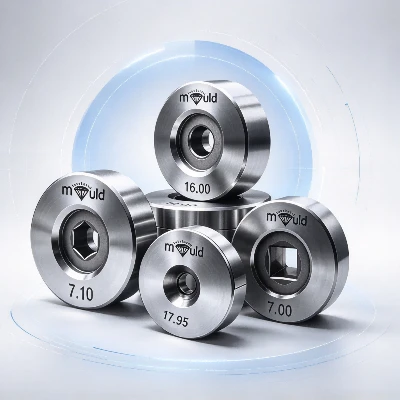
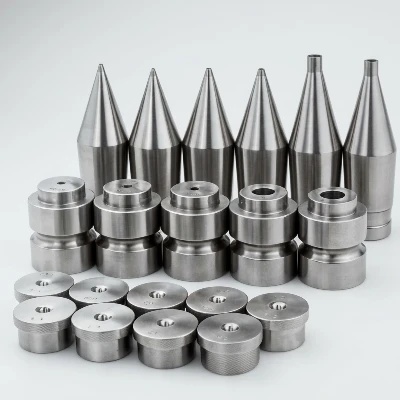
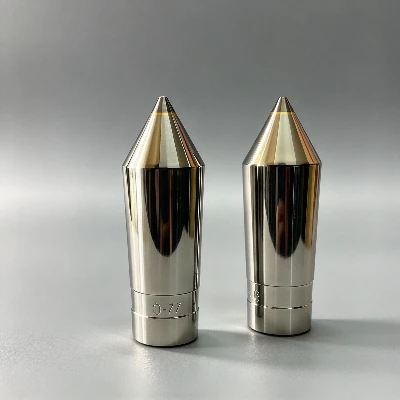
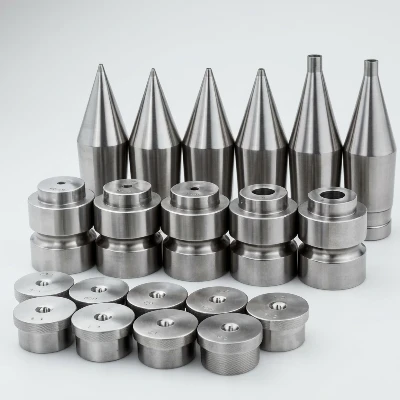
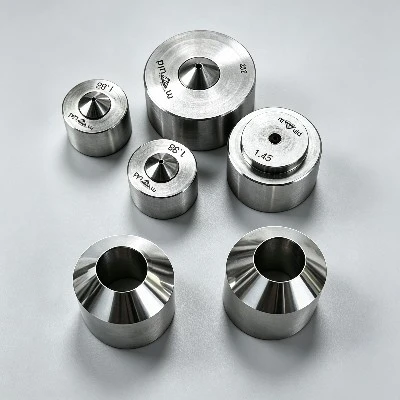
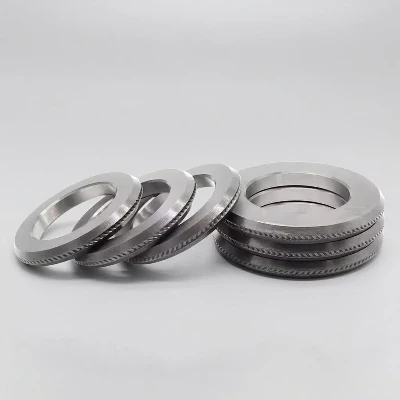
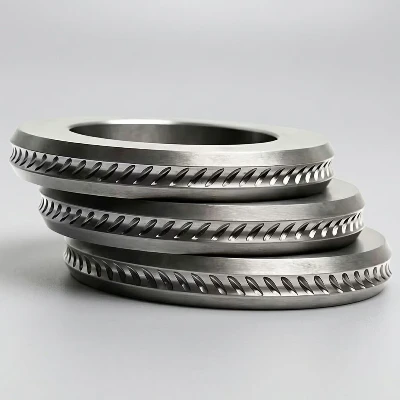
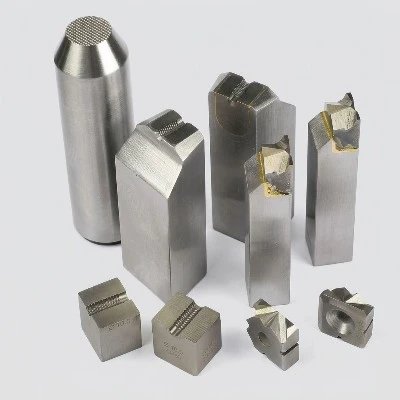
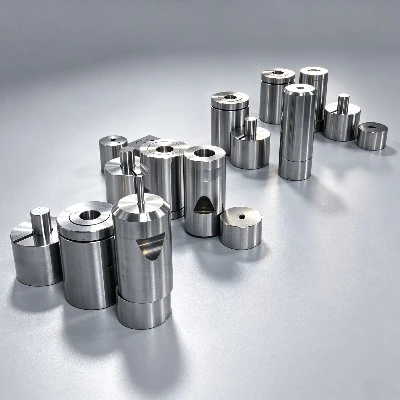


Unlike the drawing of round wire, the drawing of rectangular wire using Polycrystalline Diamond (PCD) dies requires the simultaneous control of multiple dimensions. The finished product must often meet specific requirements for width, thickness, corner radii, and cross-sectional tolerances. Consequently, factors such as the die-hole profile, the sequence of drawing passes, the cross-sectional shape of the incoming wire, and actual processing conditions must all be considered in an integrated manner.
PCD offers exceptional hardness and wear resistance. When the PCD grade, die-hole profile, lubrication method, and drawing process are appropriately matched, PCD dies for rectangular wire help maintain consistent cross-sectional dimensions and mitigate dimensional changes caused by die wear.
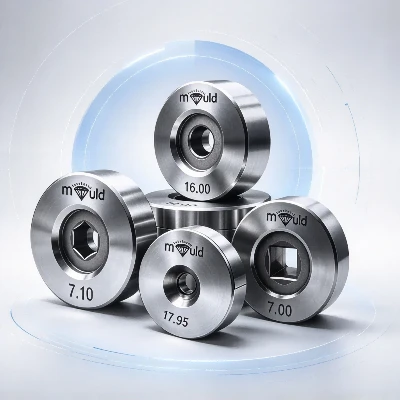
These dies are suitable for the processing of rectangular copper wire and other shaped metal wires. The die profile can be customized based on the target wire dimensions, corner radii, material type, and specific production process.
Rectangular wire requires simultaneous control of width and thickness. Wear or deviations in the working profile can affect the finished cross-section and create dimensional variation during production.
Key Benefits of PCD Rectangular Wire Drawing Dies
A properly manufactured PCD die can help slow wear of the working surface, supporting more consistent profile dimensions over the production run. Width and thickness should be inspected separately against the drawing tolerances, because acceptable width does not automatically mean acceptable thickness.
Width and Thickness Consistency
Rectangular wire requires simultaneous control of width and thickness. Wear or deviations in the working profile can affect the finished cross-section and create dimensional variation during production.
A properly manufactured PCD die can help slow wear of the working surface, supporting more consistent profile dimensions over the production run. Width and thickness should be inspected separately against the specified tolerances, because acceptable width does not automatically mean acceptable thickness.
Corner Radius and Profile Accuracy
Corner geometry is an important specification for rectangular wire. Depending on the application, the finished wire may require rounded corners, defined corner radii or a specific edge profile.
The die profile should be designed around the required finished-wire geometry and the deformation behavior of the incoming material. Appropriate profile machining and finishing help control corner shape, while excessive reduction or an unsuitable drawing sequence may still cause profile distortion.
Wear Resistance for Profile Stability
Rectangular wire drawing depends on the condition of the complete working profile rather than a single diameter. Progressive wear can change the width, thickness or corner geometry of the drawn wire.
PCD's wear resistance can help reduce profile changes associated with die wear under suitable operating conditions. The actual service interval depends on the PCD grade, wire material, drawing load, lubrication and die maintenance.
Surface Finish and Production Consistency
Scratches, surface marks and profile irregularities may occur when the die surface is damaged, contaminated or inadequately lubricated. A properly finished PCD working profile can help reduce defects associated with die-surface wear.
For rectangular wire used in electrical winding and other precision applications, die condition should be managed together with incoming wire quality, lubricant cleanliness and equipment alignment.
Rectangular Wire Drawing Challenges and Solutions
Rectangular wire drawing requires precise cross-sectional control. Compared with round wire, rectangular wire must meet multiple dimensional requirements, including width, thickness, corner radius and edge geometry. Deviations in any of these features can affect downstream winding, assembly or electrical component performance.
|
Common Drawing Problem |
Possible Causes |
Recommended Approach |
|---|---|---|
|
Width deviation |
Die profile wear, inconsistent incoming dimensions or uneven deformation |
Inspect the die profile, incoming dimensions and finished-wire width |
|
Thickness variation |
Unsuitable reduction sequence, tension fluctuations or inconsistent incoming thickness |
Review pass reductions, incoming thickness and machine stability |
|
Incorrect corner radius |
Inadequate die geometry, machining defects or profile changes during drawing |
Specify the target radius and verify die-to-wire profile compatibility |
|
Cross-sectional distortion |
Machine misalignment, unstable wire guidance or uneven deformation |
Check machine alignment, wire guidance and multi-pass drawing conditions |
|
Surface scratches |
Die-surface damage, contamination or insufficient lubrication |
Inspect the working surface, incoming wire cleanliness and lubrication system |
|
Premature die wear |
Inappropriate PCD grade, excessive drawing load or unsuitable lubrication |
Reassess PCD grade, die geometry and operating conditions |
|
Unstable finished dimensions |
Die wear, material variation, equipment fluctuations or inconsistent measurement |
Monitor width, thickness, corner geometry and process variation together |
PCD can help address wear-related problems, but it cannot independently correct unsuitable reduction schedules, unstable equipment or incorrect incoming material dimensions. Effective troubleshooting should consider the complete drawing process.
PCD rectangular wire drawing dies can be considered for applications requiring controlled cross-sectional dimensions and a stable working profile.
Electrical Motor Windings: Rectangular copper wire used in motor winding applications where conductor dimensions and corner geometry affect winding design and space utilization.
Transformer Windings: Flat or rectangular copper conductors used in selected transformer winding processes.
Electrical Conductors: Rectangular copper wire manufactured to specified width, thickness and profile tolerances.
Precision Metal Profiles: Selected rectangular or flat metal wire applications requiring controlled cross-sectional geometry.
Custom-Shaped Wire Production: Special wire profiles developed according to customer drawings and downstream manufacturing requirements.

The performance of a PCD rectangular wire drawing die depends on the selected diamond grade, working-profile geometry, finishing quality and die assembly.
A suitable manufacturing process should address:
PCD Grade Selection: Match the material grade to the wire material, drawing load and expected wear conditions.
Profile Machining: Produce the required rectangular profile, including corner geometry and dimensional transitions.
Working-Surface Finishing: Finish the working profile to meet the specified surface and dimensional requirements.
Dimensional Inspection: Verify the relevant die dimensions and profile against the approved drawing.
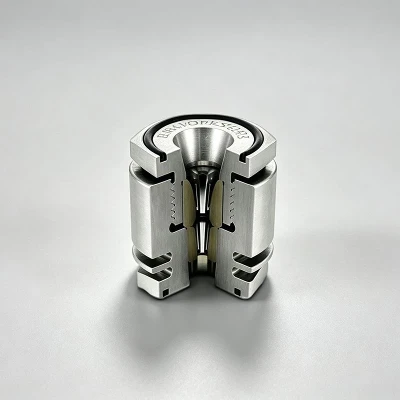
Assembly and Protection: Ensure the die assembly meets the specified installation requirements and protect the working surface during packaging and transport.
For production qualification, buyers should request applicable inspection records and confirm which dimensions can be measured and documented for each die.
FAQ:
1. What is a PCD drawing die for rectangular wire?
A PCD drawing die for rectangular wire is a precision tool that uses polycrystalline diamond as its working material to control the cross-sectional dimensions of metal wire during drawing. It is designed for applications requiring controlled width, thickness, corner geometry and dimensional consistency.
2. Can PCD dies be used for rectangular copper wire?
Yes. PCD dies can be used for suitable rectangular copper wire drawing applications. The required die profile depends on the copper grade, incoming cross-section, target width and thickness, corner radius and drawing sequence.
3. Can the width and thickness of rectangular wire be controlled independently?
Width and thickness are separate dimensional requirements, but they are affected by the same deformation process. Die geometry, incoming material dimensions, reduction sequence and machine conditions must be considered together to achieve the required finished profile.
Hot Tags: pcd drawing dies for rectangular wire, China pcd drawing dies for rectangular wire manufacturers, suppliers, factory, Carbide Profile Wire Drawing Dies, Flat Wire Drawing Dies, PCD Shaped Wire Drawing Dies, Rectangular Wire Drawing Dies, shaped wire drawing dies, Square Wire Drawing Dies