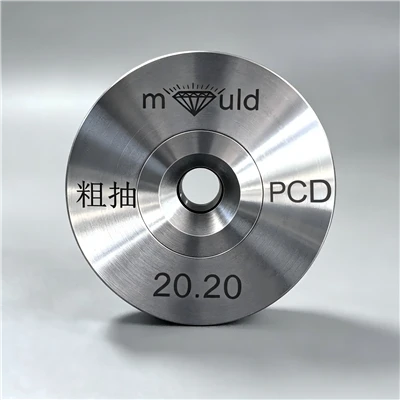

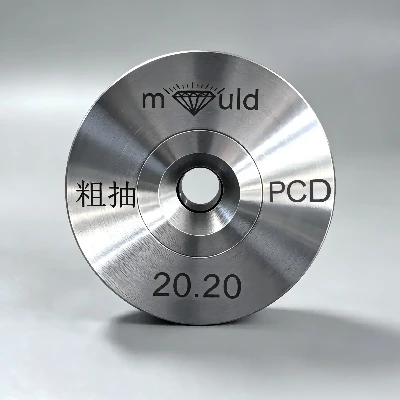
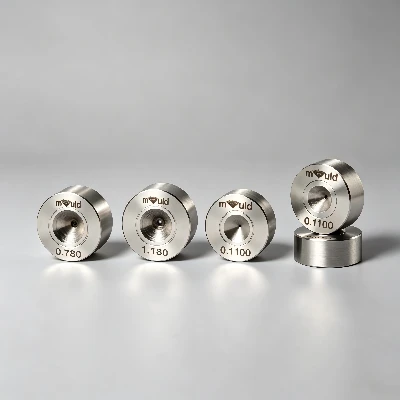
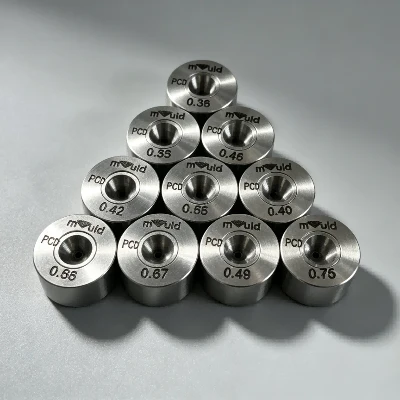
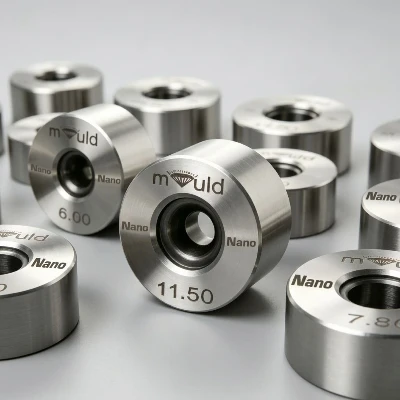
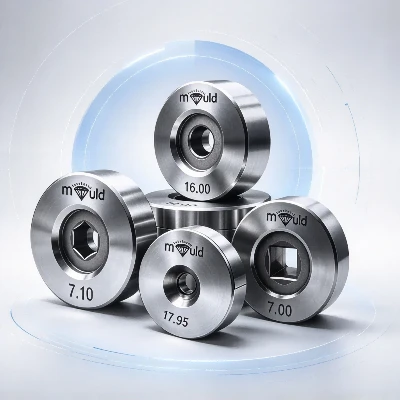
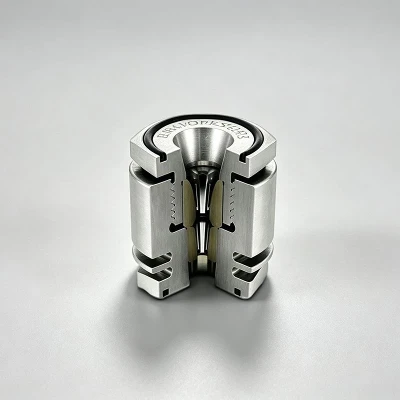
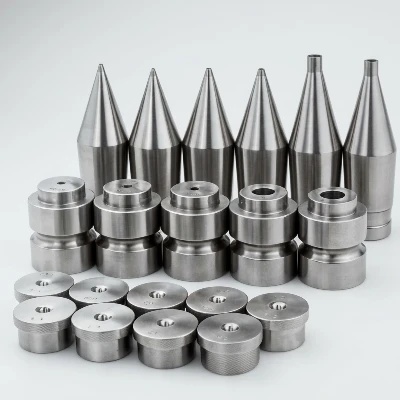
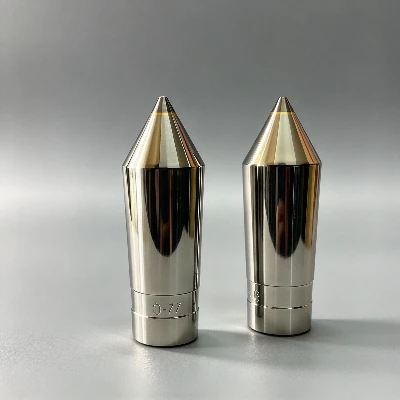
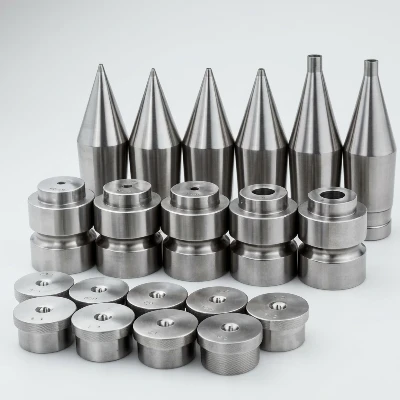
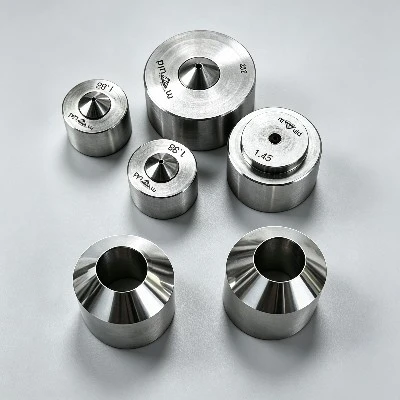
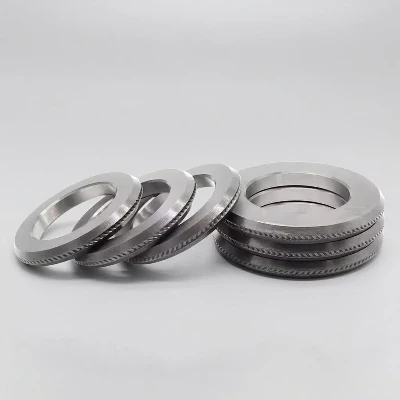
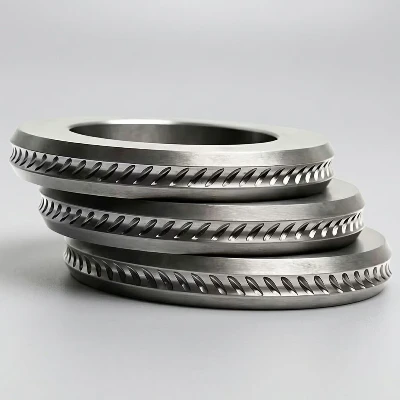
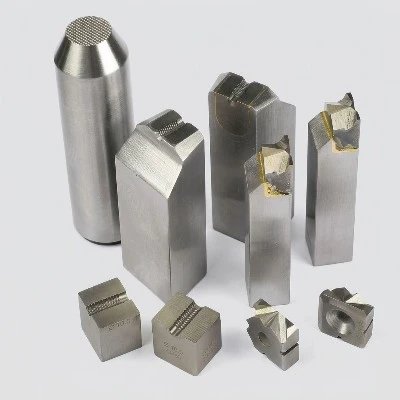
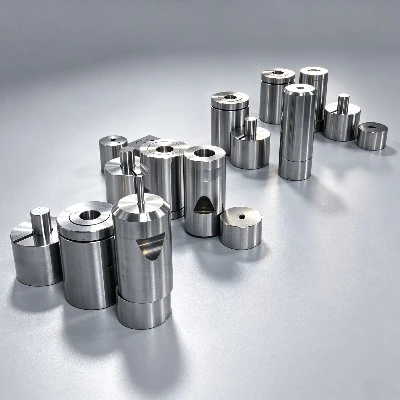

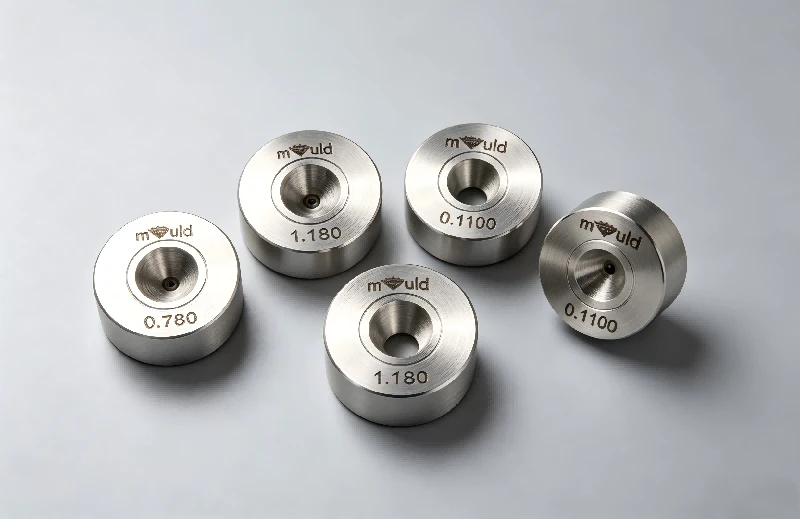
Unlike finished drawing dies, which already contain a machined drawing hole, these blanks are supplied as semi-finished components. Their diamond working material, supporting structure, external dimensions, and bonding characteristics determine how effectively they can be processed into finished dies for different wire drawing applications.
Depending on the production requirements, manufacturers can select Polycrystalline Diamond (PCD) blanks or Natural Diamond (ND) blanks. Each material has different characteristics in terms of grain structure, wear behavior, machining requirements, and suitability for particular wire diameters.
For industrial buyers, selecting the correct PCD wire drawing die blanks is not simply a matter of choosing the hardest available material. The selection must consider the wire material, incoming and finished wire diameters, drawing speed, lubrication conditions, reduction ratio, and required surface quality.
Our product range is intended to support different drawing die manufacturing requirements, from general-purpose metal wire processing to precision applications involving fine and ultra-fine wires.

Key Product Characteristics
Diamond Working Material
PCD and natural diamond options for different drawing requirements.
Wear-Resistant Structure
Diamond-based working areas designed for demanding wire drawing environments.
Multiple Grain Grades
Different PCD grain structures available according to the required balance between surface finish, wear resistance, and processing conditions.
Precision Blank Geometry
Customizable outer diameter, thickness, core dimensions, and supporting structures.
Machining Compatibility
Suitable for subsequent die-hole machining, shaping, grinding, and polishing operations.
Industrial Application Flexibility
Designed for copper, aluminum, stainless steel, carbon steel, and other metal wire processing applications, subject to material and grade selection.
Material Structure: PCD, Natural Diamond, and Supporting Substrates
The working material is one of the most important factors influencing the performance of a wire drawing die. Different diamond structures produce different wear characteristics and machining requirements.
Polycrystalline Diamond (PCD)
PCD is manufactured by consolidating diamond particles under high-pressure, high-temperature conditions. The resulting material contains multiple interconnected diamond grains rather than one continuous natural crystal.
This multi-grain structure gives PCD a combination of high hardness, wear resistance, and multidirectional working characteristics.
During wire drawing, the die surface experiences repeated contact with moving metal wire, drawing pressure, and friction generated under the selected lubrication conditions. A suitable PCD grade can help maintain the working profile over extended production periods.
PCD is particularly suitable for manufacturers processing large volumes of copper, aluminum, and other metal wires where frequent die replacement can interrupt production.
Important material considerations include:
- Diamond grain size and distribution.
- Interparticle bonding quality.
- Residual catalyst content.
- Diamond layer thickness.
- Thermal stability under actual operating conditions.
- Compatibility with subsequent machining processes.
Different PCD grades should be selected according to the required balance between wear resistance, surface quality, and machining efficiency.
Natural Diamond (ND)
Natural diamond blanks use a single-crystal diamond as the working material.
Unlike PCD, natural diamond has crystallographic orientation. Its mechanical properties and machining behavior can vary according to the direction of the crystal.
For this reason, crystal orientation, clarity, internal inclusions, and available working dimensions are important selection criteria.
Natural diamond is commonly considered for fine and ultra-fine wire drawing applications where precise hole finishing and excellent surface quality are essential.
It is particularly relevant to manufacturers working with fine copper wires and other precision conductors.
Tungsten Carbide Supporting Substrate
Some composite diamond blanks combine a diamond working layer with a tungsten carbide supporting substrate.
The diamond layer provides the wear-resistant working material, while the cemented carbide substrate provides mechanical support and helps facilitate the integration of the blank into a finished die structure.
The interface between these materials is particularly important. Poor bonding quality, unsuitable geometry, or excessive machining stress can lead to cracking, separation, or premature failure.
For procurement evaluation, buyers should consider the following:
Not every blank uses the same composite structure. Self-supported diamond materials and other configurations may also be available depending on the product design.
Grain Size Engineering: Selecting the Right PCD Grade
Grain size is one of the most important specifications when purchasing polycrystalline diamond blanks.
PCD grain size affects the surface characteristics of the material, the behavior of the working edge, the finishing process, and the wear pattern during operation.
Fine-grain grades generally provide a more uniform microstructure and are frequently selected for applications requiring fine finishing and precise working surfaces.
Coarser grades are often considered for applications where wear resistance and the mechanical characteristics of the selected PCD composition are prioritized.
However, grain size alone does not determine the overall performance of a die. Binder composition, sintering quality, diamond content, working geometry, and drawing conditions must also be considered.
Reference PCD Grain Size Selection
The grain sizes above are representative selection categories, not a guarantee that every size is available from every manufacturer. Actual grades should be confirmed against the supplier's material specifications.
How Grain Size Influences Purchasing Decisions
For fine wire applications, an unsuitable grain structure may make it difficult to obtain the required working surface after machining and polishing.
For larger production runs, buyers may place greater emphasis on wear resistance and the consistency of the PCD material throughout the working layer.
The correct selection should therefore be based on the final wire diameter, required surface roughness, drawing speed, and expected production volume rather than grain size alone.
Precision Blank Geometry and Dimensional Configuration
The external dimensions of a blank directly affect whether it can be installed, clamped, and processed using the buyer's existing die manufacturing equipment.
A blank that has excellent material properties but incompatible external dimensions can create unnecessary machining costs or require changes to the existing manufacturing process.
For this reason, dimensional customization is an important part of industrial die blank procurement.
Main Dimensional Parameters
Why Core Concentricity Matters
Core concentricity describes the positional relationship between the diamond working area and the external reference geometry.
During subsequent die manufacturing, the blank is positioned and processed using its external surfaces or designated locating features.
If the diamond core is significantly offset, the finished drawing hole may not align correctly with the intended working position.
This can create difficulties during die-hole machining and may affect the finished die's usable material thickness around the hole.
For precision applications, buyers should provide dimensional drawings that specify the required core position, external diameter, thickness, and relevant geometric tolerances.
Diamond Layer Thickness and Machining Allowance
The diamond working layer must provide sufficient material for the intended die-hole geometry.
A blank with insufficient working-layer thickness may restrict the achievable drawing-hole configuration or reduce the available machining allowance.
On the other hand, excessive thickness can increase material costs without providing a practical benefit for the intended application.
Buyers should therefore coordinate the blank specification with the finished die design, including the expected hole diameter, approach angle, bearing length, and exit geometry.
Finished Die Compatibility: Understanding the Drawing Hole Structure
Although these blanks are supplied before the drawing hole is machined, their design must be compatible with the final drawing die geometry.
The geometry of a finished drawing die controls how metal wire enters the die, undergoes plastic deformation, and exits at the required diameter.
The main working sections include the entrance, approach, reduction zone, bearing, and back relief.
Entrance and Lubrication Zone
The entrance section guides the incoming wire into the drawing passage.
In wet drawing operations, the entrance geometry also influences lubricant access to the drawing interface.
An unsuitable entrance profile can create inconsistent lubrication conditions, increasing friction and potentially accelerating wear.
Approach Zone
The approach zone guides the wire toward the reduction region.
Its angle and length influence the deformation conditions and the contact behavior between the wire and die surface.
The approach geometry should be selected according to the wire material, reduction ratio, and lubrication system.
Reduction Zone
The reduction zone is where the wire undergoes plastic deformation.
During this stage, the wire diameter decreases as the material passes through the tapered working passage.
The reduction angle must be matched to the material's mechanical properties and the intended drawing conditions.
An unsuitable angle can increase drawing force, produce excessive heat, and affect wire surface quality.
Bearing Zone
The bearing section is the cylindrical sizing region that establishes the final wire diameter.
Bearing length is particularly important because it influences contact time, dimensional control, and friction.
A longer bearing is not automatically better. Excessive contact length can increase friction and heat generation, while insufficient length may reduce dimensional stability under certain production conditions.
Back Relief
The back relief provides an exit transition after the sizing section.
Its geometry helps the drawn wire leave the working passage without unnecessary contact with the die body.
The appropriate back relief configuration depends on the finished die design and application.
Finished Die Geometry Reference
These parameters belong to the finished die design rather than the raw blank itself. The blank must provide the necessary material and geometry to manufacture the required working profile.
Performance Advantages Compared with Conventional Drawing Die Materials
Different drawing die materials serve different production requirements. The best material is determined by wire type, diameter, drawing speed, production volume, and the required finished-wire quality.
Comparison of Tungsten Carbide, Natural Diamond, and PCD
Advantage 1: Improved Wear Resistance
PCD contains a high proportion of diamond particles, giving it excellent resistance to abrasive wear.
During repeated wire drawing operations, the working surface is exposed to friction, contact pressure, and possible abrasive particles carried by the wire or lubricant.
A suitable PCD grade can maintain its working geometry longer than conventional carbide in demanding applications.
This can reduce the frequency of die replacement and help maintain more consistent production conditions.
Actual service life depends on the wire material, surface condition, lubrication, reduction schedule, drawing speed, and die maintenance.
Advantage 2: More Consistent Working Geometry
The wear resistance of diamond materials helps reduce the rate at which the drawing passage changes during production.
This is particularly important when manufacturers need to maintain narrow wire diameter tolerances across large production batches.
A stable working profile can reduce the frequency of die adjustments and help control variations in the finished wire.
However, material selection alone cannot guarantee dimensional accuracy. The finished die's bearing geometry, machining quality, and operating conditions remain equally important.
Advantage 3: Better Suitability for Precision Surface Finishing
Diamond materials can be machined and polished to produce high-quality working surfaces.
For fine-wire applications, the quality of the finished die-hole surface has a direct relationship with wire surface characteristics.
A properly selected and processed PCD or natural diamond working area can help reduce surface defects associated with rough or excessively worn die passages.
The final result depends on the machining method, polishing process, working geometry, and drawing lubrication.
Advantage 4: Reduced Die Replacement Frequency
Frequent die replacement creates additional production costs beyond the purchase price of the die itself.
These costs can include:
- Machine downtime during die replacement.
- Operator time for removal and installation.
- Wire threading and production restart.
- Dimensional inspection after die changes.
- Additional process adjustments.
- Production losses caused by interrupted operations.
When the selected diamond material provides a longer usable working period, manufacturers may reduce these indirect operating costs.
For high-volume wire drawing facilities, this can be an important part of total production cost evaluation.
Advantage 5: More Flexible Material Selection
PCD and natural diamond provide different material options for manufacturers with diverse wire drawing requirements.
Rather than relying on one universal die material, buyers can select different blank specifications for different drawing stages.
For example, a production line processing relatively large wire diameters may use one material configuration for initial reduction and a different grade for later precision drawing stages.
This approach allows the die material to be matched more closely to the actual operating conditions.
Application-Specific Selection for Different Metal Wire Materials
The working conditions of copper, aluminum, stainless steel, and specialty alloy wire production are not identical. The appropriate blank should be selected according to the mechanical properties of the incoming wire, the required finished diameter, and the drawing process.
Copper Wire Drawing
Copper wire is widely used in electrical conductors, communication cables, electronic components, and industrial wiring. Manufacturers processing copper wire commonly focus on:
- Finished wire diameter consistency.
- Surface smoothness.
- Conductivity-related material quality.
- Drawing speed.
- Lubrication stability.
- Die replacement frequency.
Fine-grain PCD and natural diamond are both relevant to copper drawing, depending on the wire diameter and required surface finish.
For larger-scale copper wire production, PCD is often considered because of its wear resistance and suitability for repeated industrial operation.
Aluminum Wire Drawing
Aluminum has a lower hardness than steel but presents specific challenges involving surface adhesion, friction, and lubrication.
When selecting a die blank for aluminum drawing, buyers should consider the wire alloy, surface condition, drawing lubricant, and reduction schedule.
A suitable diamond working material can support stable die-hole conditions and reduce the impact of excessive abrasive wear.
The final die geometry and lubricant compatibility must be evaluated together.
Stainless Steel Wire Drawing
Stainless steel drawing involves higher deformation resistance than many common non-ferrous wire applications.
Drawing force, frictional heating, and contact pressure can become important factors, particularly in multi-stage production.
For this application, buyers should pay close attention to PCD grade selection, supporting structure, and the finished die's working geometry.
The suitability of a diamond die should be evaluated according to the stainless steel grade, incoming wire diameter, reduction per pass, and lubrication conditions.
Carbon Steel Wire Drawing
Carbon steel wire is used in fasteners, springs, wire ropes, welding materials, and industrial components.
The drawing process may involve considerable mechanical loading and abrasive wear, depending on the wire grade and surface condition.
The selection of PCD or carbide dies should therefore consider the production line's drawing force, reduction schedule, and required tool life.
Diamond-based materials may be suitable for selected carbon steel applications, but they should not automatically replace carbide in every drawing stage.
Tungsten and Molybdenum Wire
Tungsten and molybdenum wires are used in specialized industrial and electronic applications.
These materials require carefully controlled drawing processes because of their high melting points, mechanical characteristics, and specific processing requirements.
For fine and specialty wire applications, natural diamond and precision PCD configurations may be considered depending on the wire size and process conditions.
The required working dimensions and machining quality should be established before ordering the blank.
Application Selection Matrix
These are general selection directions. The actual material must be validated against the complete drawing process rather than selected solely by wire material name.
Technical Specifications and Custom Manufacturing Options
For industrial buyers, the most useful quotation is based on a defined technical specification rather than a general product description.
When requesting a quotation for PCD drawing die blanks, buyers should provide the required dimensions, material grade, application, and drawing equipment information.
Product Technical Data
Customization According to Production Requirements
Material Customization
Different PCD grades can be selected according to grain structure, wear behavior, and finishing requirements. Natural diamond options can be considered for applications requiring single-crystal working material.
Dimension Customization
Outer diameter, thickness, diamond core diameter, and supporting substrate dimensions can be specified according to the customer's die manufacturing drawings.
Structural Customization
The configuration of the diamond working layer and supporting material should be determined according to the required machining allowance, finished die design, and installation method.
Tolerance Customization
Dimensional tolerances and geometric requirements should be agreed upon before production. Buyers manufacturing precision dies should specify the reference surfaces and measurement methods used for acceptance.
Manufacturing Quality Control: What Buyers Should Evaluate
A high-quality blank must demonstrate consistency in both material properties and dimensional characteristics.
For manufacturers purchasing large quantities, variations between individual blanks can create difficulties during automated machining and finished die production.
Quality control should therefore cover the raw material, composite structure, blank geometry, and final inspection.
Diamond Material Inspection
Material inspection should focus on the consistency of the selected PCD grade or natural diamond quality.
For PCD, relevant considerations include grain distribution, bonding integrity, material uniformity, and visible structural defects.
For natural diamond, crystal quality and internal characteristics should be evaluated according to the agreed material specification.
Bonding and Interface Inspection
For composite structures, the connection between the diamond layer and supporting substrate is a critical quality point.
An unsuitable interface may lead to separation or cracking during subsequent machining or operation.
Inspection methods should be selected according to the composite design and manufacturer capability.
Dimensional Inspection
The outer diameter, thickness, core dimensions, and positional accuracy should be measured against the approved drawing.
For repeated production orders, consistent measuring methods help reduce dimensional variation between batches.
Surface Inspection
The external surfaces should be checked for defects that may affect positioning, clamping, or subsequent processing.
The inspection requirements should distinguish between the functional diamond working surface and non-working external areas.
Quality Control Reference Table
For buyers, a supplier's ability to maintain consistent inspection standards across repeat orders is as important as the performance of an individual sample.
Why Choose Diamond-Based Blanks for Long-Term Wire Drawing Production?
The purchase decision should not be based exclusively on the initial unit price.
For a wire drawing die manufacturer or a large wire processing facility, the more meaningful calculation is the total cost associated with manufacturing and operating the finished dies.
A lower-cost carbide blank may be economically suitable for general applications, particularly where the wire material and drawing conditions do not require diamond-level wear resistance.
However, for high-volume production, fine-wire manufacturing, or applications where frequent die replacement creates substantial downtime, a suitable diamond-based solution may provide a better long-term cost structure.
Evaluating Total Cost of Ownership
A practical purchasing evaluation should include:
- Initial blank purchase cost.
- Machining and polishing expenses.
- Finished die yield.
- Usable working life under actual production conditions.
- Die replacement frequency.
- Machine downtime and labor costs.
- Finished-wire rejection and dimensional inspection costs.
The relevant comparison is not simply the price difference between PCD and carbide. It is the cost per unit of acceptable wire produced under comparable operating conditions.
Suitable Procurement Scenarios
PCD blanks are worth evaluating when:
- The production line operates continuously or at high utilization.
- Die wear creates frequent dimensional adjustments.
- The finished wire requires consistent surface quality.
- The manufacturer processes large batches of non-ferrous wire.
- The existing carbide die configuration produces an unsatisfactory service life.
- The buyer needs different diamond grades for different drawing stages.
Natural diamond blanks should be considered when the application places particular emphasis on single-crystal working material, fine-wire drawing, and precision finishing.
Tungsten carbide remains a practical choice for many conventional applications where the initial purchase cost and general-purpose performance are the primary considerations.
Ordering and Technical Information for Customized Die Blanks
Accurate technical communication before production helps prevent mismatches between the supplied blank and the buyer's finished die manufacturing requirements.
For an efficient quotation, industrial buyers should prepare the following information:
For buyers who do not yet have a complete blank drawing, the finished die dimensions and application information can provide a starting point for technical communication. The supplier can then evaluate the required material configuration, blank geometry, and manufacturing feasibility before confirming the quotation.
Supporting Precision Die Manufacturing Across Different Industrial Applications
Reliable wire drawing starts with the correct combination of material, geometry, and process control.
A well-selected blank provides the necessary diamond working material and structural foundation for producing a finished drawing die that meets the intended production requirements.
Whether the application involves copper conductors, aluminum wire, stainless steel products, carbon steel components, or specialty metal wires, the blank specification should be developed around the actual manufacturing conditions.
By considering grain size, diamond layer thickness, substrate configuration, dimensional tolerances, and subsequent machining requirements together, buyers can avoid selecting products based solely on generic hardness or wear-resistance claims.
Our range of PCD wire drawing die blanks and natural diamond options supports different die manufacturing requirements through material selection and dimensional customization.
For procurement teams, drawing die manufacturers, and industrial wire producers, the objective is to obtain a blank that fits the existing manufacturing process, provides sufficient machining allowance, and supports consistent finished die quality throughout repeat production.
Submit your technical drawing, required material grade, and application details to discuss a suitable blank configuration for your wire drawing production requirements.
Hot Tags: diamond wire drawing die blanks, China diamond wire drawing die blanks manufacturers, suppliers, factory