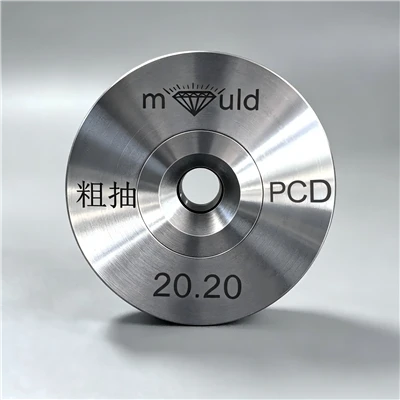
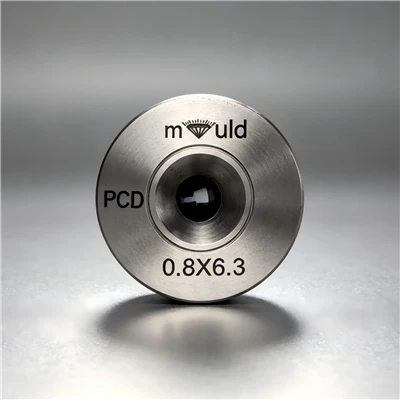
A wire-drawing die consists primarily of two components: the die casing and the die core. The casing is typically made of high-quality steel (such as 45 steel) with a hardness of HRC 20–25; it is fitted to the core with an interference fit to provide structural reinforcement. The die core is the critical component of the assembly, featuring a bore profile composed of five sections: the entry cone, lubrication cone, working cone, sizing zone, and exit cone.
The entry cone features a rounded profile to facilitate the entry of the wire into the working cone, serving to guide the wire into the die. The lubrication cone channels lubricating powder into the die during the drawing process. The working cone is a vital part of the core structure where the wire undergoes plastic deformation and cross-sectional reduction; the die's operational efficiency depends largely on the geometry and area of this section. The sizing zone ensures the wire's dimensions and shape are precise and uniform, controlling key parameters such as diameter, roundness, straightness, and surface quality; its length is determined by the properties of both the wire material and the die material. The exit cone is designed to reinforce the die's outlet, preventing defects such as "bamboo-like" scratches during machine stoppages, as well as chipping at the sizing zone outlet or catastrophic failure of the die core.