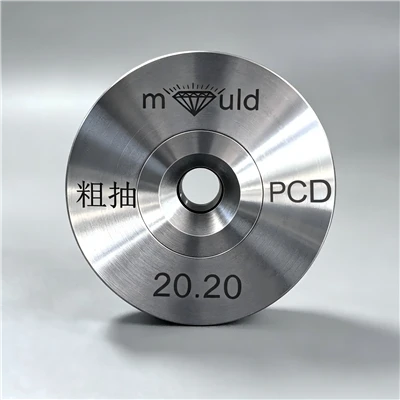
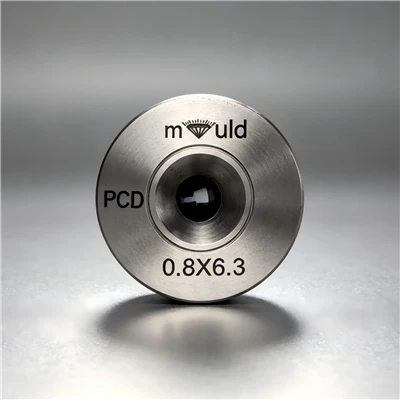
A typical extrusion die comprises the following core components:
Die base: Supports the overall die structure and withstands extrusion pressure.
Female die (or die plate): The working component containing the die orifice(s), which determines the cross-sectional shape of the product.
Material flow control ring: An annular structure that regulates the direction of material flow.
Bearing surface (or bearing land): The length is typically 1.5 to 3 times the profile wall thickness, calculated using the formula $h = L \cdot (S1/S2)$ (where $L$ is the profile perimeter and $S1$ is the area ratio coefficient).
The layout of die orifices on the die face must adhere to specific principles to ensure process stability and product quality. Key considerations include: ensuring stability during extrusion to prevent twisting or bending; avoiding direct contact between decorative surfaces and the run-out table to prevent scratching; positioning thin-walled sections as close as possible to the center of the extrusion container to balance metal flow velocity; and, for channel-shaped profiles, preventing "tongue" deflection that could lead to uneven wall thickness.
Depending on the type of extruded profile, extrusion dies are primarily categorized into two main types: solid dies (flat dies) and hollow dies. Hollow dies encompass specific structural configurations such as flat split-die assemblies, star-shaped assemblies, and tongue dies.