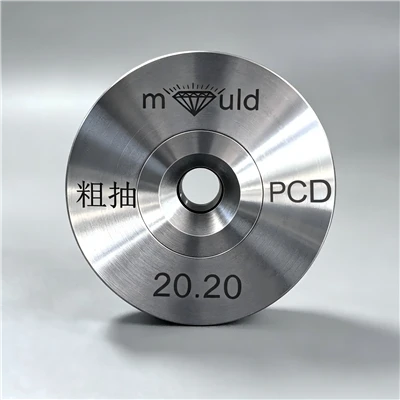
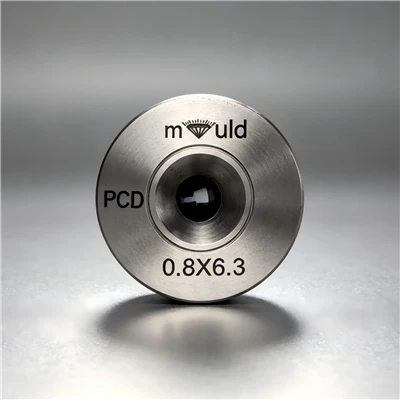
Wire drawing dies are made from a variety of materials, primarily natural diamond, cemented carbide, polycrystalline diamond (synthetic diamond), CVD diamond, ceramics, and steel.
Natural diamond dies offer high hardness and excellent wear resistance; however, they are brittle, extremely difficult to process, and very expensive. Due to their anisotropic nature, they are prone to severe localized wear and are typically used only for drawing very fine-gauge wire.
Cemented carbide dies feature good polishability, low adhesion, a low coefficient of friction, and high corrosion resistance. Although they have lower hardness and wear resistance-resulting in a shorter service life-they are suitable for drawing wires across a wide range of diameters.
Polycrystalline diamond (synthetic diamond) dies possess hardness second only to natural diamond. They are isotropic, meaning they do not suffer from accelerated wear in a single radial direction; however, they are costly and difficult to process, resulting in high manufacturing expenses.
CVD diamond dies exhibit excellent wear resistance due to their diamond-like properties, producing wire with low surface roughness and a high-quality finish. They also offer good thermal stability, though their complex manufacturing process and processing difficulties lead to higher costs.
Ceramic dies offer higher hardness and wear resistance than cemented carbide dies and are inexpensive to produce, making them an excellent material choice positioned between diamond and cemented carbide. However, due to poor toughness, low thermal shock resistance, and processing difficulties, they have not seen widespread application.
Steel dies are inexpensive and easy to maintain, but they suffer from relatively low hardness and wear resistance, resulting in a short service life; they are primarily used for drawing large-cross-section shaped wires in low-volume production.
The selection of die material must be matched to factors such as the type of wire being drawn, lubricant properties, die profile, and cooling conditions to maximize the die's service life.