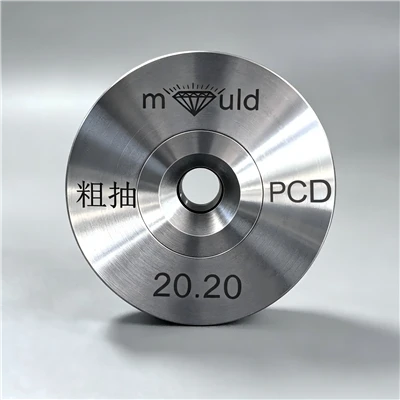
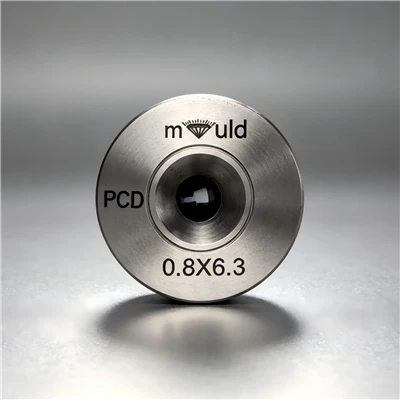
Irregularly shaped wire drawing dies play a crucial role in the wire drawing process, and their key factors include the following:
First, the die material is paramount. High-quality die materials should possess high hardness, high wear resistance, and good heat resistance to ensure they do not easily wear or deform during prolonged wire drawing, thus guaranteeing the accuracy and surface quality of the wire.
Second, the die's design and structure significantly impact the wire drawing process. Irregularly shaped wire drawing dies are typically complex in shape, requiring calculation and optimization based on specific wire drawing requirements. This includes aspects such as the die's inlet and outlet angles, die hole shape, and dimensional accuracy. A reasonable inlet and outlet angle can reduce resistance during the wire drawing process and improve efficiency; while a suitable die hole shape and size ensure that the dimensional accuracy and surface roughness of the wire meet requirements.
Furthermore, the selection of wire drawing process parameters cannot be ignored. This includes the drawing force, speed, and lubrication conditions. Appropriate tension allows the wire to pass smoothly through the die while preventing overstretching and breakage. A suitable speed improves production efficiency, but excessive speed can lead to overheating and affect wire quality. Good lubrication reduces friction between the die and the wire, lowers wear, and improves drawing stability and surface quality.
Furthermore, the die's machining accuracy and surface treatment significantly impact the drawing process. High-precision machining ensures the die's dimensional and shape accuracy, thus improving drawing precision. Surface treatments such as nitriding and hard chrome plating further enhance the die's hardness and wear resistance, extending its lifespan.